SAEDNEWS: Yemen Attacks Saudi Arabia as Turkey and Pakistan Remain Silent

According to Saed News, citing Kayhan, Yemen's conflict has entered a new phase of asymmetric confrontation, with Yemeni forces seeking to shift the balance of the war against Riyadh by targeting Najran Airport, Saudi Aramco facilities, and disrupting shipping routes. Meanwhile, Saudi Arabia's allies, Turkey and Pakistan, have faced criticism for remaining inactive despite their reported trilateral defense agreement.
The changing dynamics of the Yemen war are not simply reflected in the number of missile and drone attacks. Yemeni forces, after years of military pressure and land, sea, and air restrictions, are increasingly attempting to use Yemen's strategic geography and its proximity to major shipping routes in the Red Sea and Gulf of Aden to raise the cost of continuing the conflict for Saudi Arabia.
From this perspective, Yemen is seeking to transform its vulnerability into leverage by shifting some of the economic and security costs of the blockade onto Saudi Arabia. Supporters of this strategy argue that it represents a form of asymmetric balance, in which a less conventionally powerful actor uses strategic locations, sensitive infrastructure, and unconventional military tactics to strengthen its negotiating position.
Yemen's government spokesman, Omar al-Bukhaiti, said that Yemeni forces had prevented 48 ships from passing through the Red Sea and Arabian Sea and had targeted eight oil tankers. According to him, this phase began on July 20 and was a response to more than 12 years of land, sea, and air restrictions imposed on Yemen.
Al-Bukhaiti said the stated objectives went beyond military pressure. They included ending the blockade, securing access to Yemen's resources to pay salaries, removing foreign forces from Yemeni territory, and ending what he described as foreign control over the country's affairs.
He also called on forces aligned with Saudi Arabia to stay away from Saudi military facilities and gatherings and urged Riyadh to halt what he described as the implementation of "American and Zionist orders." The statement reflects an effort by Sana'a to frame the conflict not merely as a border dispute, but as a broader struggle over sovereignty, resources, and political independence.
At the same time, Yahya Saree, spokesman for Yemen's armed forces, announced two drone operations against targets in Saudi Arabia. He said one operation targeted an important area at Najran Airport, while another struck facilities belonging to Saudi Aramco in Najran.
According to Saree, the attacks were carried out in response to alleged Saudi violations of the airspace over Yemen's Saada province. Regardless of the independently verified extent of the damage, the selection of targets is significant because airports and energy facilities are directly connected to Saudi Arabia's economic and infrastructure security.
The attacks appear intended to demonstrate that continued pressure on Yemen could also impose costs deeper inside Saudi territory. This reflects the logic of asymmetric warfare: while Saudi Arabia possesses substantially greater conventional military capabilities and foreign support, Yemeni forces seek to offset that advantage by targeting sensitive locations and employing drones and maritime capabilities.
Saree also issued a statement regarding the reported targeting of Saudi-backed forces with a drone identified as the "Rajum."
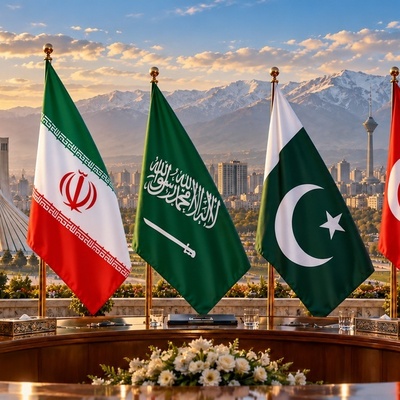
Despite the recent attacks on Saudi territory, the reported joint defense agreement involving Saudi Arabia, Pakistan, and Turkey—which states that an armed attack against one member should be regarded as an attack against all—has not resulted in a visible collective military response.
The lack of action has prompted criticism and online mockery, with some social media users questioning the effectiveness of a provision compared to NATO's collective-defense principle. Critics sarcastically suggest that the agreement appears to require its members merely to watch when one of them comes under attack.
Meanwhile, a reported maritime incident 136 nautical miles east of Al Mukalla, Yemen, has again highlighted security concerns surrounding regional waterways. According to a report by the United Kingdom Maritime Trade Operations, an oil tanker issued a distress call after another vessel approached it in the Gulf of Aden.
Some sources further claimed that six armed individuals boarded the tanker and directed it toward Somalia. However, at the time of the report, further details regarding the tanker's ownership, the identity of the armed individuals, and their motives had not been confirmed.
As military and maritime incidents continue, the conflict's impact appears to be extending beyond the battlefield, with strategic infrastructure, shipping routes, and regional defense commitments increasingly becoming part of the wider confrontation.