SAEDNEWS: John Mearsheimer, a prominent international relations theorist, believes that all U.S. schemes against Iran have failed, and that a military attack would yield no result other than the closure of the Strait of Hormuz, an Iranian strike on Israel and U.S. bases in the region, and widespread global economic devastation.
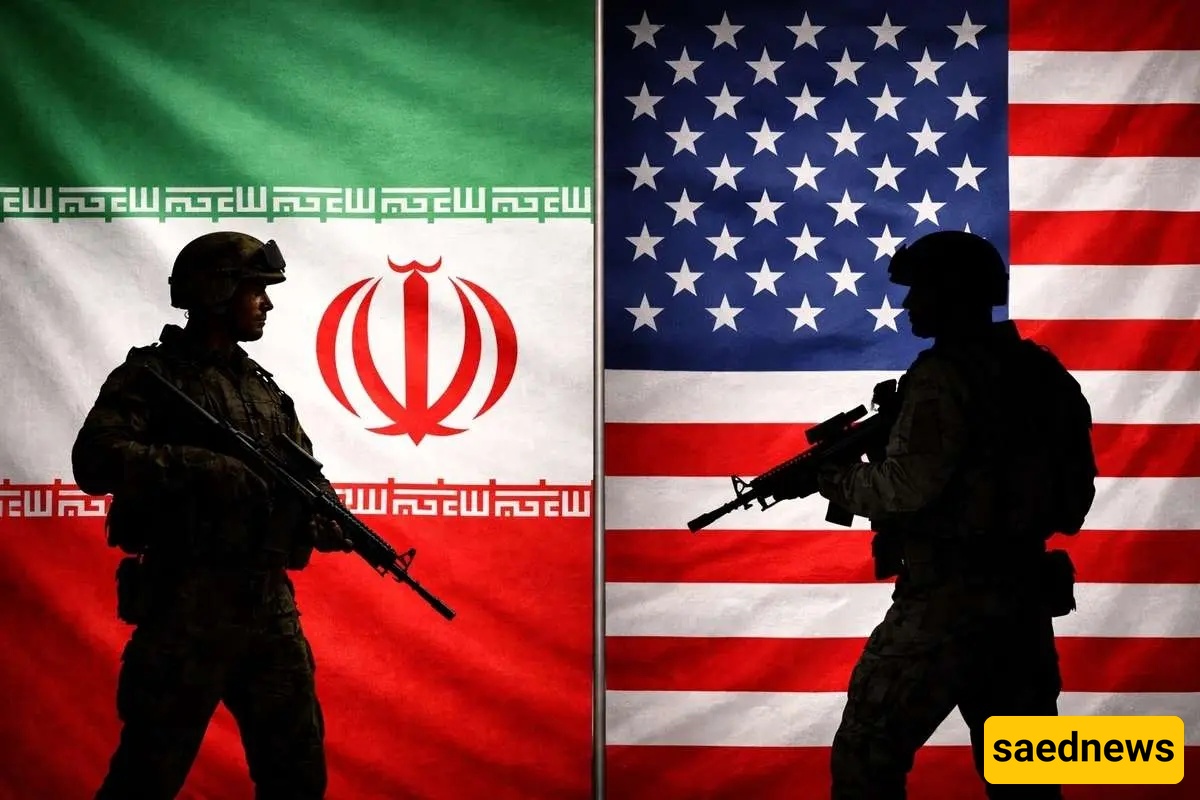
According to the political news service of Saed News, John Mearsheimer, a prominent political science professor, explicitly states that U.S. strategies to weaken or overthrow the Iranian government—including exploiting domestic protests and military threats—have failed.
Mearsheimer believes that Iran has the necessary capability to counter any military aggression, and such actions would not only fail but could also have devastating effects on global energy markets, particularly if the Strait of Hormuz were closed. He emphasizes that the U.S. is incapable of changing Iran’s regime.
The leading international relations theorist recently commented on Trump’s threats against Iran, saying that any U.S. adventurism would be met with Iranian attacks on Israel and American bases in the region.
He stressed that the U.S. initially sought to weaken Iran through domestic protests and then deliver a final blow via military action. Mearsheimer asserts that all these plans have failed, and with tensions in Iran now easing, there is no logical reason for an attack.
The prominent scholar notes that even with all its military power in the region, the U.S. cannot eliminate the Iranian government. He adds that such an attack would not only fail but could lead to serious consequences, such as closing the Strait of Hormuz and halting oil flows from the Persian Gulf.
Mearsheimer also highlighted that such measures would ultimately have devastating impacts on the global economy.
The American theorist criticized Trump, saying that his statements and actions are making the world increasingly dangerous, which is a concern for the U.S.
Former Israeli National Security Advisor: U.S. Deterrence Against Iran Severely Eroded
Yaakov Nagel, a veteran Israeli commander and influential figure in shaping Israel’s national security doctrine, also emphasizes the severe weakening of U.S. deterrence against Iran. According to his analysis, Iran has concluded from observing U.S. actions in recent years that it can target American and Israeli interests in the region without fear of a decisive response.
In a note for the Foundation for Defense of Democracies, Nagel acknowledges that U.S. deterrence against Iran has been significantly weakened, leading Tehran to conclude that its actions against American and Israeli interests will have no serious consequences.
He explains that with effective management of sanctions and diplomatic pressures by the Islamic Republic, Iran sees no significant obstacle to harming U.S. and Israeli interests in the region in the near future.
Nagel, who has chaired Israel’s Internal Security Council and served as national security advisor to the prime minister, notes the “dangerous erosion of U.S. deterrence” against Iran. He writes that Iran evaluates Washington’s behavior based not on declared positions but on practical actions and, in recent years, has seen ample signs of U.S. political weakness.
Nagel believes the main problem with U.S. policy toward Iran is not a lack of tools or options but hesitation in using them.
Both perspectives portray a strong and determined Iran on the international and regional stage, capable of resisting external pressures and even challenging the deterrence of major powers.
Mearsheimer emphasizes the failure of U.S. regime-change strategies, while Nagel highlights the erosion of U.S. deterrence. Both point to the ineffectiveness of current Washington policies toward Tehran.
These analyses suggest that aggressive U.S. approaches toward Iran, ignoring on-the-ground realities and the Islamic Republic’s defensive and strategic capabilities, would have severe consequences for U.S. and Israeli interests.