SAEDNEWS: Although Months Have Passed Since the 12-Day Imposed War, Le Figaro Emphasizes That “Another Battle Is Still Underway Online” Against Iran, With Fake Accounts and Manufactured Likes Supporting the Pahlavi Quarter
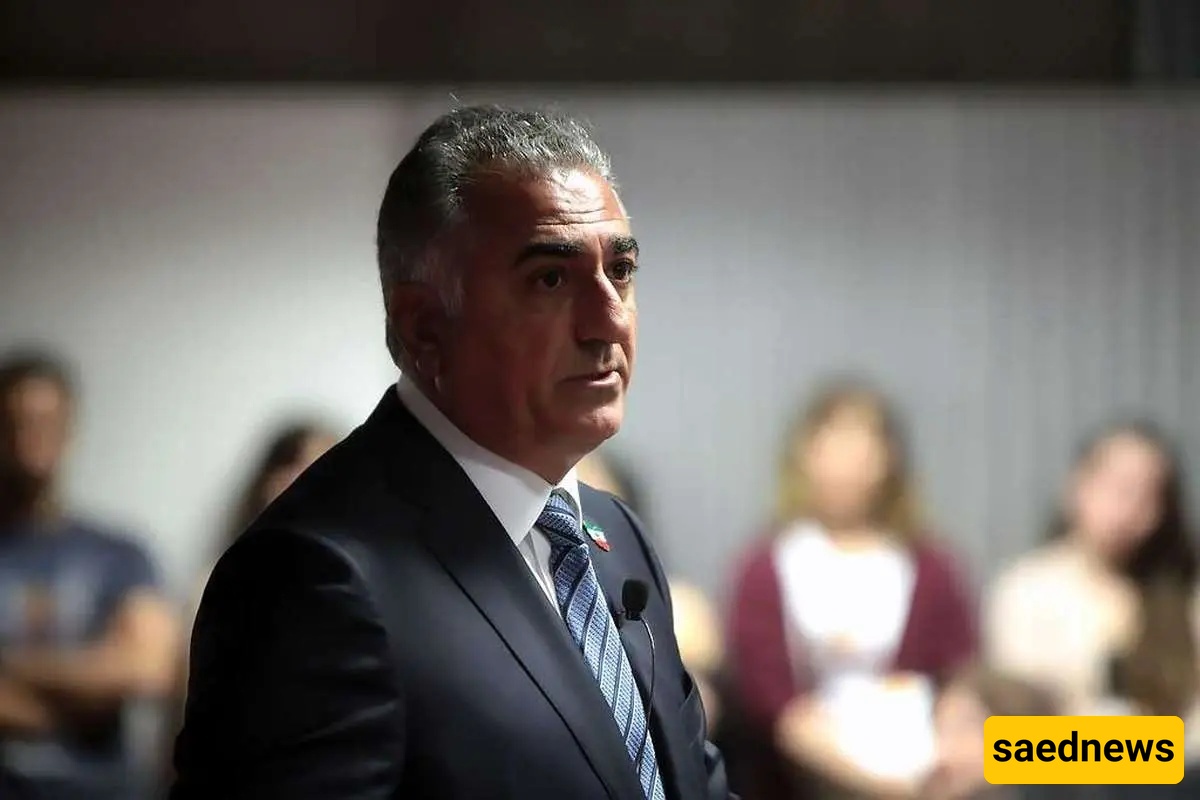
According to the political desk of Saed News, Le Figaro reported that Israel is closely observing developments in Iran. In June, the Israeli regime targeted locations in Iran, and after Iran’s missile response, the military confrontation halted. However, Le Figaro noted on January 31 that on social media, the “war” has never stopped.
Researchers and experts on combating fake information, after several months of monitoring social media, have observed a rise in coordinated campaigns targeting Iranian audiences, managed from outside Iran.
According to the report, these campaigns rely on networks of fake accounts and content that is either manipulated or generated by artificial intelligence.
Le Figaro added: “Experts point the finger at Israel, which intends to support unrest in Iran and promote figures such as Reza Pahlavi, the son of Iran’s deposed Shah.”
Jeff Goldberg, founder of the independent organization Social Forensics, which specializes in analyzing digital platform manipulations, said: “The scale and complexity of manipulations observed in the Persian-speaking space indicate the involvement of a state actor.”
Le Figaro cited researchers saying the described methods rely on the high-volume dissemination of content and topic coordination. Networks of accounts repost similar messages with identical hashtags to generate artificial impressions. According to the researchers, “this accumulation of signals alone is enough to place certain content at the top of feeds, regardless of genuine user engagement.”
Social Forensics identified 4,765 accounts, each posting over 100 messages per day, totaling 843 million tweets since their activation on the social media platform X.
Additionally, 11,421 accounts exhibited abnormal engagement, collectively generating 1.7 billion “likes.” Another 8,830 accounts changed their usernames multiple times—a method typically associated with coordinated operations. A total of 3,361 accounts linked to these discussions have been suspended by the platform.
Le Figaro referenced a report published in fall 2025 by Citizen Lab, the cybersecurity research lab at the University of Toronto, as cited by Haaretz. It described an infiltration campaign using fake profiles created in 2023, mostly dormant for nearly two years, but suddenly activated in early 2025 amid rising military tensions between Israel and Iran.
Citizen Lab noted that some content was published before it was reported by local sources or Iranian media. Researchers pointed to signs of coordination among accounts, such as synchronized posting times and the lack of verified identities. The report stated: “The observed level of coordination is inconsistent with natural dynamics and indicates centralized planning.”
Iran specialist Or Yissakhar at the David Institute in occupied Jerusalem said that this strategy and method are now implemented globally, but in Israel’s case, they have distinct usage patterns and characteristics. He explained: “All major powers now conduct social media infiltration operations, but Israel’s difference lies not in the objective but in the ‘level of technological and narrative sophistication.’”
Le Figaro emphasized that among the apparent objectives of these campaigns, “promoting Reza Pahlavi” is prominent, as he enjoys Israeli support, thereby reinforcing royalist narratives on social media.
Philip Mai, a researcher at the Metropolitan Toronto University Social Media Lab, wrote that certain individuals actively operate on the social media platform X to present Reza Pahlavi as the leading voice of the opposition.
He described: “Some accounts send messages directly to a single audience—the U.S. president—to persuade him to act against Iran and support Reza Pahlavi.”
As a result, X is filled with accounts using the “crown” emoji, which Le Figaro notes is a fabricated identity meant to simulate public support for Reza Pahlavi.
This technique, known as astroturfing, creates an illusion of mass mobilization. Social Forensics estimates that over 95 percent of accounts using the “crown” emoji are fake.