SAEDNEWS: What Happens Inside Cyrus the Great’s Tomb? A Question That Has Revived Speculation About the Exact Location and True Name of the “King’s Grave.”
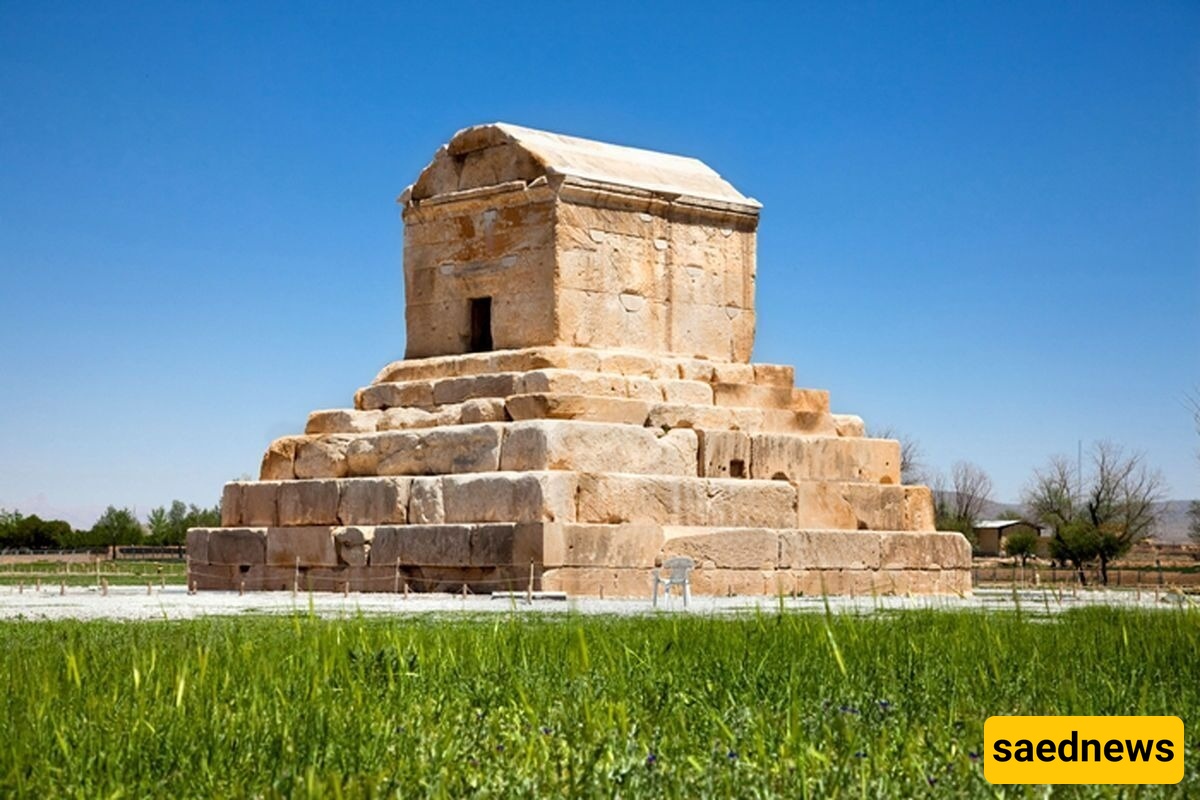
According to SAEDNEWS, The Tomb of Cyrus was built with extraordinary engineering skill and, after more than 2,500 years, remains standing strong. Cyrus the Great, the founder and first king of the Achaemenid Empire, ruled vast parts of Asia from 559 to 529 BCE and played an unparalleled role in world history.
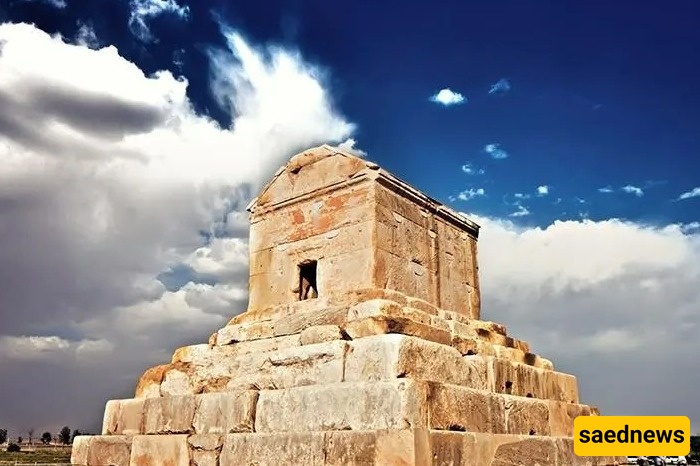
Cyrus the Great’s tomb, with its majestic, balanced, and impressive design, is one of the most prominent and best-preserved structures in the Pasargadae complex. Here are detailed insights into this historic monument.
The tomb is located in Fars Province, about one kilometer southwest of the Pasargadae palaces. Its simple yet unique architecture makes it visible from a distance across the Marghab Plain. The site is part of the Pasargadae complex and was registered as a UNESCO World Heritage Site in 2004 under number 1106.
The tomb is in the city of Pasargadae, not Shiraz, although many visitors travel from Shiraz. It is approximately 130–140 kilometers north of Shiraz, a journey of roughly 1.5 to 2 hours by car.
Yes, the tomb is authentic and was considered a sacred place during the Achaemenid era.
Throughout history, the tomb has been known by names such as the Mosque of Mother Solomon, Mashhad Mother Solomon, and Mashhad Umm Nabi. Today, it is universally known as the Tomb of Cyrus the Great.
The Tomb of Cyrus is the most prominent and enduring building in Pasargadae. Its balanced, simple, yet grand design showcases a combination of strength and beauty. Remarkably, it has retained its original structure for over two millennia, exemplifying ancient Persian architecture and demonstrating that traditional Iranian designs were historically based on precise engineering and harmony with the environment.
The tomb is the first structure that captures the attention of visitors entering the Pasargadae historical site. It is constructed from massive white limestone blocks, placed without mortar, using a dry-stone technique and iron clamps shaped like swallows’ tails.
The six-tiered stepped platform is pyramid-shaped, with each level carefully measured: the first tier is 1.65 meters high, the second and third are 1.05 meters, and the top three tiers are 57.5 centimeters each. The stones, quarried from northeast Sivand, weigh tens of tons in some cases, ensuring the monument’s stability.
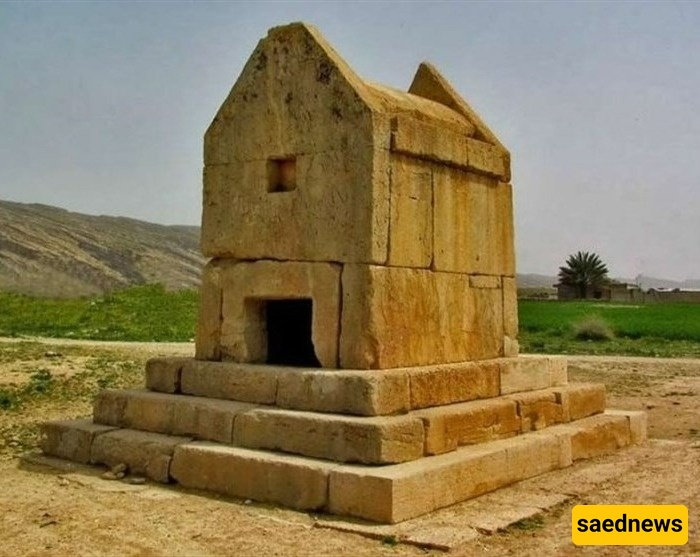
The interior is simple but precisely designed. The tomb rises approximately 10.11 meters from the ground, and the burial chamber measures roughly 2.3 by 3.2 meters with a height of 3.27 meters. Walls are about 1.5 meters thick, making the interior space slightly smaller than it appears from outside.
Hertzfeld noted that the chamber once had two large stone doors, each about 1.3 meters high, allowing entry only by bending. The floor and ceiling consist of two thick stone slabs, with a sloped roof about 4.75 meters long and 85 centimeters high, suggesting the possibility of an intermediate chamber.
Carved, coffin-like recesses in the interior stones may have served to lighten the structure and could have held the remains of Cyrus the Great and his wife, Cassandane.
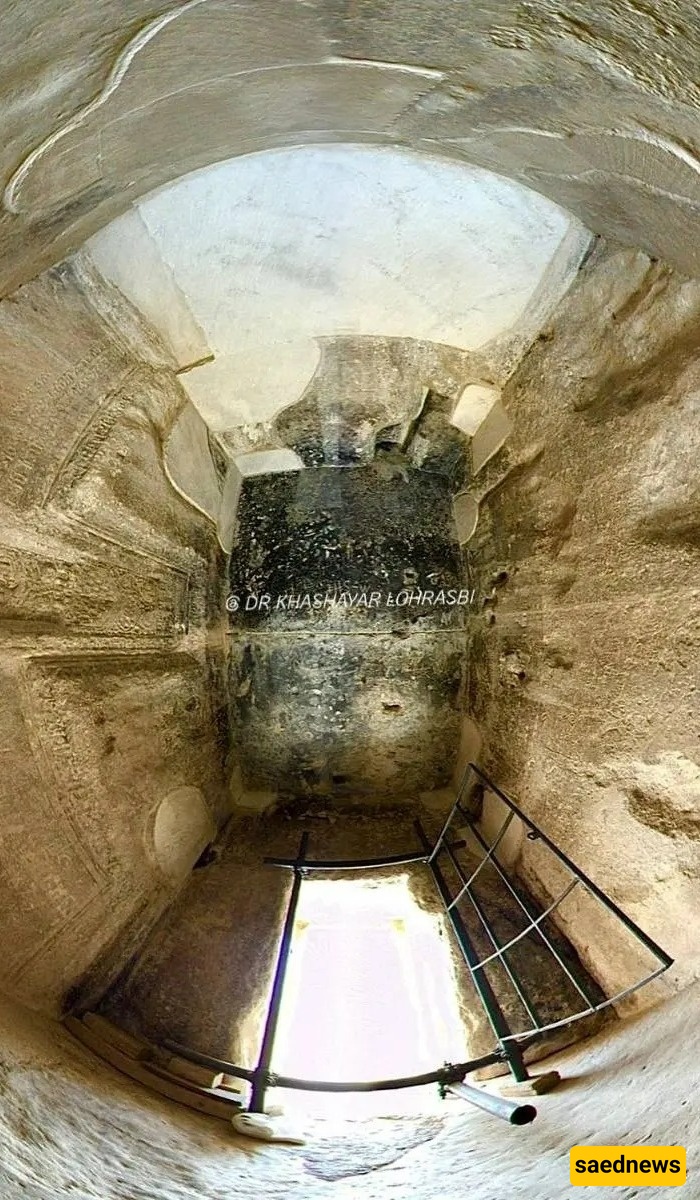
The tomb contains almost no decoration or inscriptions. The only design is a faint twelve-petaled Achaemenid rosette on the triangular façade beneath the roof above the entrance. No official inscription has been found inside, though the Greek historian Arrian reported an inscription in the Persian script reading:
"O man, I am Cyrus, son of Cambyses, founder of the Persian Empire, ruler of Asia; do not envy me."
Strabo, quoting Aristobulus, described the interior as containing a golden bed, sarcophagus, table, and vessels. Later inscriptions and prayer-niche designs on surrounding stones date to the Atabakan period when the site functioned as a mosque. At one point, it was believed to be the tomb of Mother Solomon, a misconception that helped preserve it.
Today, only one full inscription remains in Pasargadae, carved on a palace wall in Old Persian, Elamite, and Akkadian:
"Adam Cyrus, Khshayathiya, Achaemenid – I am Cyrus, King of the Achaemenids."
Another version of this inscription once stood above the winged man relief but disappeared between 1240–1253 in the Solar Hijri calendar. The historical importance of this inscription has drawn worldwide attention, including recognition at the United Nations.