SAEDNEWS: Customs and Traditions: Definition and Concept Explained – Stay with SaedNews
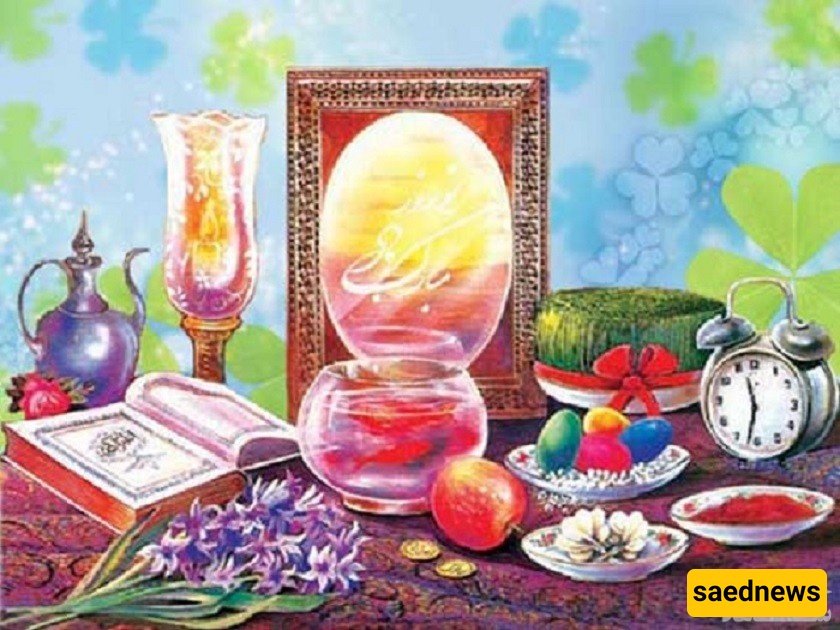
According to Saednews, Customs and traditions refer to the ways of life, habits, and specific practices of a nation, people, or community. They also include elements of obligation and the general acceptance of participants in social life.
From a sociological perspective, common customs and traditions can be defined as:
Fundamental and important patterns of behavior that individuals are compelled to accept within a social environment.
A set of behaviors that have become habitual and are performed by members of a social group or class, carrying an implicit meaning within the society’s value system. Violation of prevailing customs and traditions may lead to public disapproval and, in some cases, legal prosecution under civil law.
A common misconception is that some members of society have culture while others do not. However, from a sociological perspective, every normal adult human possesses culture. Culture can be defined as the set of acquired behavioral and belief characteristics of members of a particular society. The key term in this definition is “acquired,” which distinguishes culture from biologically inherited behavior.
Example:
All infants cry when they are hungry, thirsty, or uncomfortable. This type of crying, observed across all human societies, is not a cultural trait but a non-acquired biological behavior inherited from human genetics.
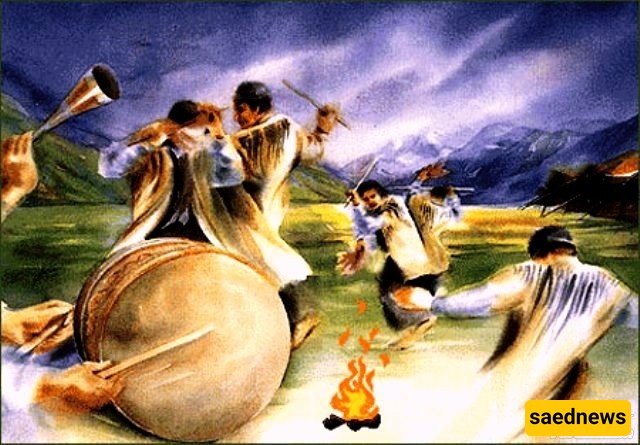
The customs and traditions of Iran can be divided into two categories:
National customs and traditions, which are widely practiced across the country
Local customs and traditions, which are limited to specific regions
Local customs are beyond the scope of this discussion and should be studied through specialized books.
National customs and traditions, however, are rooted in the long history of the Iranian plateau and extend beyond modern political borders. The formation of Iranian culture can be traced through pre-Aryan civilizations, nomadic Aryan (Iranian) cultures, the Median Kingdom, the Achaemenid Empire, the Parthian Empire, the Sassanid Empire, the Arab rule over Iran, the Mongol invasions, and the Safavid era.
To understand Iranian culture fully, one must also consider neighboring countries and culturally related regions. Countries such as Afghanistan, Tajikistan, Turkmenistan, Uzbekistan, Azerbaijan, and even parts of Armenia, Georgia, and Kurdish regions in Iraq, Turkey, and Pakistan have all inherited elements of Iranian culture.
Key elements of Iranian culture beyond political borders include:
The Persian language and its dialects
National celebrations such as Nowruz and Yalda Night, and the solar calendar
Islam
Iranian philosophy
Zoroastrianism and Mithraism
Iranian arts (Persian literature and poetry, architecture, and cuisine)
Local cultures of Iranian ethnic groups
Traditional Iranian music
Custom refers to practices that carry strong notions of right and wrong within a society. Customs are often reflected in legal systems and religious teachings. Laws are essentially customs that have gained special importance and formal recognition; those who violate them face legal punishment.
Example:
In most human societies, murder, assault, treason, and rape are strictly prohibited. Alongside these legal prohibitions, there are also social customs whose violation leads to strong public reaction, such as insulting religious symbols or appearing naked in public. Customs may change gradually, either through unconscious social processes or through formal legal reforms.
There are four fundamental differences between ethics and customs:
Changing customs does not harm society if there is general consensus. For example, traditions like removing hats as a sign of respect could change without causing disruption. Even changing holidays or social rituals would not fundamentally harm society if agreed upon collectively. However, ethical principles cannot be changed in the same way. Substituting honesty with deception, trustworthiness with betrayal, or justice with injustice—even if universally accepted—would destroy the foundation of society.
Ethics are not contractual. Customs are based on social agreements and can be changed through new agreements, but ethical principles are not contractual and cannot be replaced by agreement alone. Ethics arise from human nature itself rather than social contracts.
Ethics are universal in time, place, and conditions. If a principle is truly ethical, it remains valid in all circumstances, regardless of time or place. However, conditions may sometimes make certain ethical rules inapplicable without negating their validity.
Customs are dependent on time, place, and social conditions. They vary between countries, historical periods, and social classes, unlike ethical principles which are considered universal.
For example, a moral command such as “be truthful” is not invalid simply because it is not applicable in a situation where speaking is impossible. The principle remains valid even if the condition for its application is absent.