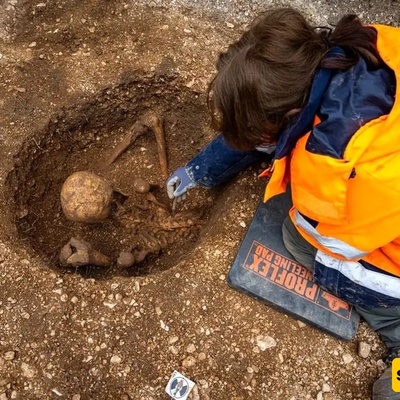
SAEDNEWS: In 1993, a tomb was uncovered in Siberia’s Ukok Plateau, revealing the body of a noblewoman dressed in luxurious silk and wool garments.
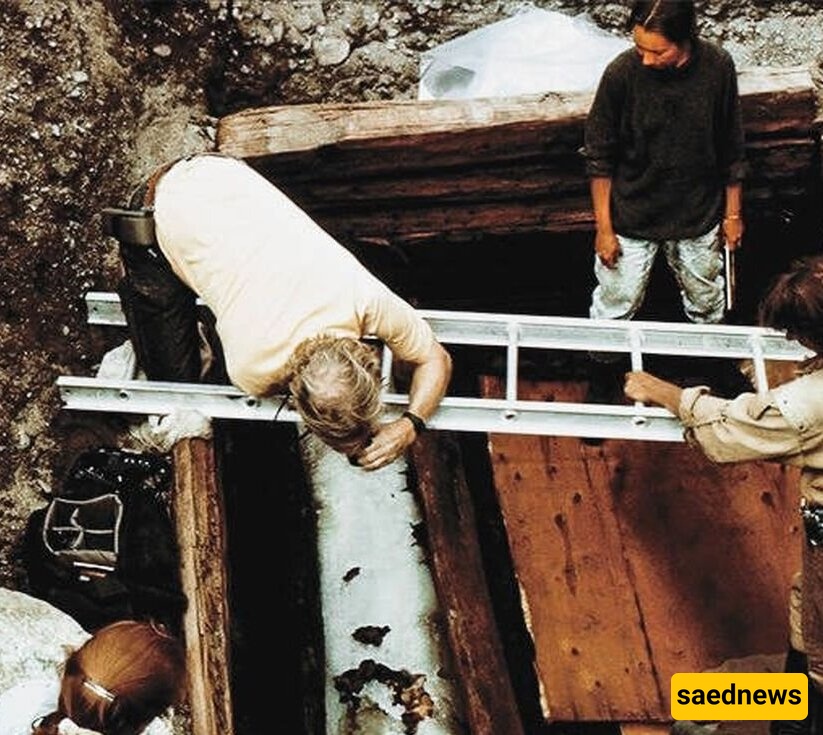
According to Saed News’ social affairs service, the Siberian Ice Maiden was likely a prominent figure in her time. She was a member of the ancient Pazyryk community and the broader Scythian culture, living in the 5th century BCE.
Her mummified tomb was discovered in 1993 in Russia’s Altai Republic. The Ice Maiden’s body rested in a large pinewood coffin, accompanied by six sacrificed horses buried nearby.
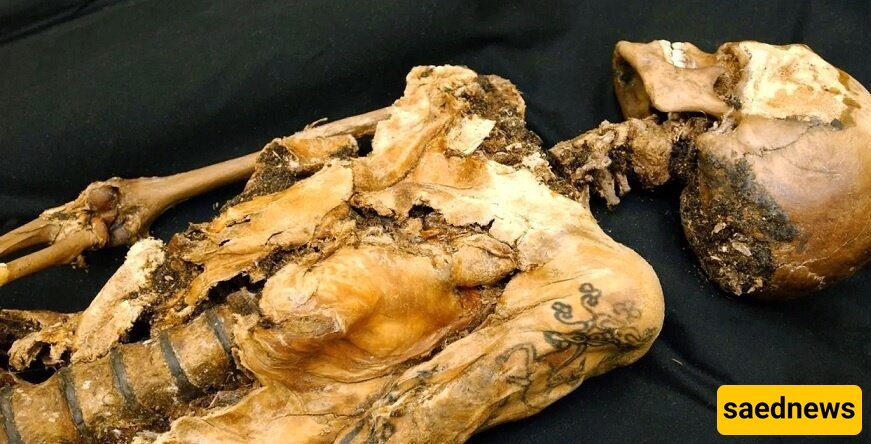
Known also as the “Princess of Ukok,” research suggests she was about 25 years old at the time of her death. Her body had been naturally mummified using peat, with her brain and eyes removed and replaced with animal fur. Yet the true preservative was the extreme cold of the permafrost soil.
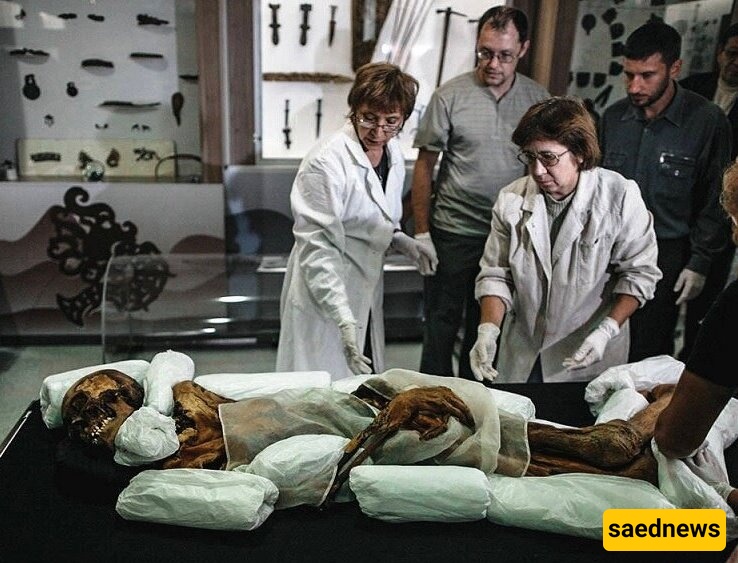
The Ice Maiden was wrapped in a roughly one-meter-long felt covering, embroidered with gold plates. Her clothing, made of camel wool, featured rich red, yellow, and brown hues.
Perhaps the most astonishing detail was her tattoos, depicting a stag’s head, a spotted leopard, a leaping deer, and the beak and horns of a mythical creature resembling a griffin. The horns’ twisting patterns created intricate, flower-like designs.

A darker aspect of the tomb also emerged. In addition to the horses, a man was buried at the head of her grave, apparently sacrificed—likely a warrior intended to guard the princess in the afterlife. He had been killed by a blow to the back of the head, and like the princess, his body was mummified and tattooed.

The discovery of the Princess of Ukok revealed unexpected insights into Pazyryk culture, which flourished from the 6th to 3rd centuries BCE. For instance, her silk cloak was made from a fabric found only in India, indicating that, some 2,400 years ago, a long trade route connected India with northern Russia.