SAEDNEWS: The memoirs of Naser al-Din Shah Qajar offer a vivid, firsthand look at the political, social, and cultural life of Qajar-era Iran. They are valued both for their historical insight and their distinctive literary style.
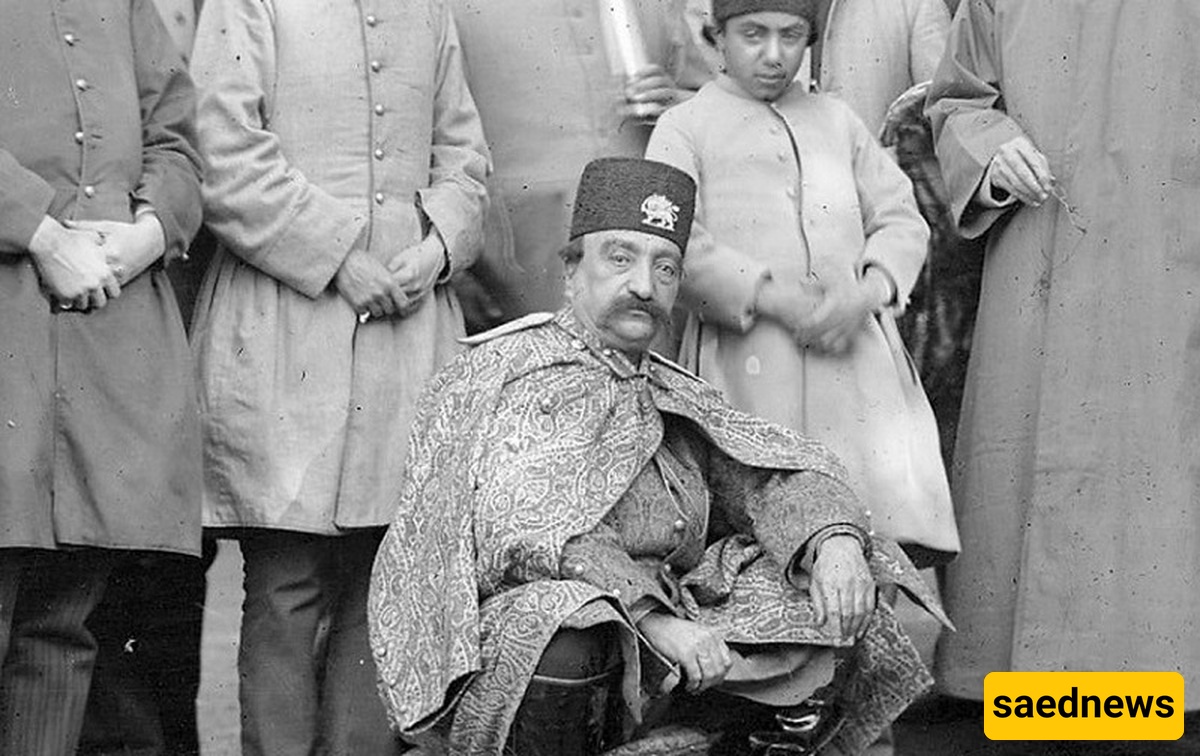
According to Saed News’ Social Affairs Service, Naser al-Din Shah Qajar recorded in his diary on Monday, 3 Shawwal 1287 AH (5 Dey 1249 / December 26, 1870):
“Today we were to go to Qazanieh, four and a half farsakhs away—this is the distance over water; by land it should be slightly shorter. In the morning, we boarded a boat and went to the large ship. Pasha, Moshir al-Dowleh, and the usual attendants were present, except Mohammad Taqi Khan Ghoshad, along with Siyachi, Aghavijeh, Mirza Abdullah, Majd al-Dowleh, Moayyer al-Mamalek, his son Ali Reza Khan, and others.
We sat down and had lunch.
By five past the hour of the afternoon division, we set off. About two and a half hours before sunset, we reached our destination. On the right side, the land today was more cultivated; on the left, it was somewhat settled. First, we arrived at Mansuriyeh, a very prosperous village with extensive palm groves. Then came Sa‘diyeh, and finally our destination, Qazanieh. These settlements are not continuous; there is a village at roughly every farsakh.
In short, Erfanchi read the newspaper. We ate lunch heartily, thank God. Majd al-Dowleh recited a fine qasida, delivering it in an unusual tone. Moayyer and everyone else were present, and it caused much laughter. Upon reaching our quarters, the ship docked by the tent on the shore, and we disembarked. The shrine had not yet arrived.
We performed our prayers. Then, half an hour before sunset, we returned to the boat. Erfanchi, the chief photographer, Siyachi, and Hasan Qavvachi were with us. We crossed to the other side of the river and walked around a bit. We explored extensively opposite the camp, then returned to the boat and traveled upriver before coming back down. By then, the shrine had arrived. Water girls were walking along the banks, which caused some embarrassment. We moved the boat further downstream and passed under Ezat al-Dowleh’s tent. A Turkmen servant girl of Ezat al-Dowleh had come down from the carriage by the river to fetch water. When she saw us, she didn’t avert her eyes; we felt deeply embarrassed. Someone else by the river was engaged in an indecent act—we arrived mid-act. Everyone, soldiers included, was busy; we were extremely embarrassed and returned to our quarters.
Yesterday, Zaqi had fought with Taj al-Dowleh—Balandah had been an accomplice of Taj al-Dowleh. I chased Zaqi away. Yesterday, in the carriage, Turan Agha had quarreled with the daughter of Nadim al-Saltaneh.
Today, Ezat al-Dowleh’s child miscarried from Yahya Khan. One of the servants that Hajji Jaber had brought, whom I had named Sandal, was ill and passed away today.
At night, Anis al-Dowleh…
Bashi Gholambacheh had struck a servant child.
In Karbala today, Ajudanbashi Aliqoli Khan Afshar Urumi, who had been in service and had been granted leave to travel to Mecca, passed away—according to a telegram received recently in Ya‘qubiyeh.”