SAEDNEWS: The President said that understanding people’s real problems through closer contact in smaller communities helps solve issues more effectively, noting that public support is the foundation of security.
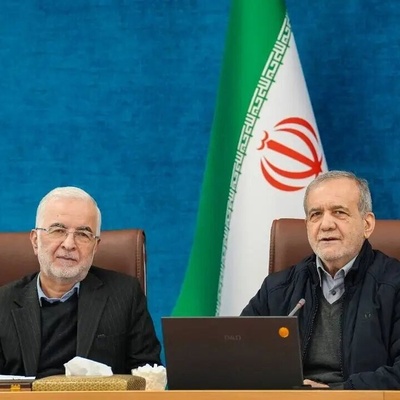
According to the Political Service of Saed News, quoting the Presidency Information Base, the nationwide meeting of governors was held this morning, Monday, 6 Bahman 1404 (January 26, 2026), with the presence of Masoud Pezeshkian, aiming to review the performance reports of governors in two areas: “Neighborhood-Based Management Plan” and “Goods Exchange from Border Provinces.”
In this meeting, the examination of the causes of recent incidents, the role and performance of governorates in prevention, reducing factors causing unrest, and the approach to dealing with recent events were other main topics of discussion between the President and the country’s governors.
During the session, Pezeshkian, while listening to reports presented by governors on the three mentioned areas, assessed the progress of plan implementation and provided necessary guidance. The President also issued instructions and directives to accelerate execution and remove obstacles and challenges ahead.
In the first part of his speech, the President emphasized the “neighborhood-based” approach, stating: Neighborhood-based management means simultaneously achieving security, public participation, and addressing the pains and hardships of society. If we are genuinely concerned about people’s issues, we will find solutions. We are responsible and possess the authority and power to solve people’s problems.
Pezeshkian noted that some security issues stem from weak effective communication with the people and added: Neighborhood-based management is important because it includes all social groups—from artists and athletes to other professions and social groups—but these capacities have not been properly recognized.
The President stressed the necessity of close communication with the people, stating: If we see people within smaller communities such as neighborhoods and have a real understanding of their problems, we can better solve issues. Security’s core is the people, and as long as the people are with us, resolving problems will be possible. Being with the people also means involving them and giving them a role in managing affairs.
Pezeshkian emphasized: The reason people’s demands are sometimes heard in the streets is that responsible authorities did not listen to the people in time and did not provide necessary warnings promptly. Our emphasis on neighborhood-based management is precisely for this reason—that to solve any issue, we must start with and through the people.
The President also noted: In the neighborhood-based approach, all social groups must be considered, not just a specific group or class. The more comprehensive our perspective, the deeper our awareness and the higher the quality of service delivery. Even those with critical views must be recognized, and improper behavior should not prevent us from treating them fairly.
Pezeshkian, referring to the role of education in promoting public culture, said: Paying attention to schools and education concerns all families and represents a significant capacity for effective communication and two-way interaction with the people. If students’ culture and education are corrected, many social harms will be eliminated at their root. Education is a crucial and strategic institution for the country, and proper management across all sectors begins with schools and the education system.
In the second part, the President emphasized the exchange of goods from border provinces and governors’ authority in importing essential goods: Administrative bureaucracy obstacles must be removed from the path of serving the people. It is impossible for the people to face a problem and for us not to act to solve it.
The President also addressed energy supply, stating: This year’s situation is significantly better than last year’s, but the government strongly emphasizes saving energy, developing renewable energies, and expanding the use of solar panels, in which neighborhood-based management plays an important role in fostering the culture.
He referred to a government plan for replacing water cooler motors, saying: Implementing this plan could save up to 30% in electricity and 20% in water consumption. With around 20 million water coolers in the country, this could save approximately 8,000 megawatts of electricity, and governors must prioritize this issue.
Pezeshkian also called for faster provincial implementation of solar panel projects, stressing: Without water and electricity, production is meaningless, and managing this sector is vital.
The President continued, noting the unbalanced development of cities and provinces and the expansion of informal settlements as significant factors in energy imbalance, stating: Governors must prepare and present a practical map for balanced provincial development.
He emphasized the need for interdepartmental coordination among national managers: If governors apply their full efforts, many problems can be easily solved. Coordination, a comprehensive perspective, and avoiding duplication are crucial in this path.
Pezeshkian also addressed concerns about changes or transfers of managers: A year and a half has been spent coordinating with economic ministers to implement economic plans, and any managerial changes will waste time. Weaknesses must be corrected and strengthened, not merely eliminated. Fortunately, high coordination exists between the government and ministers in planning and implementation.
In the third part of his speech, taking a diagnostic look at the January events, the President emphasized public satisfaction as the fundamental principle in all minor and major planning and decision-making, stating: If people are dissatisfied, it indicates shortcomings in our service delivery—in healthcare, medicine provision, public administration interaction, or handling administrative violations. We must accept that in some cases, we have not served properly.
Pezeshkian also referred to the performance of provincial security councils, stating: Greater precision and vigilance are required in ensuring security and monitoring enemy activities.
The President added: Expert teams are reviewing the causes of recent incidents, but foreign interference certainly played a significant role. Violent actions against security forces, burning ambulances, relief centers, markets, and mosques indicate a deliberate plot to create internal conflict and weaken the country.
Pezeshkian announced that universities are activated to review the recent events: Following instructions to the Minister of Science, universities are tasked with identifying gaps and deficiencies, and governorates must pursue evidence-based reforms in their provinces.
The President emphasized: One of the main areas the enemy has targeted to harm the country is people’s livelihoods. If public satisfaction in this area is achieved, the enemy’s objectives will fail.
Pezeshkian stressed: The government bears primary responsibility for responding to young people’s demands, ensuring public health, livelihood, and housing. While some groups view issues only through a politically favorable lens, if shortcomings exist, we must take responsibility. We are here to serve the people, not confront them, and we must also correct ourselves.
The President identified four pillars of government programs: “livelihood, education, health, and housing,” urging governors to prioritize these areas seriously.
Pezeshkian, referring to the reform of the subsidy system, said: The government’s major economic plan does not mean eliminating subsidies; it means transferring subsidies from the start to the end of the chain, creating justice, and removing rent-seeking, corruption, and discrimination so that resources are fairly accessible to all people.
He emphasized: Alongside calculating inflation, the increase in purchasing power and citizens’ access to ration cards must also be accurately measured and announced.
The President also strongly criticized the hypocritical approach of the U.S. and Europe regarding the country’s recent events under the guise of human rights, stating: These countries, while posing as defenders of human rights, supported the most heinous and inhumane crimes by the Zionist regime in Gaza and officially supported rioters and violent acts in our country. They are not concerned about Iranian lives; their primary aim is the oil, gas, resources, and wealth of our people.
Finally, Pezeshkian stressed: With reliance on God and focusing on serving the people, we will overcome this period, and if public satisfaction is the main axis of our actions, no power can remove them from the scene.