SAEDNEWS: As U.S. threats mount, Iran’s allies from Iraq to Yemen warn that any new strike on Tehran would trigger a region-wide war Washington cannot contain.
According to SAEDNEWS, As U.S. naval deployments in the Persian Gulf intensify and Washington hints at the possibility of renewed aggression, a constellation of Iran’s allied forces across West Asia are issuing coordinated warnings that a second war against the country would ignite a region-wide confrontation — one that neither the United States nor Israel, they say, is prepared to contain.
In a coordinated series of statements released over the past 48 hours, Iran’s regional allies in Iraq, Lebanon, and Yemen have declared that a U.S. attack on Iranian soil will trigger a “comprehensive war” across the Levant and the Arabian Peninsula. In their statements, the Resistance groups said they would turn American bases into “graveyards” and shipping lanes into “no-go” zones.
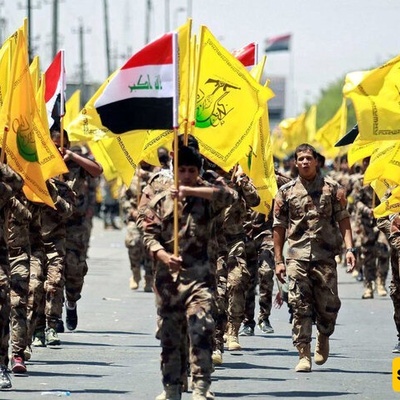
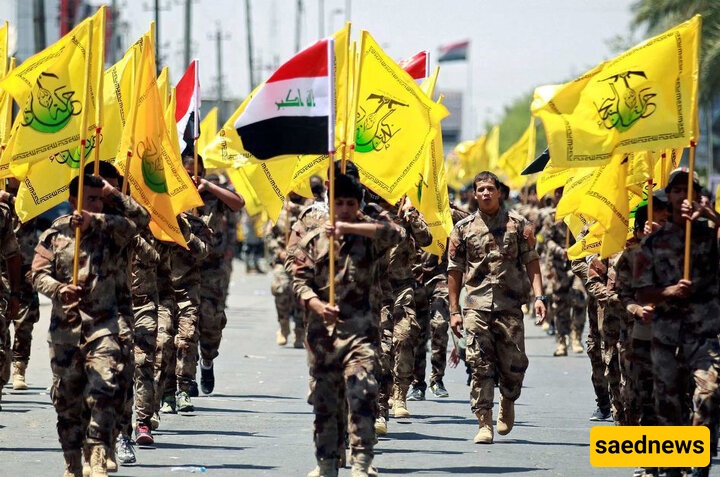
The most visceral warning came from Iraq, where the powerful paramilitary group Kataib Hezbollah signalled a readiness to escalate beyond conventional warfare. In a statement issued Sunday, the group’s Secretary General ridiculed the American military buildup, warning the Trump administration that a new invasion would not be a “picnic.”
“Today, the powers of error—Zionists and tyrants—have gathered to force Iran’s submission,” the statement read. “We warn the enemies that war against the Islamic Republic… will be one where you taste various forms of sudden and bitter death, leaving no trace of you in our region.”
The group, which maintains a vast network of hardened fighters across Iraq and Syria, issued a directive to its members to prepare for “one of two goods: victory or martyrdom.”
Kataib Hezbollah operates in close proximity to the remaining U.S. troops in Iraq and eastern Syria.
In Lebanon, Hezbollah Secretary General Sheikh Naim Qassem said the movement will not sit out a second round of American aggression against Iran. In a televised speech, Sheikh Qassem articulated a theological and strategic bond with Tehran that supersedes national borders. “If America and Israel start a war against Iran, we will not be neutral,” he declared. “We view a threat against Iran as a threat against ourselves.”
The Hezbollah chief said the defense of Iran is a religious obligation because Leader of the Islamic Revolution Ayatollah Seyyed Ali Khamenei is the “deputy” of the 12th Shia Imam.
Hezbollah possesses a vast arsenal of precision-guided missiles capable of overwhelming Israel’s air-defense systems. During Hezbollah’s attacks in 2023 and 2024, tens of thousands of Israeli settlers fled the northern occupied territories, many of whom have yet to return despite more than a year without strikes. In a renewed conflict, Hezbollah could expand its campaign to target Israel’s critical infrastructure — including power grids, ports, and military installations — potentially paralyzing the United States’ primary regional ally.
While forces in Iraq and Lebanon are positioned to strike U.S. troops and Israel directly, Iran’s other powerful ally, Yemen, holds leverage over one of the most critical chokepoints in the global economy.
After Iranian Parliament Speaker Mohammad Bagher Ghalibaf warned that Tehran could close the Strait of Hormuz — through which roughly a fifth of the world’s oil supply passes — Yemen’s Ansarallah movement announced on Monday that, in the event of a U.S. attack on Iran, it would “sink all U.S. fleets and vessels in the Red Sea.”
Ansarallah had previously targeted Israeli-owned or Israel-bound vessels for several months in support of Palestinians in Gaza. According to Hebrew-language media reports, the campaign effectively emptied the Israeli port of Eilat. The United States intervened to halt the Yemeni attacks but later sought a ceasefire after Ansarallah began targeting American vessels as well.
The combined closure of the Strait of Hormuz and the militarization of the Red Sea would trigger an immediate, catastrophic spike in global oil prices, potentially plunging the Western economies into a recession.
The United States and Israel launched a bombing campaign against Iran on June 13, 2025, a campaign that analysts said was aimed at toppling the Islamic Republic. Iran, however, swiftly replaced the military commanders assassinated in the opening hours of the war and went on to carry out at least 21 waves of missile and drone strikes against the occupied territories, leaving widespread destruction across Israeli cities. Tehran also struck a U.S. military base in Qatar, the largest American installation in the region.
None of Iran’s regional allies entered the conflict last year, yet after 12 days of fighting, the United States and Israel were forced to seek a ceasefire. Two days after the war ended, Iranian officials announced that the country would begin regrouping and replenishing its capabilities, warning that another attack could come at any moment.
Washington and Tel Aviv appeared to be waiting for the riots that convulsed Iran earlier this month to pave the way for a second wave of aggression. The unrest, involving armed individuals, exploited largely peaceful protests over economic hardship caused by years of Western sanctions — sanctions that U.S. Treasury Secretary Scott Bessent recently acknowledged were designed to drive Iranians into the streets and generate nationwide instability.
Despite the deaths of more than 3,100 people — including roughly 2,500 ordinary civilians and members of the security forces — the unrest subsided in less than a week.