SAEDNEWS: Experts Say Fossils Unearthed by an 11-Year-Old on a Somerset Beach May Belong to the Largest Marine Reptile Ever Known
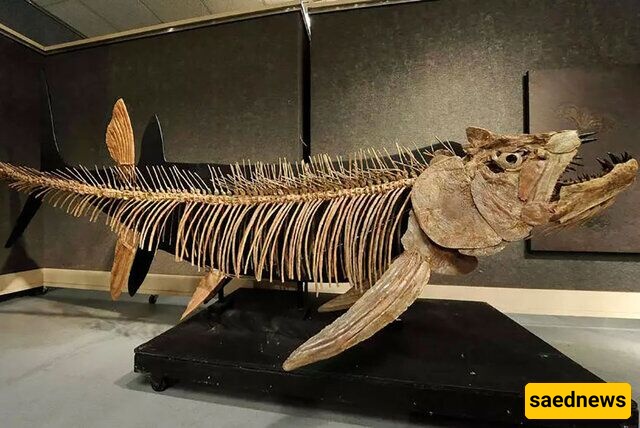
According to Saed News’ society desk, citing Faradid, the newly uncovered fossil is believed to belong to a type of ichthyosaur — a marine reptile thought to have lived roughly 202 million years ago, in the late Triassic seas.
Researchers have named the species Ichthyotitan severnensis, meaning “the giant fish-lizard of the Severn.”
Dr. Dean Lomax, a paleontologist at the University of Bristol and one of the study’s authors, said: “This giant is likely the largest marine reptile formally described to date. Comparing this fossil with other ichthyosaur remains suggests it was about 25 meters long — nearly the size of a blue whale.”
He added that caution is necessary when making such estimates, as scientists are working with fragments of enormous bones. Still, simple scaling methods are commonly used when comparable material is scarce.
The fossil also appears to show that the creature was still growing at the time of its death.
Lomax explained: “We believe these ichthyosaurs were the last survivors of a family known as the Shastasauridae, which went extinct during the global mass extinction event at the end of the Triassic.”
Lomax and colleagues reported in PLOS ONE how the first jaw fragments were discovered by Justin Reynolds and his daughter Ruby — coauthors of the paper — on the Blue Anchor shoreline in May 2020, when Ruby was 11 years old.
After contacting Lomax, the Reynolds family joined him in searching for more pieces. Among those who helped was Paul de la Salle, an expert from the Jurassic Coast Marine Life Museum in Dorset, who in 2016 had discovered a jawbone from a new ichthyosaur species on a Somerset beach — a specimen later studied by Lomax’s team.
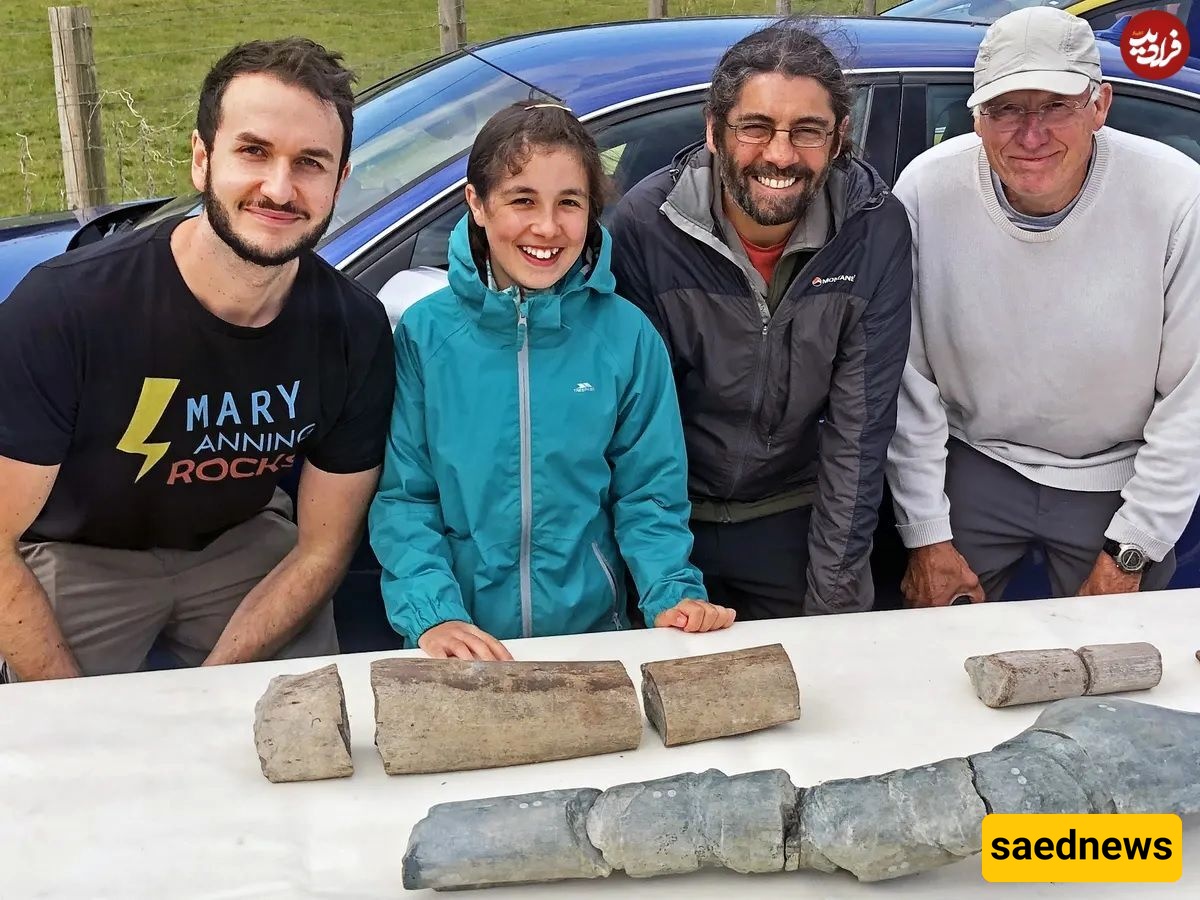
Once the new fossil fragments were assembled, it became clear they belonged to the same species de la Salle had found.
In both cases, the fossilized bone is a long, curved structure located above and behind the lower jaw.
Lomax noted: “When my team described the first specimen in 2018, it had unusual features suggesting it might be something new. But given how incomplete and weathered it was, we held off on naming it.”
“Now, having two identical, uniquely featured bones from the same geological time interval supports our earlier suspicion — especially considering that these remains appear around 13 million years after the last known relatives with formal names.”
Dr. Nick Fraser, a paleontologist at National Museums Scotland who was not involved in the study, said the identification of the fossils as part of an ichthyosaur’s lower jaw is highly convincing. “This discovery shows the animal that once owned these bones was gigantic — perhaps among the largest marine reptiles of all time.”
However, Fraser remains cautious about naming it a new species: “In my view, it’s too incomplete for that.”