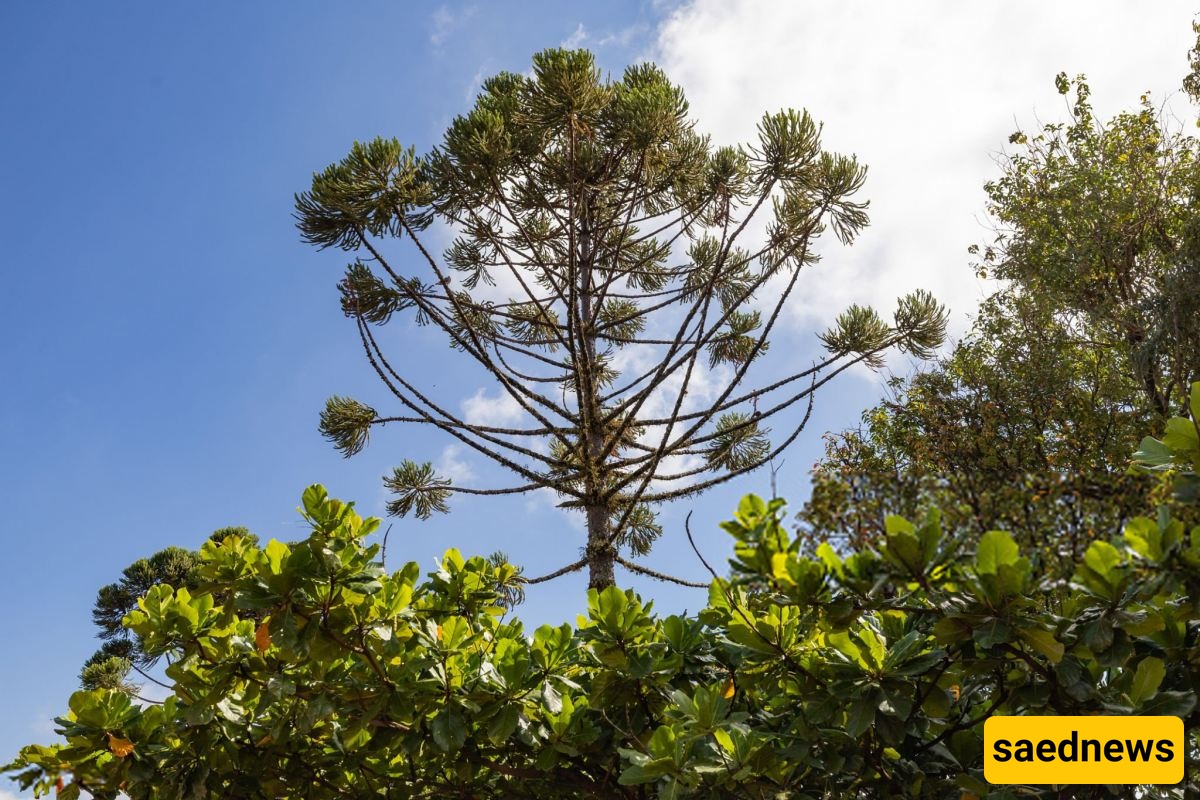
SAEDNEWS: The Araucaria, scientifically known as Araucaria heterophylla and commonly called the Norfolk Island pine, is one of the most popular houseplants. Its distinctive geometric shape and symmetrical, layered branches add a unique touch to indoor spaces.
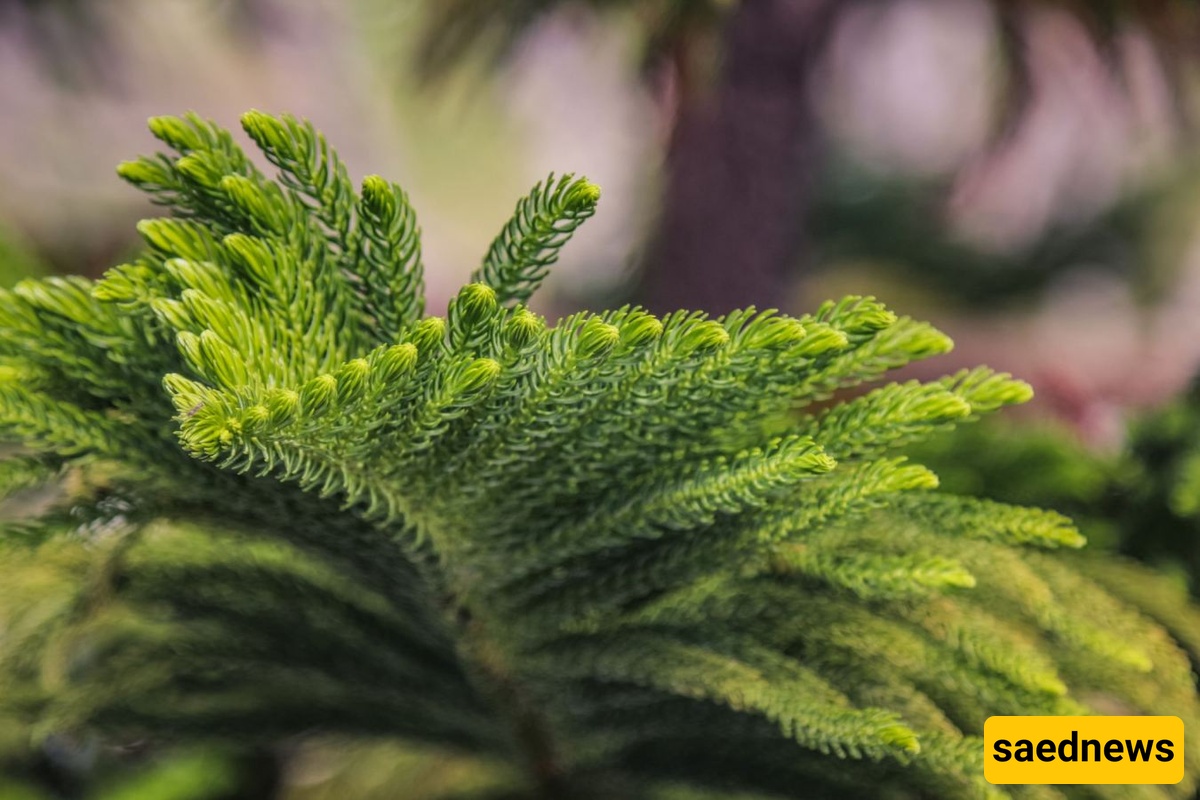
According to Saednews, Araucaria is an evergreen conifer belonging to the Araucariaceae family. Contrary to popular belief, it is not a member of the true pine family. The plant is native to Norfolk Island in the Pacific Ocean, where the climate is mild, humid, and influenced by sea breezes. In its natural habitat, Araucaria can grow several dozen meters tall, developing an umbrella-shaped crown with symmetrical, horizontal branches. This distinctive, tiered growth pattern also makes it an attractive ornamental plant when grown in pots.
Indoors, Araucaria rarely grows taller than two to three meters, and its growth rate is relatively slow. These characteristics make it suitable for smaller living spaces, provided its environmental needs are met. Its soft, needle-like foliage consists of flexible, pointed leaves rather than true pine needles, giving the branches a dense, lush appearance.
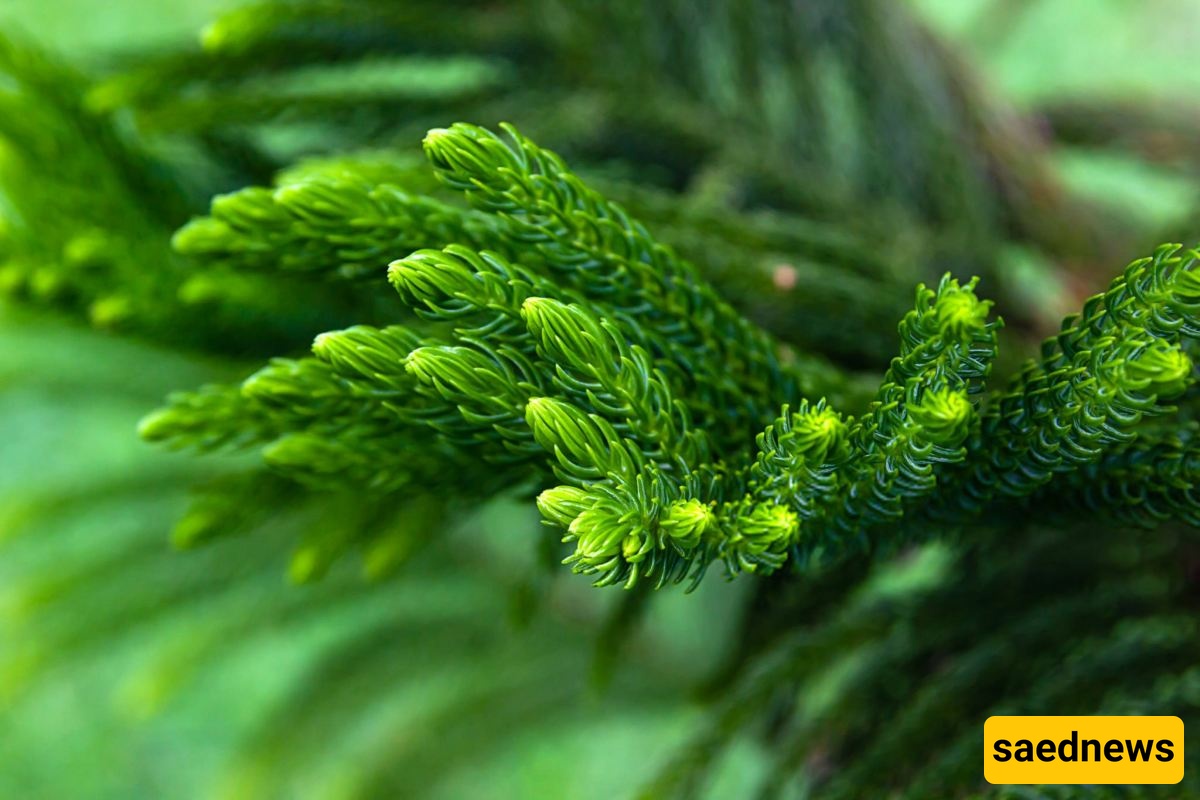
Araucaria thrives in bright, indirect light. The best location is near an east- or north-facing window where the plant receives plenty of natural light without intense direct sunlight. Strong midday sun can scorch the foliage and cause brown patches on the leaves. Conversely, placing the plant in a dark corner can lead to faded foliage, lower leaf loss, and uneven branch growth.
If your home does not receive enough natural light, consider using a grow light. Rotate the pot slightly every few weeks so that all sides of the plant receive even light, helping it maintain its characteristic tiered shape. Avoid moving the plant abruptly from a low-light environment to a much brighter location, as sudden changes can cause stress.
The ideal temperature for Araucaria is between 16°C and 24°C. It generally tolerates cool to moderate conditions better than excessive heat. Temperatures above 27°C, particularly in dry environments, increase the risk of yellowing and leaf drop.
Avoid placing the pot directly in the airflow of an air conditioner or near radiators, heaters, or other sources of hot, dry air. These conditions are among the most common causes of brown, dry leaf tips.
During winter, the plant can generally tolerate temperatures down to approximately 10°C, but it is best to avoid colder conditions. If you keep it on a balcony or terrace, bring it indoors before the weather becomes too cold.
Araucaria prefers relative humidity levels of around 50–60%. Since indoor air often becomes dry during summer and especially in winter when heating systems are in use, maintaining adequate humidity is essential for healthy growth.
Effective ways to increase humidity include:
Placing the pot on a tray filled with pebbles and water, ensuring that the bottom of the pot does not touch the water.
Using a cool-mist humidifier near the plant.
Lightly misting the foliage in the morning with room-temperature, low-mineral water.
Grouping several houseplants together to create a more humid microclimate.
Avoid misting during the hottest part of the day or in poorly ventilated spaces, as water that remains on the foliage for extended periods may encourage fungal problems.
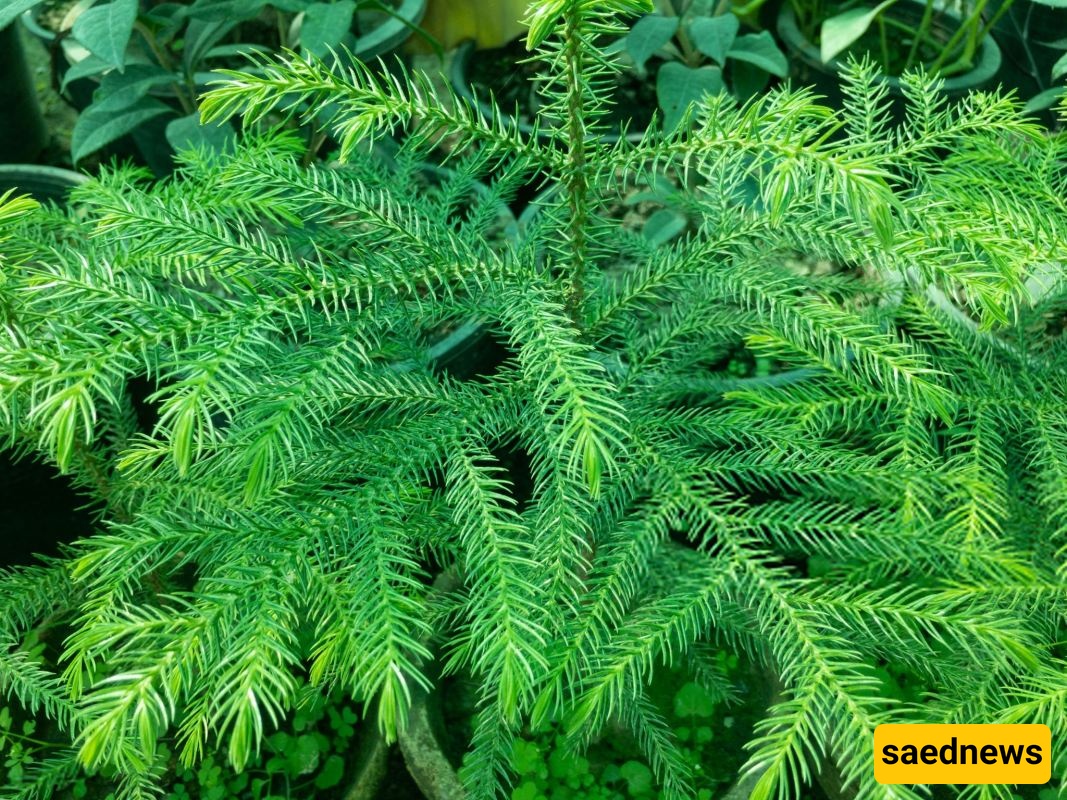
Watering is one of the most important and sensitive aspects of Araucaria care. The soil should remain slightly moist but should never become waterlogged.
The best way to determine when to water is to check the soil with your finger or a wooden stick. If the top 2–3 cm of soil feels dry, it is usually time to water. During the growing season, in spring and summer, watering every five to seven days may be sufficient. In winter, watering every 10–14 days is often adequate.
Keep the following watering guidelines in mind:
Use low-mineral water at room temperature, as cold water may stress the roots.
Empty excess water from the saucer within 30 minutes of watering.
Never allow the soil to remain completely dry for extended periods, as severe dryness can cause leaf drop and brown needle tips.
When in doubt, it is generally safer to water less frequently than to overwater. Root rot in Araucaria can be difficult to reverse.
Always adjust your watering schedule according to the plant's environment, pot size, and soil moisture rather than relying on a fixed timetable.
Araucaria requires a lightweight, well-draining, slightly acidic growing medium with a pH of approximately 5.5–6.5. A mixture of leaf compost, peat moss, and perlite or coarse sand provides suitable growing conditions.
Good drainage is essential, so always use a pot with drainage holes.
Fertilize the plant during its active growing season. Apply a balanced liquid fertilizer or one formulated for foliage plants at half the recommended strength every three to four weeks in spring and summer. In autumn and winter, reduce feeding to once every six to eight weeks or suspend it altogether.
Excessive fertilization, particularly with nitrogen-rich products, can produce weak growth and make the plant more susceptible to stress.
Young Araucaria plants generally need repotting every one to two years, while mature plants may need it every two to three years. Early spring is the best time for repotting.
Choose a new pot that is only one size larger than the previous one. An excessively large pot retains more moisture, increasing the risk of root rot.
During repotting, inspect the roots carefully and gently remove any blackened or rotten sections using sterilized scissors.
Araucaria does not require regular pruning, but removing dead, broken, or diseased branches can improve its appearance and overall health.
The most important rule is never cut off the main growing tip at the top of the plant. Araucaria's upward growth depends on this terminal bud, and removing it can disrupt vertical growth and permanently alter its characteristic tiered form.
If a branch becomes excessively long, it may be shortened near the trunk, but keep in mind that Araucaria recovers slowly from heavy pruning.
Propagating Araucaria at home can be challenging. The primary method is seed propagation, although achieving good results indoors can be difficult.
Stem cuttings are another possibility, but plants grown from cuttings may lose their natural symmetrical, tiered shape and develop irregular growth.
For most home gardeners, purchasing a healthy young plant is a more practical option than attempting propagation.
Lower leaves dropping: Some loss of older lower foliage is natural as the plant grows taller. However, sudden or extensive leaf drop may indicate watering problems, insufficient light, or abrupt temperature changes.
Dry, brown leaf tips: These are commonly caused by low humidity, inconsistent watering, or sensitivity to minerals in tap water. Increasing humidity, maintaining consistent soil moisture, and using filtered or low-mineral water may help.
Yellowing leaves: Yellow foliage may indicate overwatering, heavy soil, or nutrient deficiencies. Check the pot's drainage and adjust your watering routine before adding fertilizer.
Drooping branches: Slight drooping of lower branches may occur naturally in mature plants. Sudden, widespread drooping, however, may signal severe dehydration or root damage.
Root rot: Symptoms include unpleasant-smelling soil, blackened roots, and yellowing foliage. Remove the plant from its pot, trim away damaged roots, and repot it in fresh, well-draining soil. Correct the underlying watering or drainage problem to prevent recurrence.
Araucaria can be vulnerable to spider mites in dry indoor environments. These pests can be identified by fine webbing beneath the foliage and tiny yellow speckles on the leaves.
Increasing humidity, washing the foliage with water, and applying an appropriate miticide when necessary can help control infestations.
Other potential pests include scale insects, mealybugs, and aphids. Depending on the infestation, these may be managed with insecticidal soap or by carefully removing the pests with a cotton swab. If using any pesticide, always follow the product label and observe the recommended safety precautions.
Choose a plant with symmetrical branches, vibrant green foliage, and a trunk free from visible damage. Avoid specimens with extensively yellowed or dried lower foliage or soil that has an unpleasant odor, as these may indicate poor growing conditions or root problems.
Check that the plant has been grown in an adequately lit environment. Specimens raised in dark conditions may experience significant leaf drop after being moved into a home.
Araucaria is generally considered non-toxic to humans and pets, although it is still advisable to keep the plant out of reach of young children and pets to prevent damage to the foliage.
The Norfolk Island pine is an elegant, slow-growing houseplant that can bring a distinctive evergreen appearance to indoor spaces. Its success depends primarily on bright, indirect light, moderate temperatures, adequate humidity, and careful watering.
By providing well-draining soil, avoiding excessive heat and moisture, and protecting its main growing tip, you can help your Araucaria maintain its symmetrical shape and healthy green foliage for years to come.