SAEDNEWS: In the following report, we want to share several interesting facts with you that can even influence those who think they already know everything.

According to the Saed News website and Wikipedia, the largest online encyclopedia, there are more than 6,035,554 articles in English alone, and this number is increasing every day. These articles contain a vast amount of information on various topics.
According to a legend, if you click the first link in any English Wikipedia article (excluding italicized links and those inside parentheses) and continue doing so, you will eventually reach the “Philosophy” page. In fact, there is even a Wikipedia page titled “Getting to Philosophy.” According to this page, this phenomenon applies to 97% of English Wikipedia articles. It was discovered in 2008.
Although nothing can replace Wikipedia, here are some interesting facts that may surprise even those who think they know everything. These facts show that we truly know very little about the world.
The growth of a lion’s mane is directly related to its testosterone levels. That is why female lions and castrated male lions do not have manes. However, there are exceptions: a few years ago in a national park in Botswana, five lionesses were observed that clearly had manes, although their bodies were not as large as male lions.

The longest word in the English language consists of 189,819 letters. It is the chemical name of titin, the largest known protein. Pronouncing the full word would take nearly three hours. However, some linguists argue that this name cannot truly be considered an English word.
Research suggests that the introduction of soft foods into the human diet has influenced the way we speak. With the addition of plant-based foods, our teeth and jaws changed, making it easier to pronounce sounds like “f” and “v.”
The LEGO company has a secret archive where it stores copies of every LEGO set ever produced.
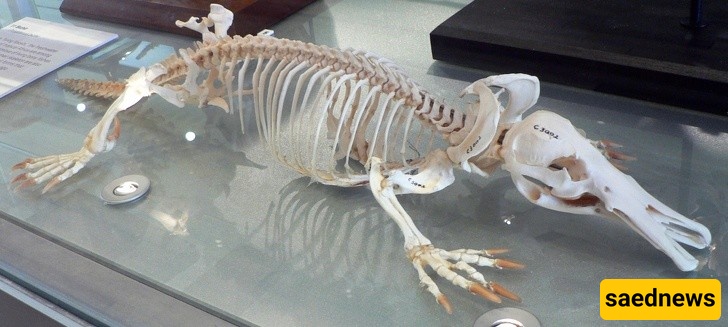
The platypus is a truly unusual animal. It lays eggs, but its young feed on milk. Platypuses also do not have stomachs. Studies show that during evolution, they lost most genes related to stomach function.
A study by Czech and German scientists examined 70 dogs of different breeds, sizes, and ages. It found that dogs tend to urinate and defecate while aligning their bodies along the north–south magnetic axis, but only when Earth’s magnetic field is stable. When it changes, dogs adjust accordingly.
The purring sound of cats varies depending on their needs. Research shows that when hungry, cats produce sounds similar to a kitten’s meow or a human baby’s cry.
No one truly knows the correct pronunciation of William Shakespeare’s name—not even Shakespeare himself. There are around 80 different recorded pronunciations in historical works.

Actors do not only wear costumes when performing; they also change their behavior and almost become someone else. Brain scans show that an actor’s brain activity differs when answering the same question depending on whether they are acting or being themselves.
When watching horror movies, the level of a protein responsible for blood clotting increases in the body.
The sound we hear when snapping fingers is actually the sound of the middle finger striking the palm.

The use of sunglasses dates back to 12th-century China. These early lenses were made of quartz. They not only protected the eyes from sunlight but were also used to hide emotions, especially by judges during interrogations.
The bricks used in building the Great Wall of China were made using a special mortar containing sticky rice. This mixture was also used in other major constructions during the Ming Dynasty.
Twins are theoretically not “siblings” in the traditional genetic sense, but due to DNA similarity, they are considered siblings because they share about 25% of their DNA, compared to about 12.5% for typical relatives.

The human heart beats approximately 2.5 billion times during a lifetime and pumps about 2,000 gallons of blood per day.