SAEDNEWS: How to Dry Persian Shallots at Home: Best Methods for Perfect Results
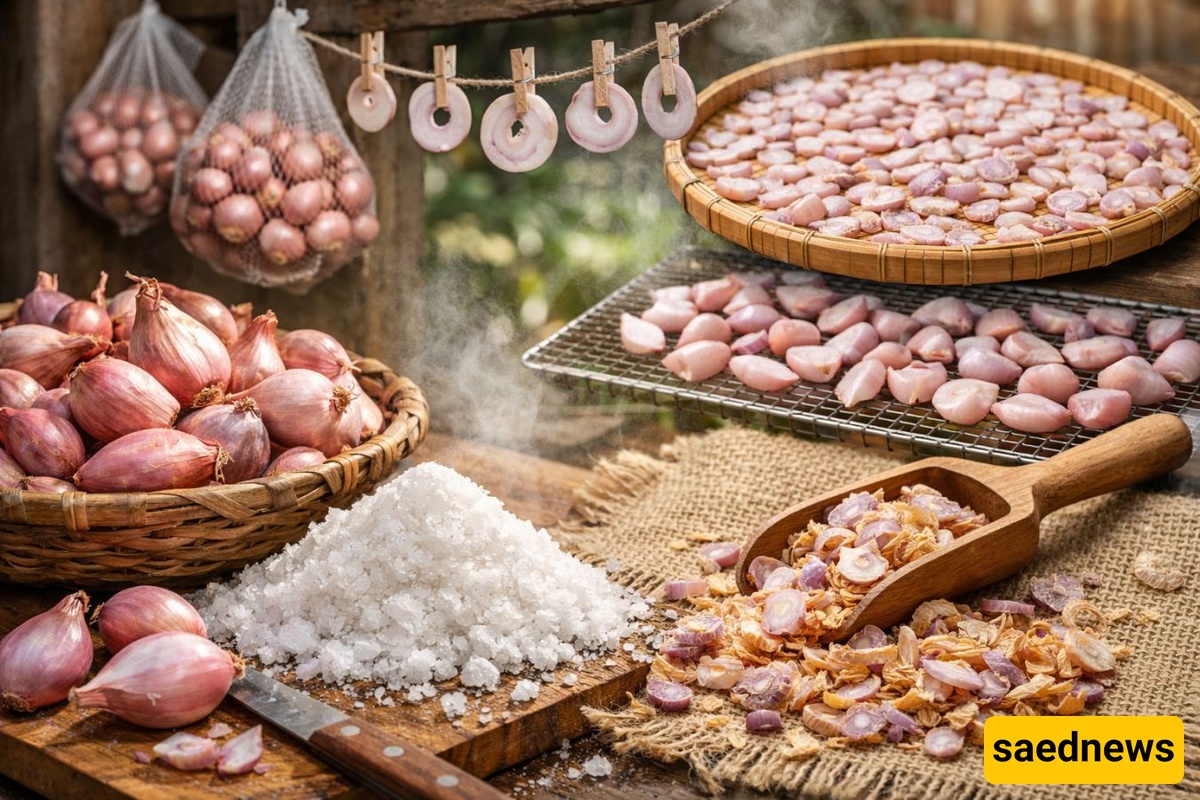
According to Saednews, Shallots are aromatic members of the onion family, valued for their distinctive fragrance and unique flavor. They hold a special place in Iranian cuisine and are commonly used to prepare seasonings such as shallot yogurt, pickles, borani, and homemade spice blends. Since fresh shallots are available only during certain times of the year, many people choose to dry them for long-term use.
Drying shallots at home is a simple, affordable way to extend their shelf life. By properly preparing the shallots, reducing their pungency, and following the correct drying techniques, you can make fragrant, flavorful dried shallots that retain their quality for later use.
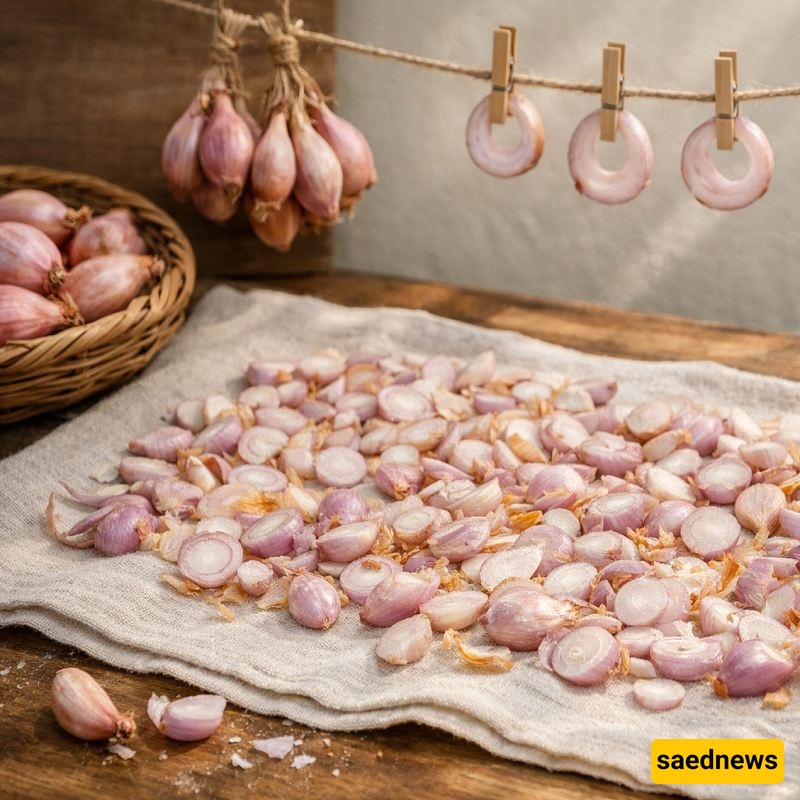
Selecting good-quality shallots is essential for achieving the best results. Choose fresh, firm shallots without spots, soft patches, or signs of damage. Small and medium-sized shallots often have a stronger aroma and develop a better texture after drying.
After purchasing the shallots, inspect them carefully and remove any damaged or spoiled pieces.
Remove the outer skin and rinse the shallots thoroughly under cold running water to eliminate dirt and other impurities.
Cut the cleaned shallots into thin, evenly sized slices. Avoid making the slices too thick, as this will increase drying time. Extremely thin slices, however, may become brittle after drying.
Uniform slices help ensure that all the pieces dry at approximately the same rate.
One of the most important steps in drying shallots is reducing their sharpness. Fresh shallots have a strong, pungent flavor, and drying them without preparation may leave them excessively intense when used in food.
To make their flavor milder:
Place the sliced shallots in a bowl of cold water.
Leave them to soak for approximately 24 hours.
Change the water every few hours.
The number of water changes needed depends on how pungent the shallots are. Taste a small piece during this process to ensure that their natural flavor and aroma are not completely lost.
Air-drying is a traditional and natural method that relies on good airflow.
Spread the drained shallot slices on a clean cloth or tray.
Place them in a dry, well-ventilated area.
Turn the slices occasionally to help moisture escape evenly.
This method may take several days, but it can help preserve the shallots' natural aroma. Protect the slices from insects, dust, and other sources of contamination.
To speed up the process, you can use a fan to improve air circulation. Moving air helps moisture evaporate more quickly and may reduce the risk of discoloration and mold caused by prolonged dampness.
Spread the slices in a single layer and ensure that air can circulate freely around them.
If you have a food dehydrator, it is a convenient option for drying shallots. It provides more consistent drying conditions and can produce good-quality dried shallots.
Follow the manufacturer's recommended temperature and drying time, and make sure the slices are thoroughly dry before storing them.
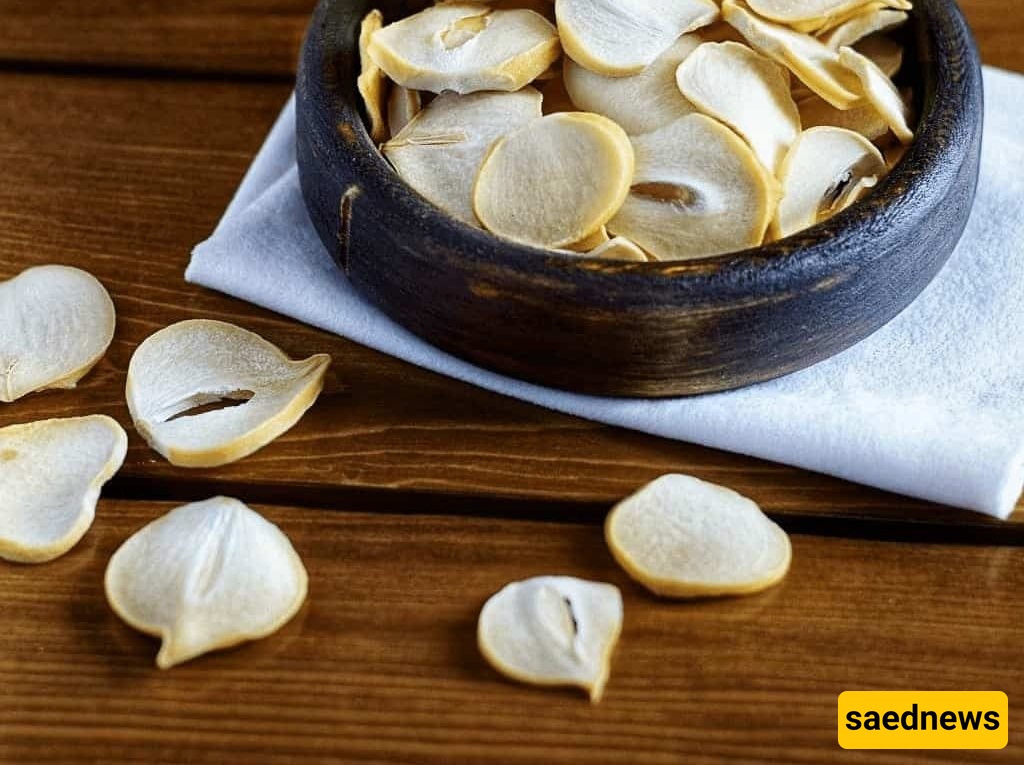
Some people prefer dried shallots with a white color and a lighter appearance. Traditionally, certain preparation methods, including the use of clear limewater, have been used to achieve this effect.
However, food-grade calcium hydroxide must be used correctly if this method is considered. Ordinary construction lime or an unidentified lime solution should never be used for food preparation. Thorough rinsing alone does not guarantee that an improperly prepared solution is safe.
This step is optional. You can make dried shallots at home without using limewater.
Proper storage helps preserve the aroma, flavor, and quality of dried shallots for longer.
Place completely dried shallots in an airtight glass or food-safe plastic container.
Store the container in a cool, dry place away from direct sunlight.
Keep the shallots away from moisture and humidity.
Allow the slices to cool completely before sealing them in the container.
Moisture can soften dried shallots and encourage mold growth. If condensation appears or you notice mold or an unusual smell, discard the affected product.
Dried shallots are versatile and can be used in a variety of dishes. Before using them, soak them in water until they soften and develop a texture similar to fresh shallots.
Popular uses include:
Making shallot yogurt, a popular Iranian condiment.
Preparing shallot pickles.
Adding them to different types of borani.
Mixing them into homemade spice blends.
Making shallot powder.
To make shallot powder, simply grind the fully dried shallots into a fine powder. It is best to prepare small quantities at a time because ground spices tend to lose their aroma more quickly than whole or sliced dried ingredients.
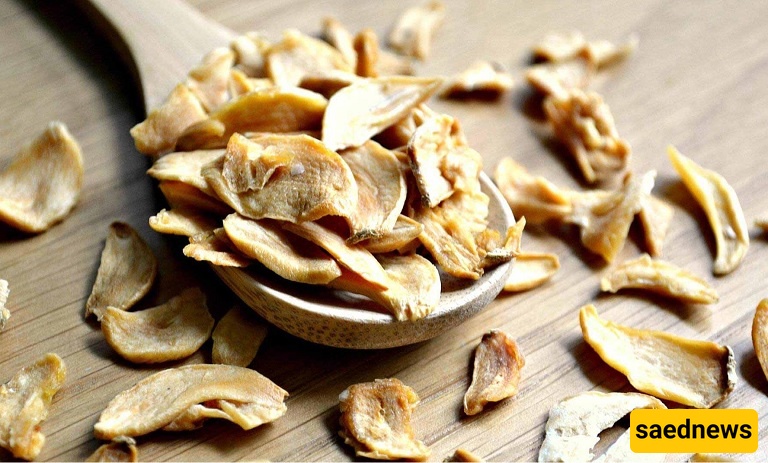
Shallots belong to the same botanical family as onions and garlic. They contain beneficial plant compounds, including antioxidants, that may contribute to overall health as part of a balanced diet.
Potential benefits associated with shallots include:
Supporting normal immune function.
Providing antioxidant compounds.
Contributing to a heart-healthy diet.
Supplying nutrients that support general skin and hair health.
Adding flavor to balanced, nutritious meals.
However, shallots should be consumed in moderation as part of a varied diet. They are a flavorful food ingredient, not a substitute for medical treatment.
Drying shallots is an excellent way to preserve this aromatic ingredient and enjoy its distinctive flavor throughout the year. By choosing fresh shallots, preparing them properly, reducing excessive pungency when desired, and using suitable drying and storage methods, you can make high-quality dried shallots at home.
Dried shallots are not only practical and economical but also a versatile addition to many dishes. Whether you use them in yogurt, pickles, traditional Iranian recipes, or homemade seasoning blends, keeping a supply of properly dried shallots on hand makes it easy to add their unique aroma and flavor to your cooking.