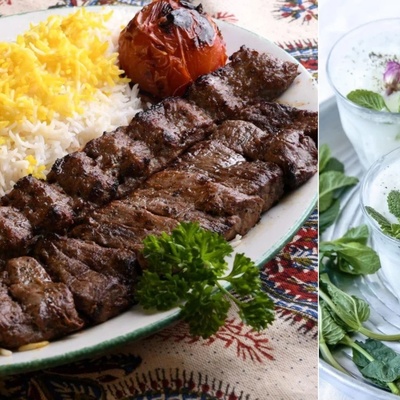
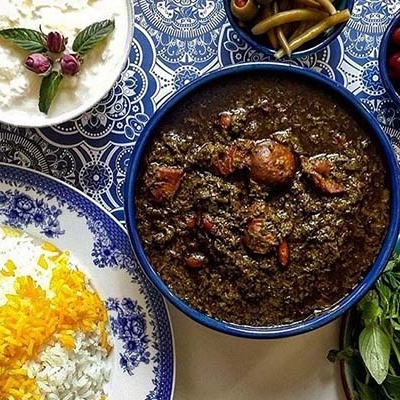
SAEDNEWS: Authentic Iranian stews are served with kateh or chelo rice. Made with vegetables, legumes, and fruits, they are a popular part of Iranian cuisine and are typically eaten two to three times a week.
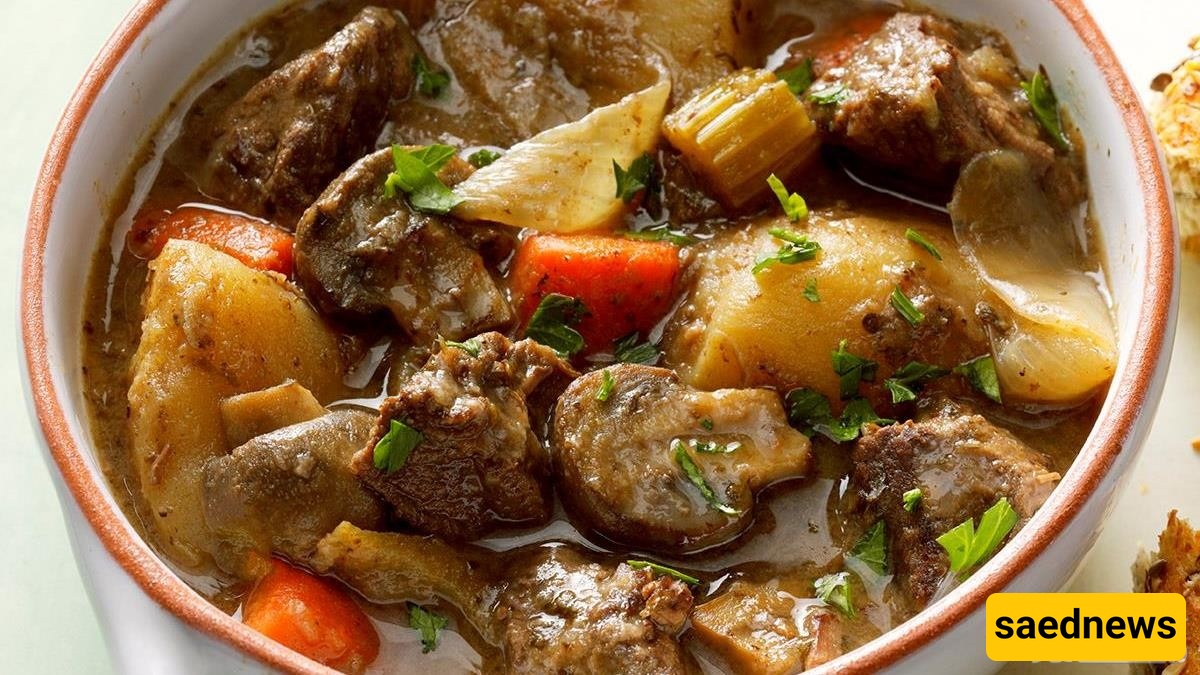
According to the Saed News Family Magazine Service, various types of stews are considered nutritious and wholesome meals in Iranian cuisine. They are prepared using a wide variety of vegetables and fruits, making them suitable for all seasons and commonly served at Iranian tables.
The pot used for cooking stews should be medium-sized, with a capacity of about 4–5 liters.
Add the stew’s water all at once. If the meat and ingredients are not fully cooked with the initial amount of water, add boiling water.
Once the stew starts boiling, reduce the heat so it cooks gently and thickens properly.
“Thickening” or “settling” the stew means that all ingredients are fully cooked, the liquid has reduced, and the stew has developed a slightly oily surface. A good stew should have little liquid and be well concentrated.
Avoid stirring the stew too much during cooking so the ingredients do not fall apart.
Sautéing meat in oil helps seal its surface, preventing it from losing flavor during cooking. For proper sautéing, the meat should be dry, not piled up in large amounts, and should not release water. If the quantity is large, fry it in a larger pot or in 2–3 batches. If it releases water during frying, reduce the heat until the moisture evaporates.
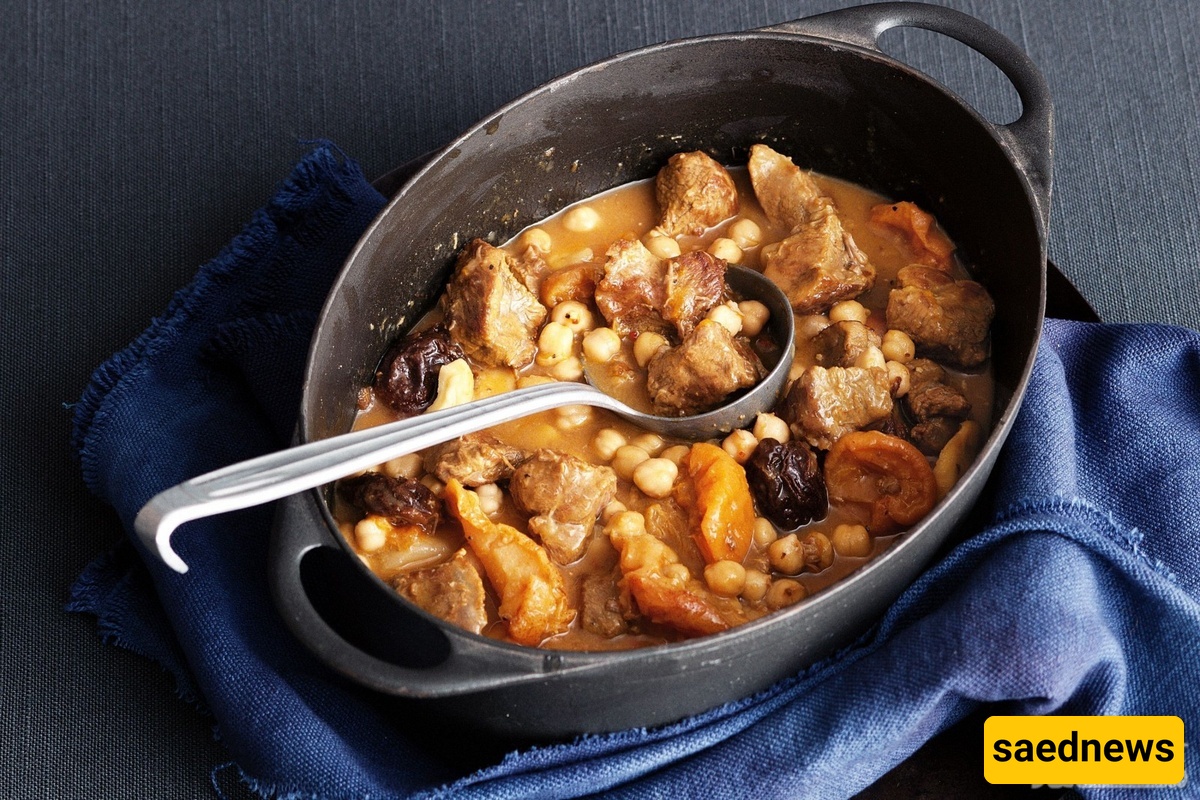
It is better to add warm water to the sautéed meat when making stew. Boiling or very hot water can make the meat tough and slow to cook. If cooked meat is suddenly mixed with cold water, it will also require a longer cooking time. All types of stews should be cooked over low heat in a covered pot.
In chicken stews, it is better not to use large pieces. Cut the chicken breast into four parts, and separate the thigh and drumstick if they are large. Remove the skin, season with salt in advance, and refrigerate for at least 30 minutes. Then fry the chicken in oil over low heat with or without onions until golden, and then add the rest of the ingredients.
If chicken is not fried before adding to the stew, it will remain pale after cooking and will not absorb the color of tomato paste or vegetables.
Fried onions help the stew become thicker and better combined. Chop onions finely so they are not visible in the stew.
Properly fried onions should be golden and appetizing. Burnt or dark onions will discolor the stew, while under-fried white onions will float and prevent the stew from thickening properly.
When using tomato paste, always sauté it in oil before adding it to the stew. This removes its raw taste and enhances its color. Using less but well-fried tomato paste results in a better-looking stew, while too much paste can overpower the natural flavor.
If spices are used, add them at the end of cooking to preserve their aroma.
Taste and adjust salt at the end of cooking. Adding salt too early may result in an overly salty stew after it has reduced.
Add souring agents such as lemon juice, verjuice, or vinegar toward the end of cooking.
Frying herbs in stews is optional and depends on taste. Add herbs after the meat is partially cooked so they can cook properly and blend well.
When the stew is fully cooked, leave the lid open so excess water can evaporate.
Legumes used in stews should be soaked for at least 2 hours. Then discard the soaking water, add fresh water, cook them separately, and add them to the stew after they are fully cooked.
When using dried herbs, soak them in lukewarm water for about 2 hours. For better flavor, mix them with sautéed onions. It is also recommended to combine dried herbs with one or two types of fresh herbs if available to improve the taste of the stew.