SAEDNEWS: A former member of Iran’s negotiation team, emphasizing that Tehran’s distrust of Washington is rooted in past experiences, said that Iran has consistently stated it does not trust the United States but has never abandoned the path of diplomacy.
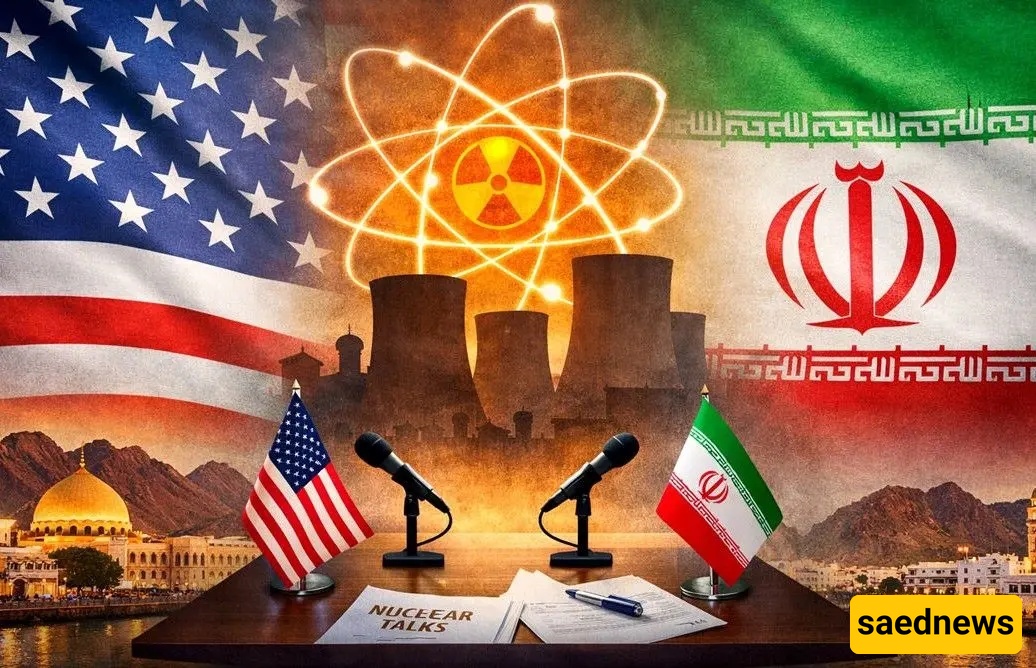
According to the political service of the Saed News Agency, IRNA reported that “Hossein Mousavian,” a diplomat and former member of Iran’s negotiating team, analyzed the ongoing negotiations between Iran and the United States in an interview with TRT World and outlined the main obstacles. The full text of the interview is as follows:
Donald Trump repeatedly said the war would soon end, but we are now in the tenth week. Given that he called Iran’s recent peace proposal “completely unacceptable,” what is your assessment of the current situation?
In my view, there are three main obstacles to reaching an agreement between Iran and the United States.
First, the U.S. is seeking a deal that effectively amounts to Iran’s surrender, while Iran is not willing to surrender.
Second, Iran insists that any nuclear agreement must be based on the Nuclear Non-Proliferation Treaty (NPT), which both countries are members of. However, the U.S. wants an agreement outside the NPT framework, including demands such as dismantling Iran’s nuclear facilities—similar to the Libya model—or transferring Iran’s enriched uranium stockpile abroad.
These demands clearly violate international law, as there is no legal basis for forcing an NPT member to dismantle its peaceful nuclear program.
Third, Iran seeks an agreement that effectively ends the war, while the U.S. appears to prefer a deal that keeps the option of future military action open. This also includes the continuation of Israeli operations in Lebanon. These three issues are the main obstacles to an agreement.
Reports indicate that internal conditions in Iran are placing significant economic pressure on the population. How long can people tolerate this situation, and what impact might it have on the political structure?
Economic pressure is real; high inflation, unemployment, and hardship have affected people’s daily lives. However, if we look at the past 47 years, Iran has always been under sanctions, external pressure, cyberattacks, and even an eight-year war imposed by Saddam Hussein, and yet it has persisted and resisted. Therefore, the level of resilience in Iranian society is high. At the same time, there is no doubt that the longer this situation continues, the more economic and social problems will intensify.
You have previously said that the U.S. cannot be trusted in diplomacy. Given recent developments, why should Iran still remain hopeful about negotiations?
Iranians have always emphasized that they do not trust the United States, but at the same time, they have never abandoned diplomacy. This distrust is based on experience. There was a comprehensive agreement—the JCPOA—which was endorsed by UN Security Council Resolution 2231, and the International Atomic Energy Agency confirmed Iran’s full compliance. Nevertheless, the U.S. withdrew from the agreement and implemented a “maximum pressure” policy.
This pattern has repeated itself. In 2025, according to the Omani foreign minister, negotiations were very close to an agreement, but the U.S. resorted to military action. In 2026, negotiations also made significant progress, but were again halted by U.S. attacks. These examples show that the U.S. does not adhere to diplomacy.
However, many countries such as Oman, Qatar, Turkey, Egypt, Pakistan, and Saudi Arabia continue to encourage Iran to pursue diplomacy and are actively working toward a political solution. But as long as these three main issues remain unresolved, reaching an agreement will remain very difficult.