SAEDNEWS: Tappeh Mil, also known as Bahram Fire Temple and Rey Fire Temple, is one of the historical monuments dating back to the Sassanian era.
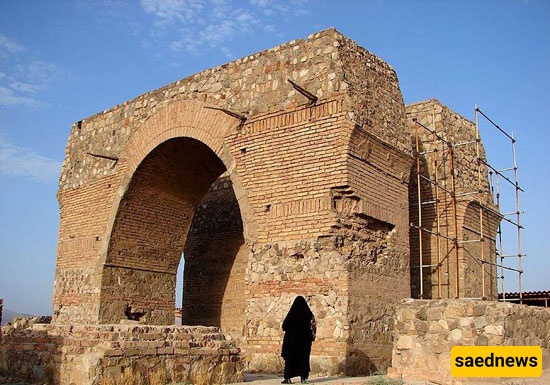
According to Saednews, Tappeh Mil, also known as Bahram Fire Temple and Rey Fire Temple, is an archaeological site dating back to the Sasanian period of Persian history. It is located near the city of Rey, south of Tehran, Iran, approximately 12 kilometers southeast of Rey, along the road toward Varamin. The site stands on a broad hill about two kilometers south of Qaleh Now, in the Kahریزak district of Rey County.
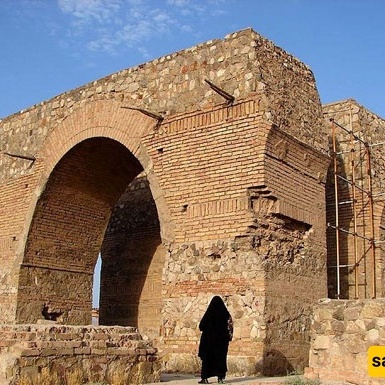
The ruins are believed to have belonged to a palace or fire temple associated with Bahram. The site acquired the name Tappeh Mil (“Pillar Hill”) because the remaining structure rests on two large supports that resemble pillars when viewed from a distance. Some parts of the Rey Fire Temple were reportedly damaged during Alexander the Great’s invasion of Persia, leaving portions of its distinctive four-arched structure standing as two prominent supports.
Much of the western section of the building has disappeared. Beneath the complex, a narrow corridor runs along the length of the structure. The principal construction materials include mud, mud bricks, rubble stone, and plaster.
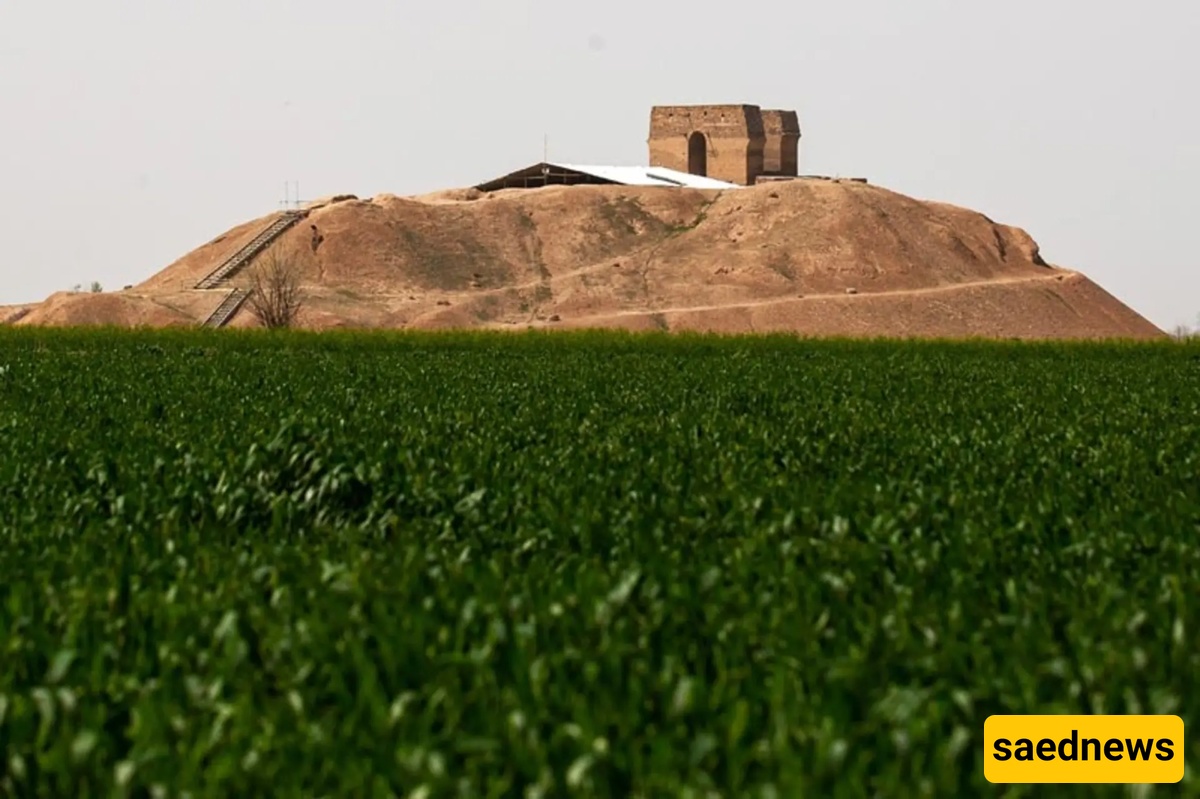
The reed beds surrounding the hill suggest that a lake once existed in the area but gradually dried up over time. Tappeh Mil rises approximately 18 meters above the surrounding plain and measures about 25 meters in width and 20 meters in length. Several smaller, lower hills are scattered around the main hill, which overlooks the surrounding landscape.
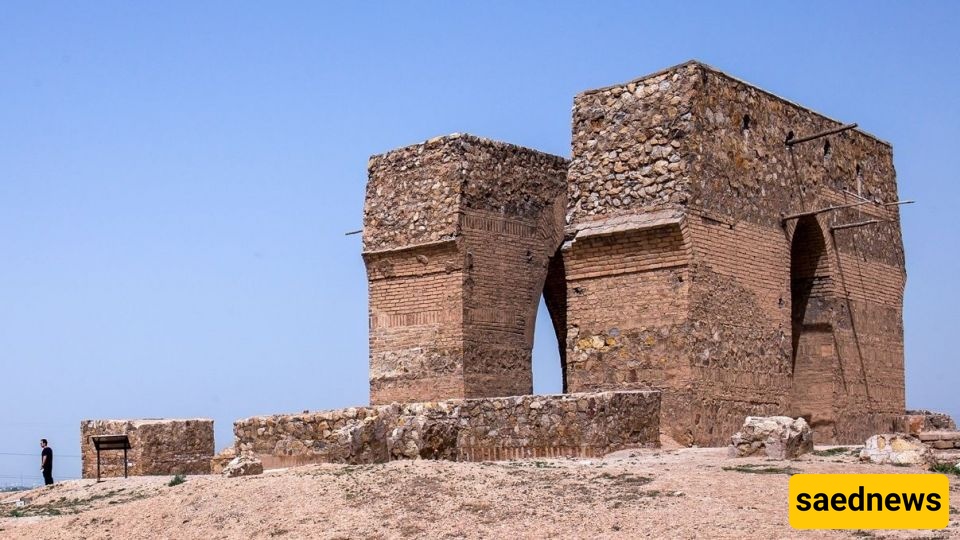
The archaeological complex covers an area of approximately 800 by 900 meters. At the summit of the hill stands the main temple building, oriented along an east–west axis.
The building's overall design resembles a columned hall featuring a central arch and two side arches. These openings connect to the central arch on one side and lead through narrower entrances to a slim corridor on the other. This corridor appears to have functioned as a passageway or portico serving the main sections of the building.
One of the most significant decorative features of the temple is its plasterwork, which adorns the walls of the principal hall. The surviving decorative designs include several distinctive styles:
Geometric patterns: These include both independent geometric motifs and patterns incorporated into larger compositions.
Decorative borders: Geometric designs were used to frame or surround the principal motifs.
Floral patterns: Inspired by nature, these plant-based decorations were rendered in stylized, abstract forms reflecting the religious beliefs and artistic traditions of the period.
Animal motifs: Images of animals also appear among the surviving plaster decorations. One notable example is a fish depicted with a remarkably naturalistic appearance.
These decorative elements provide valuable insight into the artistic traditions, cultural practices, and religious beliefs of the Sasanian era.
Tappeh Mil, also known as Bahram Fire Temple, was officially registered on Iran’s National Heritage List in 1955 (1334 in the Iranian calendar) by the Ministry of Culture and Arts.
Today, the site remains an important archaeological landmark, offering evidence of ancient Persian architecture and the religious heritage of the Sasanian period.