SAEDNEWS: Iranian President Urges Faster Implementation of Agreements and Expanded Cooperation with Russia
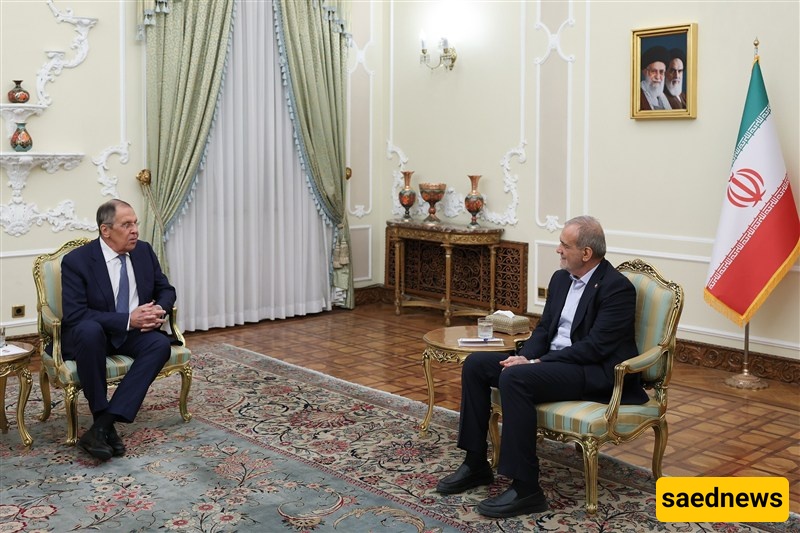
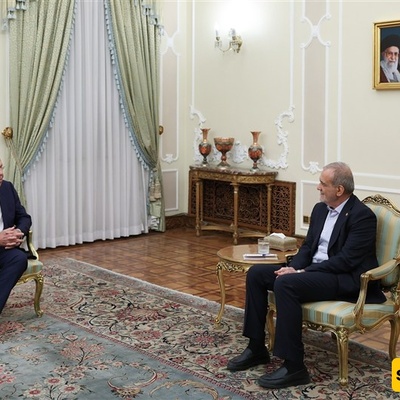
According to Saednews, Meeting with Russian Foreign Minister Sergey Lavrov on Monday, Iranian President Masoud Pezeshkian expressed satisfaction with the progress of bilateral relations, emphasizing the need for closer political and diplomatic coordination.
Referring to his recent meetings and phone conversations with Russian President Vladimir Putin, Pezeshkian said joint programs are underway and expressed hope that his upcoming visit to Moscow would help translate existing agreements into concrete results.
The Iranian president also thanked the Russian government and people for their support during what he described as the recent war of aggression imposed by the United States and Israel, stressing the importance of continued mutual support.
Highlighting agreements related to the Caspian Sea and trade, Pezeshkian called for practical measures and clear timelines to implement existing commitments in energy, transportation and electricity generation.
Addressing regional and international developments, he condemned US and Israeli aggression against Iran, including the assassination of the martyred Leader of the Islamic Revolution, Ayatollah Seyed Ali Khamenei, along with military commanders, scientists and schoolchildren, as well as attacks on infrastructure. He stated that these actions violated international law and occurred while Iran was pursuing dialogue and diplomatic engagement.
Pezeshkian said Iran rejects any country's attempts to impose its will on others through coercion, advocating an international order founded on mutual respect, national rights, constructive cooperation and multilateralism. He noted that Tehran and Moscow share common perspectives on these principles.
He also underscored the importance of neighborhood diplomacy and stronger relations among Muslim countries, reaffirming Iran's readiness to resolve regional disputes through dialogue and regional mechanisms. He argued that US military bases in the region contribute to rising tensions and insecurity, while expressing Tehran's willingness to pursue joint initiatives with regional countries in peace, security, economic development, culture, science and people-to-people exchanges.
Pezeshkian identified BRICS, the Shanghai Cooperation Organization (SCO) and the Eurasian Economic Union (EAEU) as key platforms for expanding bilateral and regional cooperation, particularly in trade, transportation and transit infrastructure.
For his part, Lavrov briefed Pezeshkian on his meetings with senior Iranian officials, noting that the discussions had covered political, economic, commercial and cultural relations and highlighted the need to accelerate the implementation of existing agreements.
He identified oil and gas, transportation, energy, communications and media, cultural exchanges, and scientific and academic cooperation as major areas for further collaboration. Lavrov also emphasized the two countries' shared positions on international issues and the importance of continued diplomatic consultations to advance peace and security.
Referring to agreements concerning the Caspian Sea, the Russian foreign minister called for closer coordination to protect the interests of both countries and reinforce regional stability.