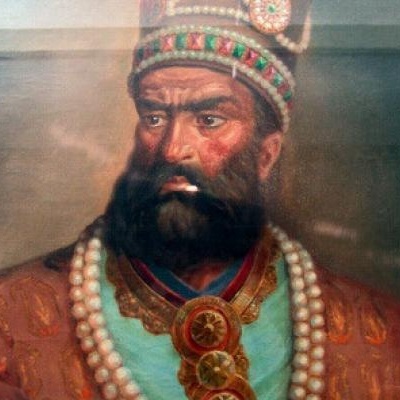
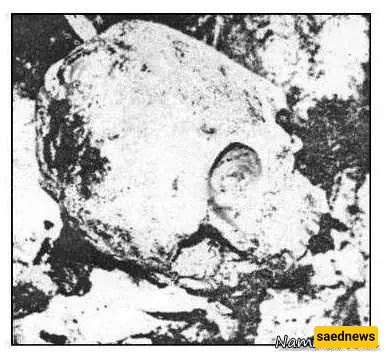
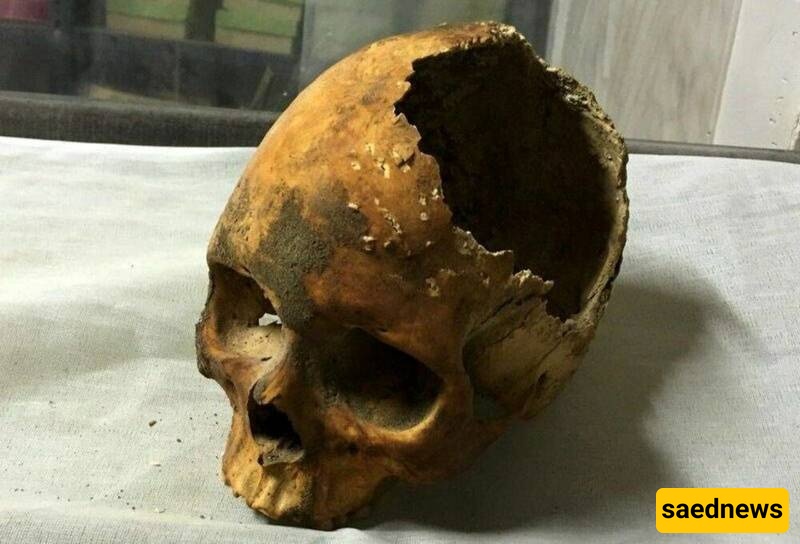
SAEDNEWS: Nader Shah Afshar was one of the most famous rulers in Iranian history, much like Cyrus the Great. During the excavation of his tomb, bones and a skull believed to be the remains of his body were unearthed.
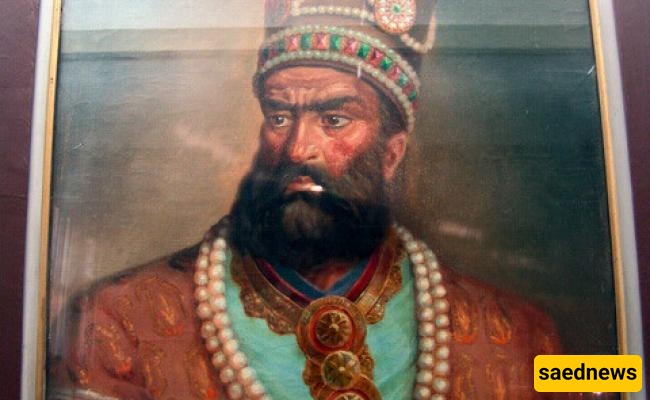
According to Saednews, Nader Shah’s skull, among the remains of his body, was uncovered during excavation work at his mausoleum. After the restoration of the building, his remains were returned to their eternal resting place.
Nader Qoli, also known as Tahmasp Qoli Khan and later Nader Shah Afshar, was a ruler of Iran and the founder of the Afsharid dynasty. Born into the Afshar tribe of Khorasan, he became one of the most famous Persian rulers of the post-Islamic era. Many historians regard him as one of the most powerful rulers in Iranian history.
When Afghan, Russian, and Ottoman forces threatened Iran from different directions and the country was engulfed in chaos, Nader gathered a group of cavalrymen and joined Tahmasp II of the Safavid dynasty, who was seeking to avenge his father. Nader helped suppress internal rebellions and drive Afghan forces out of Iran.
Tahmasp II grew jealous of Nader’s growing reputation and popularity. Seeking to demonstrate his own military strength, he launched a campaign against the Ottomans. According to the account, the campaign resulted in the deaths of thousands of Iranian soldiers, and Tahmasp fled the battlefield.
Despite having a small and exhausted army, Nader marched from eastern Iran toward the west, advancing deep into Ottoman territory and bringing many lands under Iranian control. He then moved toward the Caucasus, where Russian forces were occupying territory. To his surprise, the Russians had retreated before confronting him.
On his return, in 1148 AH, Nader resigned from his position as commander of the army during an assembly of Iranian elders in the Moghan Plain. He cited behind-the-scenes political maneuvering by the Safavid family as one of his reasons.
Nader set out for Mashhad. Near Zanjan, horsemen caught up with him and informed him that the assembly believed in his abilities and wanted him to remain commander of Iran’s army. They then placed the royal belt around his waist, marking his rise to kingship.
Nader Shah reportedly warned India three times to surrender approximately 800 officers associated with Ashraf Afghan, whom he accused of participating in massacres of the Iranian people.
When they were not handed over, the Iranian army crossed the Indus River and conquered India. The account states that 800 Afghan fugitives were executed in the markets of Delhi before Nader returned.
Nader Shah restored the government of Muhammad Mughal to him, declaring that Iran had no intention of conquest for its own sake but would not abandon the rights of its people.
Impressed by Nader’s conduct, Muhammad Mughal invited him to request a gift. Nader initially refused. After repeated insistence, he reportedly replied that the young people of Iran needed books because years of foreign occupation had destroyed much of the country’s written history.
Muhammad Mughal was astonished and presented Nader with numerous jewels in addition to books. According to the account, some of these jewels later became part of the backing for Iran’s national currency reserves at the Central Bank.
Nader Shah ruled for approximately 12 years before being killed by a group of conspirators in 1160 AH.
One notable detail in his early life is that, between the ages of 15 and 25, he was reportedly held in captivity by the Uzbeks alongside his mother. After her death, he escaped from the Uzbek camp and later allied himself with young men who sought freedom.
During his lifetime, Nader Shah ordered the construction of a small tomb in the Bala Khiyaban area of Mashhad. Built from mud bricks and clay in 1145 AH, it stood beside the royal Chaharbagh and opposite the shrine of Imam Reza.
Toward the end of the Qajar period, in 1296 AH in the Iranian calendar, Qavam al-Saltaneh built a new mausoleum for Nader Shah at the site of one of his ruined tombs. Nader’s remains were transferred from Tehran and reburied there.
The new structure stood for some time. In 1335 in the Iranian calendar, the National Heritage Association of Iran decided to construct a mausoleum more befitting Nader Shah’s stature at the same location.
Construction began in 1336 and was completed in 1342.
Today, Nader Shah Afshar is remembered by many Iranians as one of the country’s most celebrated historical rulers. His name, alongside that of Cyrus the Great of the Achaemenid dynasty, continues to inspire national pride.
Iranian patriotic thinker Oreg Bozorg (Ard-e Bozorg) is quoted as saying of Nader Shah:
“He managed to transform the ruins that our enemies had created for us into a magnificent country. His name will always remain familiar and beloved to Iranians.”