SAEDNEWS: Five Days Into the : Which Side Is Time Favoring?
According to the political desk of Saed News analytical outlet, initial estimates suggested that the United States had the capacity to sustain war operations for no more than one or two weeks. Continuous waves of Iranian attacks have intensified the situation, forcing the United States to rapidly gather its THAAD systems and many other pieces of equipment and missiles from various parts of the world in order to reconstruct its military deployment.
Some aspects of this redeployment are not particularly slow, and in many cases certain equipment can be relocated within one or two days. However, rebuilding major radar systems during an ongoing war appears highly unlikely.
On Iran’s side, the enemy’s primary focus has been on military targets, followed by security and law-enforcement objectives. Military targets are struck in order to gain overall strategic advantage in the war, while security and policing targets are attacked to open pathways for activating terrorist elements within urban areas.
In response, Iran has repeatedly targeted Kurdish terrorist groups with missile and drone strikes, effectively neutralizing much of their operational capability. Nevertheless, Iran does not appear overly concerned about this issue. Iranian forces that have confronted the United States are expected to close the case of these terrorist groups very quickly as well. Responsibility for this task has been assigned to the Ground Forces, and the missile and drone strikes against these groups prior to the start of their operations were carried out by this branch.
Some terrorist groups that had already infiltrated cities have not yet found the opportunity to act. The main reason for this is the strong presence of citizens in the streets. At the same time, security forces maintain comprehensive oversight of these teams. An important point is that Iran’s security institutions continue monitoring these networks until the final associated members are identified, provided that the groups do not initiate action.
Iran’s broader strategic objective is to push the United States out of the region and stabilize the situation in such a way that American forces no longer have the ability to take further action.
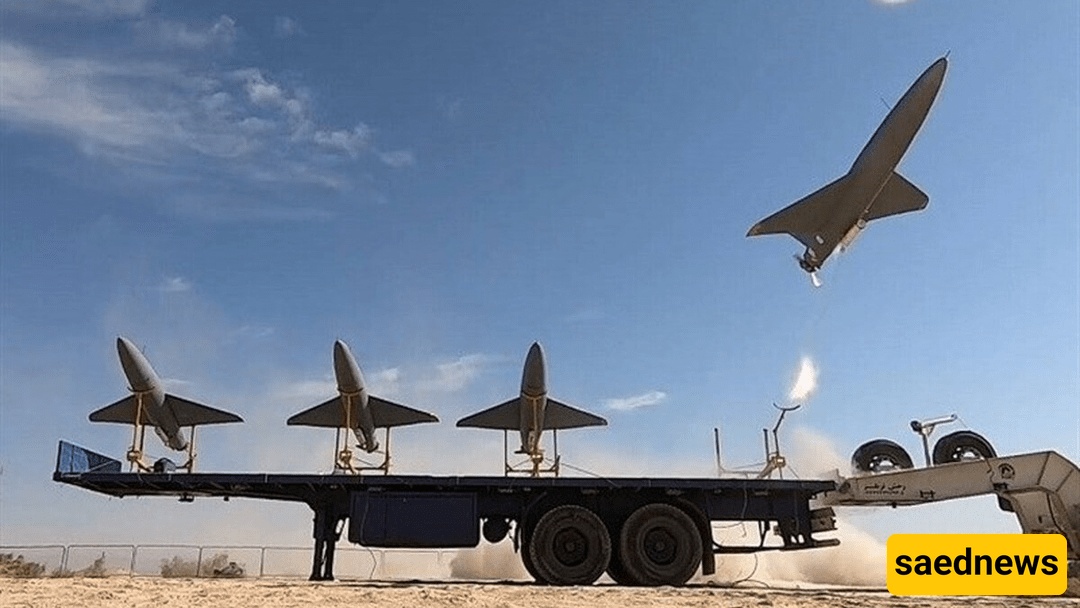
This process may take anywhere from several months to several years. Iranian fighters have prepared the necessary logistics for such a prolonged conflict, although the course of warfare may shift over time. For example, under current conditions, when the adversary lacks an effective air defense system, there is no need to launch missiles; Iranian drones are able to strike targets with a high success rate. This level of operational activity was not anticipated by the enemy.
These developments are occurring while Iran has thus far been fighting without a formal leader, without a chief of staff of the armed forces, without a commander of the Revolutionary Guard, and while several field commanders have been killed. This situation demonstrates the strong structural resilience of Iran’s military forces. Once new officials are appointed to these critical and decisive positions, the conditions for more diverse and offensive maneuvers by Iran will become even more favorable.
As time passes, the enemy’s assumption that the conflict would be short-term is likely to inflict greater damage on the United States. In particular, within the coming days, when the real impact of closing the Strait of Hormuz becomes visible in energy and food markets, the situation may deteriorate significantly.
The current trajectory of the war could produce several important field outcomes:
First, U.S. bases in the region may be evacuated and lose their operational effectiveness.
Second, Israel could face more intense pressure and encirclement from Iran, Hezbollah, and Yemen.
Third, the perception that Iran might collapse will disappear entirely, and divisions within the United States regarding Iran will deepen.
Fourth, the financial and strategic costs of the war for the opposing side will increase, and the failure to achieve the initial objectives of the war will become a central analytical conclusion.