SAEDNEWS: Araqchi told CNN: Meaningful negotiations must be based on trust, and we do not trust the U.S. as a negotiating party.
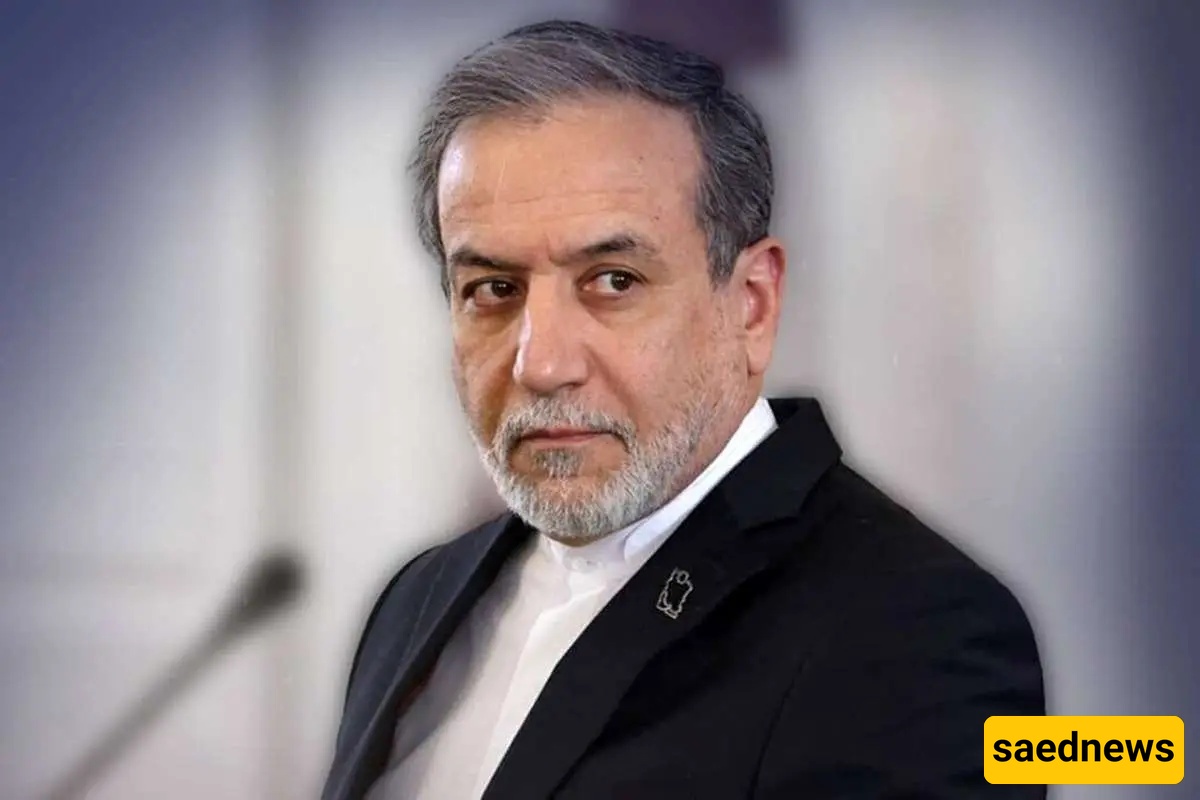
According to a report by the political service of Saednews News Agency, Iranian Foreign Minister Seyed Abbas Araghchi, in an interview with CNN, referred to the sensitivity of Tehran–Washington relations and emphasized that a war between the two countries is “not inevitable” and can be prevented.
He said that Iran is not afraid of war: “We are fully prepared for it; even more so than before the twelve-day war. The best way to prevent war is to be ready for it.” Araghchi clarified that this readiness does not mean Iran desires war, but that it is intended to deter conflict and avert it altogether.
Full text of the interview with the Iranian Foreign Minister:
Reporter: You have said that relations between the United States and Iran are at a very sensitive stage right now. How do you assess the risk of war between the two countries?
Araghchi: First, thank you for this interview. In response to your question, I would say that, in my view, war is not inevitable and can be prevented. Second, I am not worried about war, because we are fully prepared for it.
We are even more prepared than before the twelve-day war. I believe that the best way to prevent war is to be prepared for it. When I say we are prepared for war, it does not mean we want war; rather, it means we want to prevent it.
My main concern is miscalculations and military operations based on incorrect information and misinformation. It is clear to us that some elements and parties want to drag President Trump into this war for their own interests. I think President Trump is wise enough to make the right decision.
Reporter: One way to avoid miscalculation is direct dialogue. The U.S. says it wants direct talks with Iran. How can meaningful negotiations begin now?
Araghchi: Meaningful negotiations must be based on trust, and unfortunately we have lost our trust in the United States as a negotiating partner, and the reason for that is clear. We negotiated in 2015 and everyone celebrated the JCPOA agreement, but the U.S. withdrew from it without justification. If we look just at last year, when we decided to negotiate, while the talks were underway, we were attacked—first by Israel and then the United States joined in.
Therefore we do not have a positive or good experience of dialogue with the Americans. To reach real negotiations, this distrust must be eliminated. Some friendly countries in the region are playing the role of mediators and trying to build trust. It’s difficult, but it is ongoing. I see the possibility of further dialogue.
If the U.S. negotiating team acts in accordance with President Trump’s statements to achieve a fair and just agreement aimed at preventing the acquisition of nuclear weapons, reaching an agreement may be possible.
Reporter: If trust is built, is Iran willing to talk directly with the U.S. side?
Araghchi: Whether negotiations are direct or indirect is a matter of form; the content of the negotiation is more important. We need trust. Perhaps complete trust will never return, but a minimum level of trust is necessary. We are working with our friends in the region to find a way to establish this level of trust and resume negotiations.
Reporter: President Trump says negotiations are ongoing. How are they progressing?
Araghchi: They are taking place through intermediaries. Some countries are conveying messages and trying to prepare the ground for real and meaningful talks. We are in contact with them and messages are being exchanged.
Reporter: Have these talks been fruitful and able to reduce tension?
Araghchi: I think so far they have been fruitful.
Reporter: President Trump says he wants to avoid using military force that is currently stationed around Iran. If an acceptable deal is reached, what features should it have regarding the nuclear issue?
Araghchi: The very deal that President Trump has referred to—a fair and just agreement that guarantees Iran will not have nuclear weapons. This is achievable.
The U.S. also brings up topics like enrichment, ballistic missiles, and regional proxies. As I said, President Trump has said there should be no nuclear weapons, and we agree completely. We can negotiate about our nuclear program to ensure it is entirely peaceful and remains peaceful forever, and in return we expect sanctions to be lifted. This agreement is possible.
Let’s focus on what’s possible and not miss the chance to reach a fair and just agreement to guarantee that no nuclear weapons are developed. As I said and repeat, this is achievable even in the short term.
Reporter: So you think negotiations could start soon? Could a venue be determined and talks held directly or indirectly to reach a relatively quick agreement, assuming you are also willing to lift sanctions?
Araghchi: Yes, that’s the goal. Of course, we want our rights first to be respected and secondly for sanctions to be lifted. The sanctions were imposed because of concerns that our nuclear program was heading toward weaponization—according to what they claim. As far as we are concerned, that is not the case. But we are ready to build trust about our peaceful nuclear program, and in return we expect sanctions to be lifted. As I said, if our enrichment rights are respected and we can continue enrichment for peaceful purposes, then every detail is negotiable and we can sit down in any format and reach a result. This is my belief.
Reporter: Iran is undoubtedly a powerful country in the region, and the U.S. also has great power here. Do you think it’s important for these two powerful actors to talk about regional and military issues to reduce tensions?
Araghchi: Honestly, we believe the source of the tensions and conflicts in our region are foreign forces that have entered the region. We respect our neighbors and are always ready to engage with them about security, peace and stability in the region. But these issues should be addressed with regional countries.
We believe these matters should be dealt with by regional actors. So that is our stance. We have been in contact with our regional neighbors and major players and have had good discussions. We are even ready to create a framework for dialogue about peace and stability in the region.
Peace and stability in this region are as important and vital to us as they are to others. We are a country next to the Persian Gulf, and the security of this waterway is important for us to export oil and conduct trade. The Strait of Hormuz is important for us and the world, and we have always kept it secure and ensured safe passage. We will continue this work. I hope nothing happens that disrupts this security.
Reporter: What do you think the consequences of a full-scale war between Iran and the U.S. would be for the region? I know your armed forces have revised their doctrine to define any attack as an existential threat. What would this mean for the region?
Araghchi: I don’t see it as an existential threat, but it would definitely be a major threat for everyone. If war begins, it would be a catastrophe for all. The previous time we tried hard to limit the extent of conflict between Iran and Israel, but this time if there is a conflict between Iran and the U.S., given the dispersion of U.S. bases in the region, many parts of the region would be involved and this would be very dangerous.
I hope reason prevails. We are prepared for any possibility, and I can say with complete certainty that our armed forces are ready and equipped, even more so than before. Our missiles were tested in the recent war and we have learned their strengths and weaknesses.
We learned many lessons from the twelve-day war and are now much more prepared but being prepared doesn’t mean we want war. We want to prevent war.
Reporter: After the protests in early January, for example at the cemetery where people said their loved ones were killed by security forces, how do you plan to calm this situation?
Araghchi: The government is working on this issue, and as you know, the rights of every arrested individual will be observed and guaranteed.
Reporter: Final question: If you reach a deal with the Trump administration, how would it affect stability, interests, and people in the region?
Araghchi: I think if misunderstandings and miscalculations are resolved, major opportunities for economic cooperation between Iran, the U.S., and regional countries would emerge. We fundamentally have no problem cooperating with American companies if sanctions are lifted, as happened after the JCPOA.