SAEDNEWS: New research shows that Little Foot, one of the most complete prehuman skeletons ever found, does not match any known species. Its evolutionary place remains uncertain, though the fossil’s excellent condition allows for further study.
According to Saed News’ social affairs desk, to understand the new claims it is necessary to become familiar with a group of perplexing hominins that lived in southern Africa more than two million years ago. The best-known species from this period is Australopithecus africanus, although whether it was a direct ancestor of modern humans remains debated. In 1948, fossils discovered at Makapansgat in South Africa were introduced as a new species, Australopithecus prometheus, based on the belief that these hominins had used fire.
However, Dr. Jesse Martin of La Trobe University notes that most paleoanthropologists now consider this designation to be mistaken. Fossils attributed to A. prometheus are so similar to A. africanus that the prevailing view is that the two could interbreed and therefore represent a single species, although some researchers continue to argue for the independent status of A. prometheus.
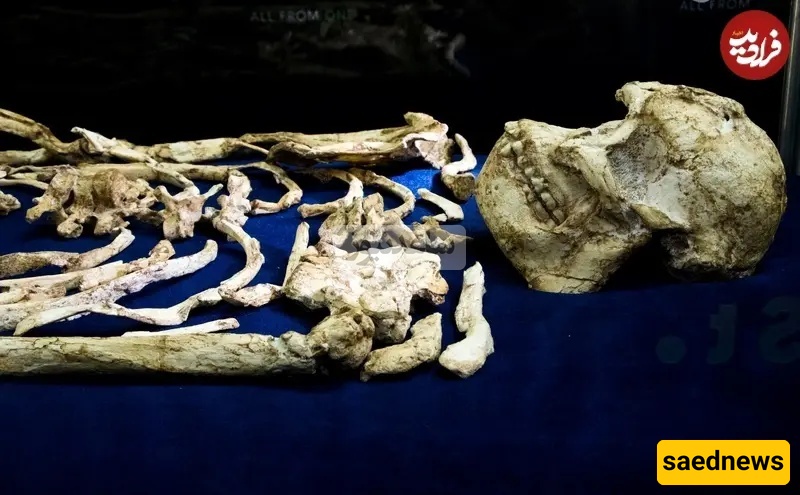
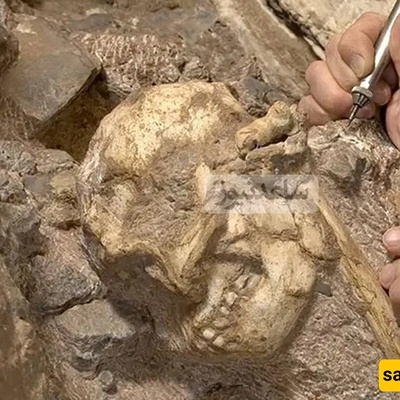
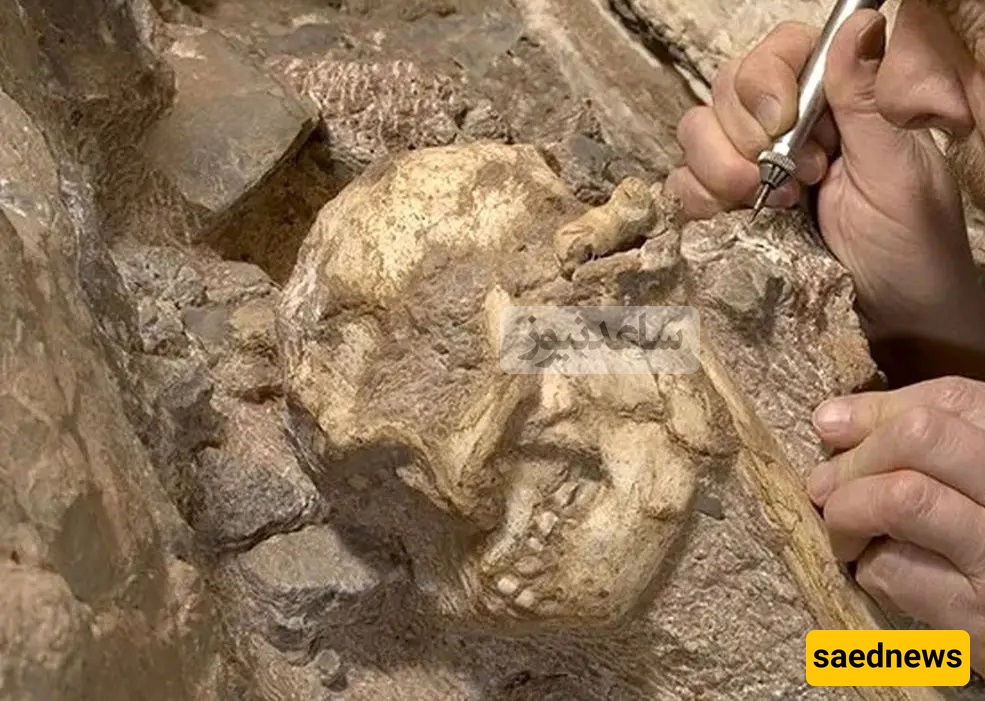
In 1998, a remarkable discovery was made at Sterkfontein in South Africa that later proved to be one of the most complete extinct hominin skeletons ever found. Extracting such an extensive skeleton from solid rock was a slow and painstaking process. When Ronald Clarke examined the Little Foot skeleton in 2019, he noted similarities to the early Makapansgat fossils and attributed this extraordinary find to A. prometheus.
Martin explains that much of the paleoanthropological community interpreted this as a reference to A. africanus, since the two were widely regarded as essentially the same. Martin and his students initially shared this assumption—until they began examining a portion of Little Foot’s skull that corresponds to the fragment on which the original 1948 description of A. prometheus was based.
In this single region at the back of the skull, the research team identified three major differences. In overall cranial shape, Little Foot more closely resembles much older hominins than the fossils previously labeled A. prometheus or the species generally accepted as A. africanus. Yet other parts of the body show features indicating that it cannot be a late-surviving member of a very ancient species. This combination suggests that Little Foot represents a previously unrecognized species.
Even the age of Little Foot remains hotly disputed. One dating method places it at around 2.6 million years old, while another suggests it is more than 3 million years old. Multiple papers have been published arguing why one estimate may be more plausible than the other.
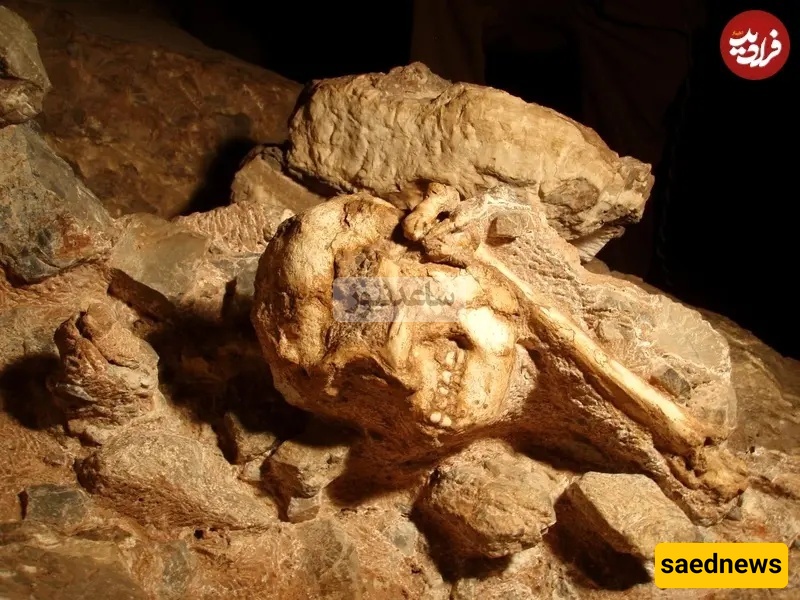
“This fossil remains one of the most important discoveries in the hominin record, and identifying its true identity is crucial for understanding our evolutionary past,” Martin said in a statement. He added that although two hominin species are known to have lived in the region during this period, Little Foot’s exact position on the family tree—its evolutionary history and whether it gave rise to any descendants—remains unclear. Each new excavation in South Africa, he noted, only adds further complexity to the story of human diversity.
Martin and his colleagues argue that Little Foot cannot clearly be classified as either A. prometheus or A. africanus and is more likely an as-yet unidentified human relative. The research team has not yet proposed a formal name for the new species, partly because only a portion of the fossil has been fully described and partly due to the desire for broad scientific consultation. The next step, Martin says, is a comprehensive analysis of the entire skeleton, along with a reexamination of all fossils currently assigned to A. africanus to determine whether some may align more closely with Little Foot.
Martin also points out that until the 1970s, the dominant belief was that only one hominin species could exist at any given time. Today, it is clear that multiple hominin lineages coexisted. He emphasizes that our own genus survived alongside at least two others, and that being the sole surviving member of a lineage is not, in evolutionary terms, a typical or necessarily favorable outcome.