SAEDNEWS: Opposition from some people to celebrating a non-Iranian holiday called “Valentine’s Day” as a way to express love has, in recent years, brought attention to the celebration of “Sepandarmazgan.” This Iranian occasion allows those who prefer not to mark a Western holiday to remind one another of their affection within a native calendar.
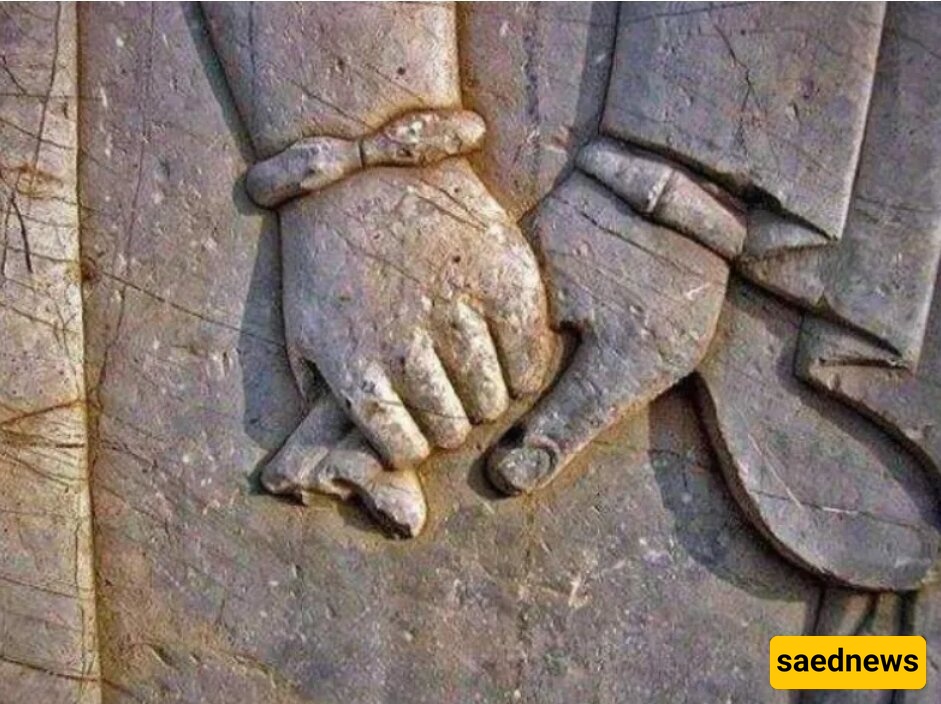
According to the Saed News Society Service, citing Hamshahri, is Sepandarmazgan, like Valentine’s Day, merely a celebration of love and affection?
Hamidreza Dalvand, a faculty member at the Linguistics Research Institute of the Institute for Humanities and Cultural Studies, explained the etymology of “Sepandarmazgan.” The term derives from the ancient word Spenta Armaiti. The first part, Spenta, carries a broad range of meanings but, in Zoroastrianism, is associated with blessing, abundance, and efficacy. The second part, Armaiti, conveys ideas such as calmness, kindness, harmony, friendship, and tranquility.
Dalvand noted that Sepandarmad is also one of the seven Amesha Spentas—divine beings in Zoroastrianism who serve as collaborators with Ahura Mazda. The Amesha Spentas embody key virtues, such as good thoughts and truthfulness, and act as representatives of Ahura Mazda in creation, guiding humans toward righteousness and happiness. In this context, Sepandarmad is an abstract, feminine divine principle linked to the material gods in ancient Zoroastrian belief.

The Connection Between Women and Earth
Dalvand emphasized that, according to Zoroastrian beliefs, Sepandarmad is the guardian of the Earth. The Earth’s essential qualities—blessing, generosity, and patience—satisfy human material needs, from shelter to the growth of plants. As such, the Earth is seen as a source of abundance and a maternal element.
He added that women, in Iranian culture, share a symbolic connection with Spenta Armaiti and the Earth. “A woman is a symbolic manifestation of the Earth,” Dalvand said, “embodying blessing, patience, generational continuity, and life itself. In Iranian culture, women are the emotional backbone of the family. Just as challenges arise and are resolved in the soil, family issues are raised and resolved in the care of women.”
Love Expressed Through the Power of Giving
According to Dalvand, ancient beliefs hold that humans are tasked with the triumph of good over evil. This empowers individuals to create and give, a process considered a manifestation of love, which is inseparable from the act of caring for others. In Iranian tradition, when people form families, they share their wealth, knowledge, youth, and energy with one another and their children, without expectation.
“This maternal generosity transforms women into selfless beings, much like the Earth,” he explained. “This giving is not born of need but of ability, and it is a true expression of love. In Iranian belief, anyone seeking perfection must create and give; through this, one becomes capable of love, which can lead to immortality. Love is not mere desire or erotic gaze—it is a deep, human devotion to existence itself.”
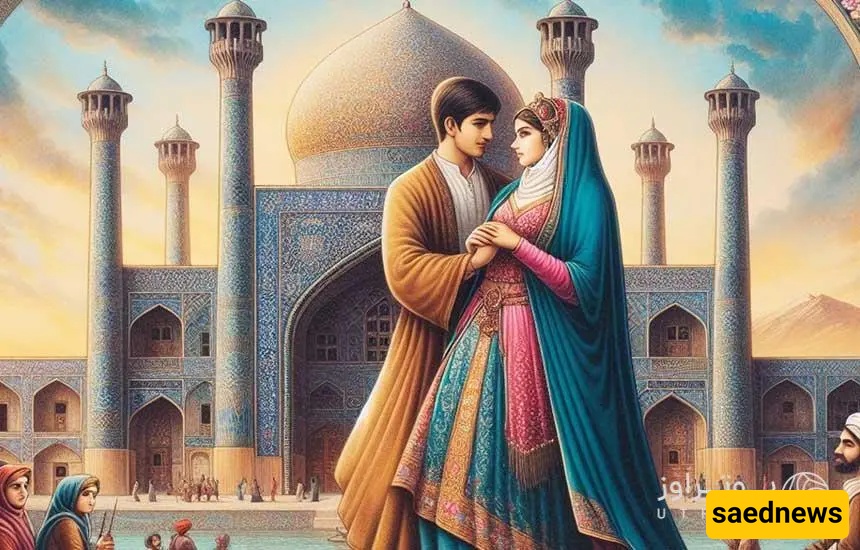
Honoring Women on ‘Mardgiran’
Dalvand noted that the festival persists in the Zoroastrian calendar. Historically, Iranian men celebrated Sepandarmazgan—the fifth day of the month of Esfand in the ancient Iranian calendar—by presenting gifts to women. This tradition, known as Mardgiran or Mordgiran, continued even after the advent of Islam in the fourth century AH, emphasizing the respect and value attributed to women. “A woman is the binding of the book of life; a man is the cover, and children are the pages. Without the binding, the book does not exist,” he explained.
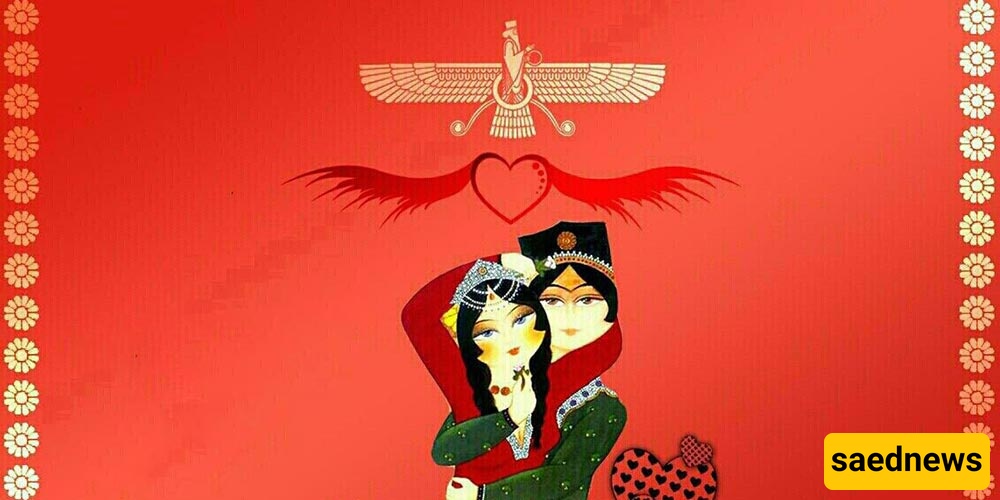
Sepandarmazgan: A Celebration with Profound Philosophy
Dalvand emphasized that Sepandarmazgan remains a relevant occasion today, distinct from Valentine’s Day, which focuses on superficial expressions of love. Sepandarmazgan is multi-faceted, with one of its core meanings being the honoring of love in a deep, philosophical sense, beyond worldly appearances.
Addressing the varying dates of the festival in sources—either the 5th of Esfand or the 29th of Bahman—Dalvand explained: “In Zoroastrianism, each day of the month is associated with a deity, and a festival is celebrated when the day and month names coincide. However, after the Pahlavi period, calendar reforms—which set six months to 31 days and six months to 30 days—shifted the date to the 29th of Bahman.”