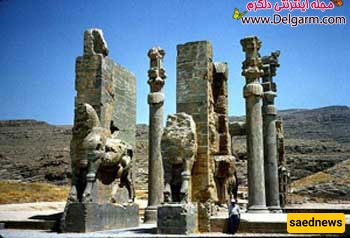
SAEDNEWS: Persepolis Palace is one of Iran’s most notable historical landmarks and a popular tourist attraction. It is an ancient archaeological site that reflects the rich history and cultural heritage of ancient Persia.
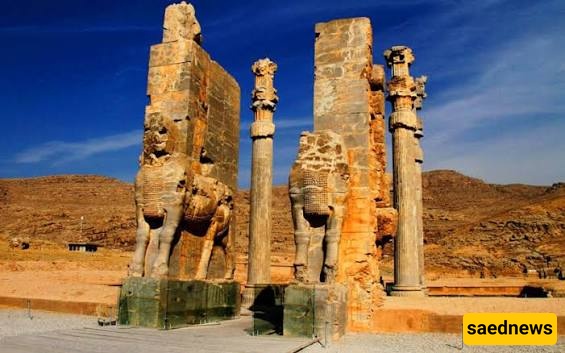
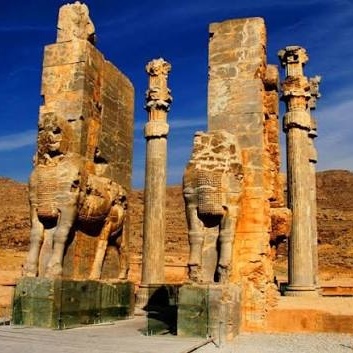
According to Saednews, Persepolis, also known as Parsa, Parsehpolis, Takht-e Jamshid, the City of a Thousand Columns, or the Forty Minarets, is located north of Marvdasht County in Fars Province, northeastern Shiraz, Iran. This historic tourist attraction is approximately 50 kilometres from the provincial capital, Shiraz.
Persepolis is one of the most remarkable ancient cities in Iran. For many years, it served as the magnificent ceremonial capital of the Persian Empire during the Achaemenid dynasty.
The ancient complex of Persepolis was constructed during the reigns of Darius the Great, Xerxes I, and Artaxerxes I. For approximately 50 years, it served as an important centre for royal ceremonies and celebrations, particularly Nowruz, the Persian New Year.
On the first day of the New Year, representatives from various countries and satrapies (provinces) gathered at Persepolis, bringing a variety of gifts and offerings to present to the Persian king.
Persepolis Palace is one of Iran's most famous tourist attractions.
Darius the Great was the founder of Persepolis. After him, his son Xerxes I and grandson Artaxerxes I expanded the complex and contributed to its grandeur. Much of what is known today about the history and culture of the Achaemenid Empire comes from inscriptions carved into the palace walls, stone surfaces, and tablets.
Historians believe that Alexander the Great, the Greek military commander, invaded Persia in 330 BC and set Persepolis on fire. This destruction may have resulted in the loss of a significant portion of Achaemenid books, cultural heritage, and artistic treasures. Nevertheless, the ruins of Persepolis still stand in Marvdasht County, Fars Province. Archaeological evidence found at the site confirms signs of fire and invasion.
Since 1979, Persepolis has been recognised as a UNESCO World Heritage Site.
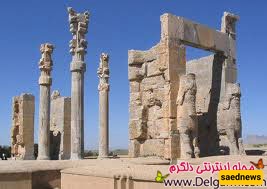
During its construction, Persepolis was called Parsa, meaning "City of the Persians." The Greeks referred to it as Persepolis, meaning "Persian City."
In modern Persian, the monument is known as Takht-e Jamshid, meaning "The Throne of Jamshid," referring to Jamshid, a legendary king of ancient Persia.
According to Ferdowsi's Shahnameh (The Book of Kings):
Jamshid was a just and handsome king who established the celebration of Nowruz and ruled Persia for 700 years. His royal throne was so enormous that demons were said to carry it upon their shoulders.
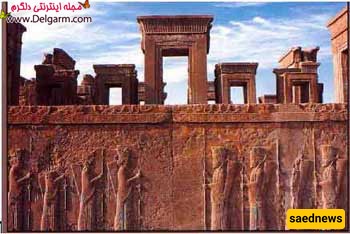
Hundreds of years after the invasions of Alexander the Great and the Arabs, the memory of the Achaemenid kings had gradually faded. People passing by the ruins of Parsa noticed carvings depicting a royal throne being carried on the shoulders of several figures. Since they could not read the cuneiform inscriptions carved into the stones, they believed the throne was the legendary throne of Jamshid described by Ferdowsi in the Shahnameh.
As a result, the site became known as Takht-e Jamshid. Later, when archaeologists deciphered the cuneiform inscriptions, they discovered that its original name had been Parsa.
During the Islamic period, the site was also respected and referred to as the Thousand Columns and the Forty Minarets. It was associated with legendary figures such as Prophet Solomon and Jamshid.
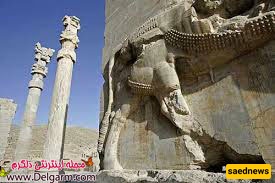
The famous Western name, Persepolis, has an interesting linguistic origin. In Greek, Persepolis and its poetic form, Perseptolis, were titles associated with Athena, the goddess of wisdom, crafts, and war, with the meaning of "the destroyer of cities." The fifth-century BC Greek poet Aeschylus used this expression as a play on words when referring to the Persian city.
The Apadana Palace is one of the oldest and most important structures at Persepolis. It was built by order of Darius the Great and was used for Nowruz celebrations and receiving representatives from the territories under Persian rule.
The palace was connected to the Tachara Palace, also known as the Palace of Mirrors, through a staircase on its southwestern side.
The Apadana originally consisted of 72 columns, of which 14 remain standing today. The column bases in the palace's portico are round, while those inside the main hall are square.
One of the most famous reliefs at the Apadana depicts representatives from Lydia carrying gifts and offerings for the Achaemenid king. This relief was carved into one of the palace staircases.
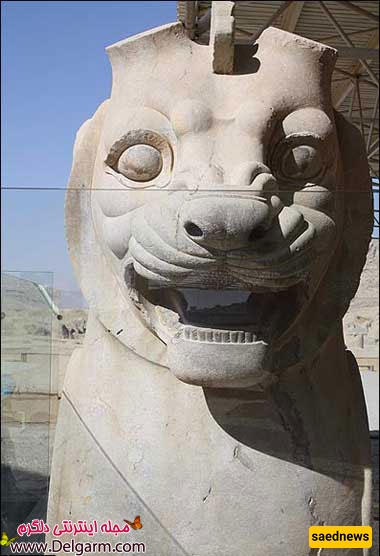
The Tachara, also known as Tachar, means "Winter Palace." It was constructed by order of Darius the Great and served as his private palace.
An inscription in the palace reads:
"I, Darius, built this Tachara."
The palace is considered a remarkable museum of ancient writing because it contains inscriptions in several historical scripts, ranging from Old Persian to Middle Persian. Its architectural design also features Egyptian-style elements on the front façade.
The main structure was built by Darius the Great, while the southern portico and stone staircase were added by Xerxes I. The western stone staircase was constructed by Artaxerxes II.
The Hadish Palace was the private residence of Xerxes I and is situated at the highest point of the Persepolis Terrace. It was connected to the Queen's Palace through two sets of staircases.
Some historians believe that the great fire at Persepolis may have started in this palace. One possible explanation relates to the hostility of the Athenians towards Xerxes I following his burning of Athens.
The yellow colour of some of the stones is believed to indicate exposure to intense heat. The palace was relatively small and originally contained a hall with six rows of six columns.
Due to its extensive destruction, little information about this palace has survived, and it is sometimes referred to as the Mysterious Palace.
The word Hadish means "elevated place." It is also believed that Xerxes named the palace after his second wife, Hadish.
The palace is located in the southernmost section of the Persepolis Terrace, and much of its floor was carved directly into the natural rock of the mountain.
The Queen's Palace was built by Xerxes I and stands at a lower elevation than many of the other structures at Persepolis.
In 1931, part of the palace was excavated and reconstructed by the renowned Orientalist Professor Ernst Emil Herzfeld.
Today, the restored section serves as a museum and the central administrative headquarters of the Persepolis complex.
Palace H, also known as the H Palace, is located in the southwestern part of the Persepolis Terrace, west of the Hadish Palace.
Its decorated staircase, which provides access from two sides, is now partially ruined.
According to a surviving inscribed fragment, the original staircase belonged to a structure whose construction was begun by Xerxes I and completed by Artaxerxes I.
The Three-Gate Palace, also known as the Council Hall, King's Gate, Three-Door Palace, or Central Palace, is located at the centre of the royal complex of Persepolis.
The palace connects to other royal buildings through three doorways and several corridors, which explains why it is also known as the Central Palace or Three-Gate Palace.
Its staircases feature carvings of Persian nobles approaching the king in a friendly and informal manner. Because of these scenes, as well as its location and possible function, the building is sometimes referred to as the Council Hall.
Although the palace was traditionally attributed to Darius the Great, archaeological evidence suggests that its construction was completed during the reign of Artaxerxes I.
The Hall of a Hundred Columns covers an area of approximately 46,000 square feet (4,300 square metres).
Its roof was supported by 100 columns, each approximately 14 metres high.
This enormous hall was one of the most impressive structures in the Persepolis complex.
This building is also known as the Council Palace or Central Hall.
It is believed that the Persian king may have met with nobles and senior officials here to discuss important matters and receive advice.
According to the carved reliefs, the king entered through one of the doorways and exited through the other two.
The building is called the Council Hall partly because two human-headed capitals were discovered here, a feature not found elsewhere in the complex. The human head was regarded as a symbol of thought and wisdom.
Approximately 6.5 kilometres from Persepolis lies Naqsh-e Rostam, an important archaeological site containing the rock-cut tombs of several Achaemenid kings.
These include the tombs of:
Darius the Great
Xerxes I
Artaxerxes I
Darius II
A fifth unfinished tomb is also located at the site and is believed by some researchers to have belonged to Darius III.
The Imperial Treasury complex consisted of a hall with 99 columns, a hall with 100 columns, several additional halls and rooms, and two courtyards.
The treasury buildings were separated from the rest of the complex by a thick defensive wall and a wide street.
According to accounts by ancient Greek historians, after the fall of Persepolis, Alexander the Great transported the gold, silver, and other valuable treasures from the royal treasury to another location using approximately 3,000 camels and a large number of horses and mules. The treasury was considered the largest of the Achaemenid Empire.
The treasury was originally constructed by order of Darius the Great, and Xerxes I later made several modifications.
Many valuable objects, including vessels, statues, and particularly eight famous stone tablets belonging to Xerxes I, were discovered at this site.
Scientific excavations also uncovered numerous clay tablets written in cuneiform and the Elamite language. These tablets contained records relating to workers' wages and payments.
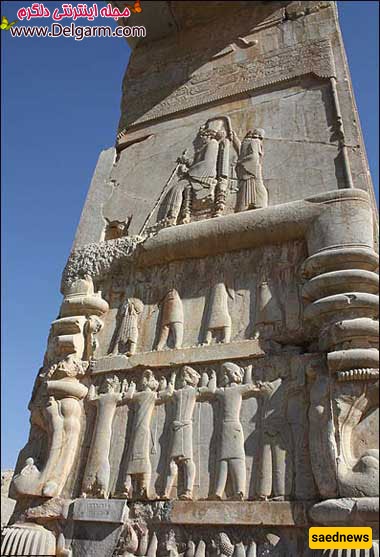
One of the most important discoveries at Persepolis is the relief depicting the royal audience ceremony.
The scene, discovered at this location, portrays Xerxes I rather than Darius the Great, as was previously believed.
The king is shown seated on his throne in full royal ceremonial dress. He holds a royal sceptre in his right hand and a lotus flower in his left, a symbol associated with Achaemenid kingship.
Standing behind the king is the crown prince, holding a lotus flower in his left hand and raising his right hand in a gesture of respect.
Behind him stand a royal court official and the king's armour-bearer.
Two incense burners are positioned in front of the king, while the chief of ceremonies stands respectfully, presenting his report.
The ceremony takes place beneath a royal canopy, surrounded by four guards.
According to archaeological research, the original location of this relief was the central section of the Apadana staircase.
Persepolis remains one of the greatest symbols of ancient Persian civilisation, reflecting the architectural achievements, cultural richness, and political power of the Achaemenid Empire.
Remove the unsupported interpretive detailsClarify the duplicated palace sections