SAEDNEWS: Buffalo are members of the bovine family. Although they share many similarities with cattle, buffalo differ in their grazing habits and are known to consume a wider variety of vegetation. The domestication of buffalo took place approximately 5,000 years after the domestication of cattle.
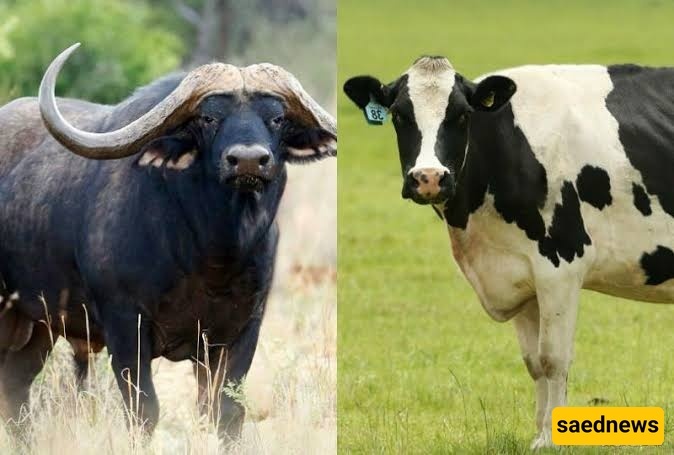
According to Saednews, Because of their great strength and powerful build, domestic buffaloes were historically used for plowing fields. Raising buffaloes provides access to milk, meat, and various other products, including leather gloves and mozzarella cheese.
In terms of appearance, many people consider cattle and buffaloes to be similar. Although they have similarities during pregnancy and childbirth, there are also many differences between cattle and buffaloes, including the following:
The reproductive organs of buffaloes are similar to those of cattle, but they are smaller. Buffalo testes are also smaller than those of cattle.
Buffalo skin is approximately twice as thick as cattle skin, and its thickness increases with age.
Except for the tongue and liver, the digestive system of buffaloes is similar to that of cattle. However, the buffalo's tongue is wider and shorter.
Buffalo childbirth is similar to that of cattle. Female buffaloes can become pregnant through artificial insemination. However, unlike cattle, about 90% of buffalo births take place while the animal is standing.
Buffalo hair is approximately twice as thick as cattle hair and is used to make brushes and paintbrushes.
Like cattle, buffaloes can suffer from diseases such as foot-and-mouth disease, tuberculosis, smallpox, theileriosis, and various parasitic diseases, including tick and lice infestations.
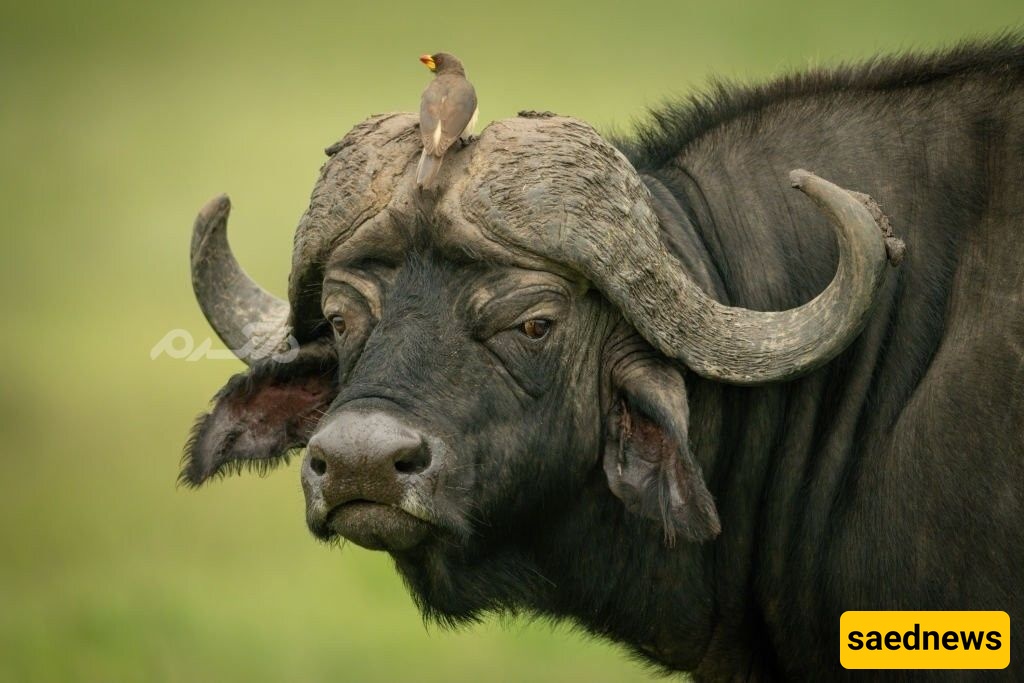
In 2000, the global buffalo population reached approximately 158 million head, of which around 153 million were found in Asia and other parts of the world. In general, buffaloes are mainly raised in tropical and subtropical regions and are divided into two major types.
Swamp buffaloes enter mud and marshy areas to cool themselves. Their diet mainly consists of reeds and coarse forage. Large populations of swamp buffaloes are raised in India and Pakistan, and their milk is also used.
River buffaloes are commonly known as dairy buffaloes in India and Pakistan and include breeds such as Murrah, Jafarabadi, Surti, Nili-Ravi, Kundi, and other Asian buffalo breeds.
Their color is usually black, sometimes with white patches on different parts of the body. Gray, brown, and, rarely, white coloration can also occur. Males generally weigh between 300 and 700 kilograms, while females weigh between 250 and 650 kilograms.
River and swamp buffaloes differ in body size and weight. River buffaloes are generally heavier than swamp buffaloes, with an average weight ranging from approximately 450 to 1,000 kilograms. Swamp buffaloes, on the other hand, generally reach a maximum weight of about 325 to 450 kilograms.
Buffaloes can live for nearly 30 years, and females remain capable of reproduction for approximately 25 years.
Male buffaloes become ready for mating at around two years of age and may remain capable of mating for another six or seven years. Artificial insemination can also be used by collecting buffalo semen and carrying out the reproductive process artificially.
Buffalo milk accounts for approximately 6.5% of the world's total milk production. In addition to milk, buffalo farming provides valuable meat and leather.
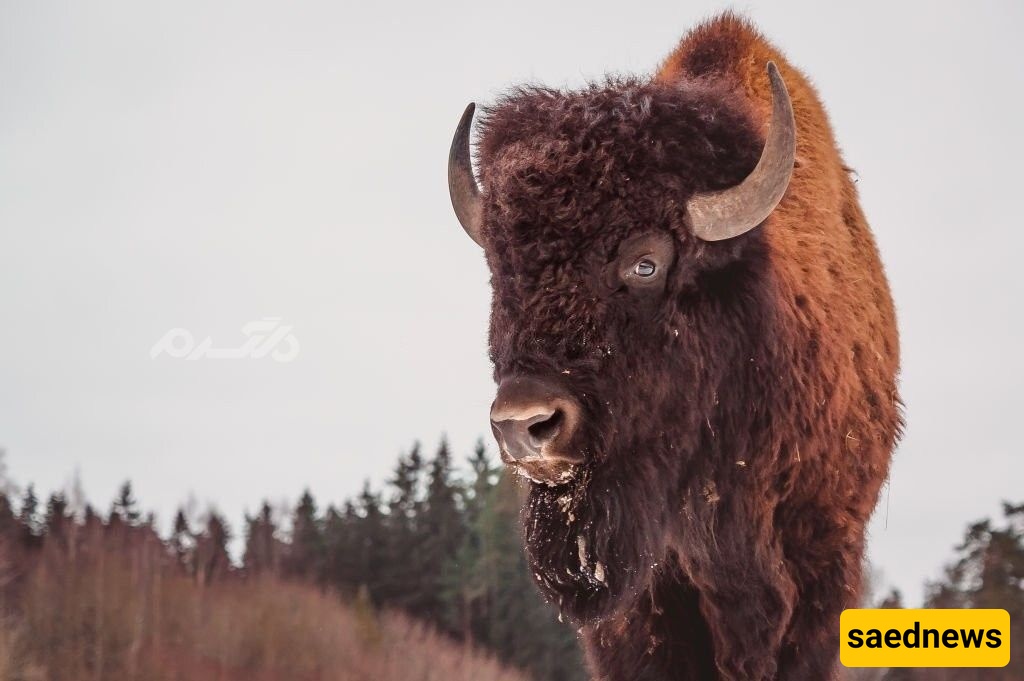
Buffalo meat does not differ greatly from beef in terms of protein content, although its nutritional composition is somewhat different. It is considered suitable for bodybuilders and athletes. Buffalo meat contains roughly the same amount of protein as beef, while its fat and calorie content are stated to be approximately twice as high.
The levels of phosphorus, iron, and potassium in buffalo meat are similar to those found in beef.
Buffalo meat contains slightly more sodium than beef.
Its cholesterol content is reported to be about 40% lower than that of other red meats.
Buffalo meat is also reported to contain approximately 11% more protein and 10% more minerals than other red meats.
According to research conducted by Egyptian scientists, buffalo milk and cow's milk contain similar amounts of total solids. Both cow's milk and buffalo milk contain small amounts of essential fatty acids, and the fat in buffalo milk does not negatively affect its digestibility.
Cow's milk contains carotene, whereas buffalo milk does not. However, because buffalo milk contains more fat, it also provides more vitamin A than cow's milk.
Milk: Buffalo milk contains more milk protein than cow's milk and accounts for approximately 6.5% of the world's total milk production. Mozzarella cheese is traditionally made from buffalo milk.
Meat: The carcass and meat yield of buffaloes is lower than that of cattle, partly because buffaloes have a large and bulky rumen.
Leather: Buffalo hides are used to make leather gloves, horse saddles, and waterproof leather products.
Horns: Buffalo horns are used to make knife handles, umbrella and cane handles, and even musical instruments.
Manure: Buffalo manure is considered an excellent fertilizer for agricultural land and mushroom cultivation.
Draft power: Buffaloes can be used for plowing fields, which can be considerably more economical than using tractors in some farming systems.
Common diseases and health problems affecting buffaloes include:
Foot-and-mouth disease
Rinderpest
Tuberculosis
Brucellosis
Smallpox
Bovine viral diarrhea
Fasciolosis
Coccidiosis
Sarcocystosis
Theileriosis
Babesiosis
Parasitic diseases caused by arthropods, such as mange, ticks, and lice
Mastitis
Differences Between Cattle and Buffaloes
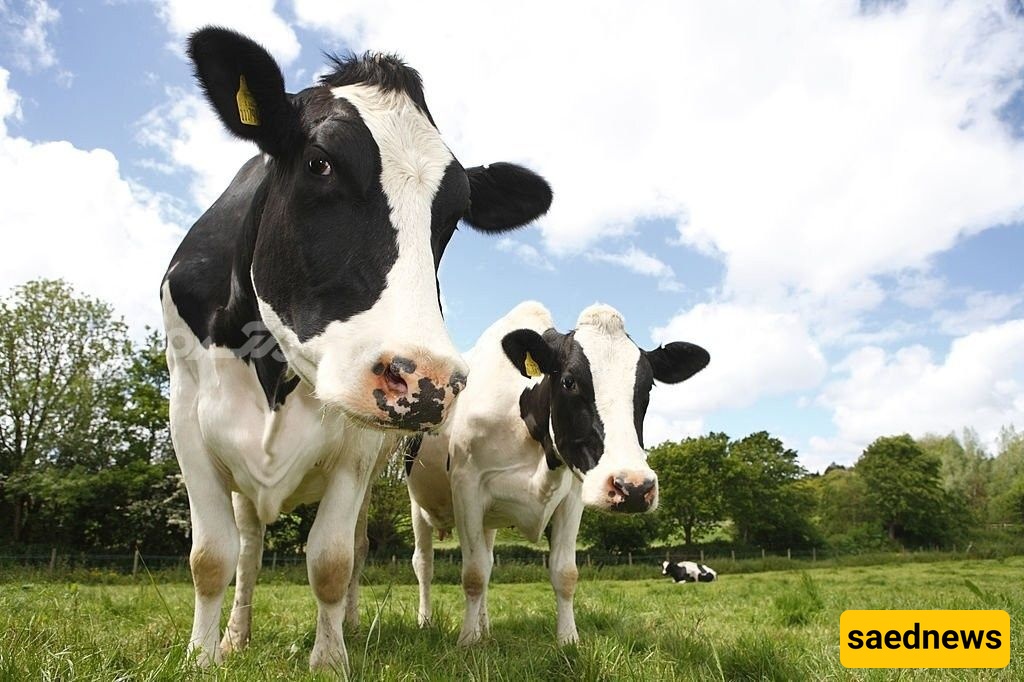
Cattle, known in Middle Persian as gaw and in English as “cow,” are hoofed, ruminant mammals belonging to the Bovidae family. The Bovidae family includes several genera, and the genus Bos includes both cattle and buffaloes.
The ancestor of modern domesticated cattle was an extinct animal known as the aurochs (Bos primigenius). The first animals belonging to the genus Bos appeared in Asia more than two million years ago. Aurochs reached Europe approximately 250,000 years ago.
Cattle do not have incisors or canine teeth in the upper jaw; they have only molars toward the back. The lower jaw, however, contains incisors and canine teeth.
The canine teeth of cattle have evolved to resemble incisors. Overall, there are eight front teeth arranged in a regular row at the front of the lower jaw.
Each of a cow's four feet has a pair of hooves.
The average gestation period of cattle is approximately 286 days.
Cattle are non-seasonal breeders, meaning they are capable of reproducing throughout the year. Pregnancy lasts about nine months, and cows usually give birth to a single calf, although twins and, more rarely, multiple births can occur.
The probability of twins in cattle is approximately 1–2%.
After reaching sexual maturity, which generally occurs from around ten months of age onward, a heifer comes into heat approximately once every 21 days and becomes receptive to a bull.
There are many cattle breeds. Depending on their primary purpose, cattle breeds are generally classified as dairy, beef, or dual-purpose breeds.
Well-known dairy breeds include Ayrshire, Jersey, Guernsey, Brown Swiss, and Friesian varieties, including Dutch Friesian, Holstein Friesian, English Friesian, and Red and White Friesian, as well as Kerry cattle.
Famous beef breeds include Galloway, Aberdeen Angus, Hereford, Shorthorn, Charolais, Limousin, Simmental, Brahman, Santa Gertrudis, and Brangus.
Well-known Iranian cattle breeds include Sarabi, Sistani, Golpayegani, and Dashtyari cattle. There are also forest, coastal, or Caspian breeds found mainly in Gilan, Mazandaran, and Gorgan, as well as mountain breeds found in areas such as Sarab, Ardabil, and other parts of Azerbaijan.
Around 6,000 years before Christ, as humans transitioned from hunting and gathering to agriculture and began developing farmland, wild cattle began entering cultivated fields. Humans gradually captured and domesticated some of these animals.
Cattle were domesticated after dogs, sheep, goats, and cats.
Initially, humans mainly used cattle for meat. Eventually, they learned how to milk cows and make use of their milk. Archaeologists believe cattle domestication took place in Asia and the Middle East between approximately 4,500 and 6,000 BC.
Beef is generally graded according to two main factors: the amount of fat in the meat and the age of the animal. Younger cattle with a higher degree of marbling and fat are generally considered to produce higher-quality meat.
Higher-quality cuts, which tend to be juicier and more tender, are commonly served in hotels and restaurants. Lower-grade meat is more often used for ground beef and other processed meat products.
Beef is first divided into several major sections, from which steaks and other cuts are prepared.
Chuck: One of the best-known sections, commonly used for making hamburgers.
Ribs: Meat from the rib section.
Brisket and shank: Cuts taken from the chest and lower leg.
Flank: Meat taken from the abdominal area.
Round: Often considered one of the leaner and more tender sections, with some cuts used for steaks and fillets.
Loin: Generally more tender and flavorful than many other cuts and widely used for steaks.