SAEDNEWS: Here we will see several examples of paintings whose creators were personally present on the battlefields and later conveyed their experiences with great artistry through their works.
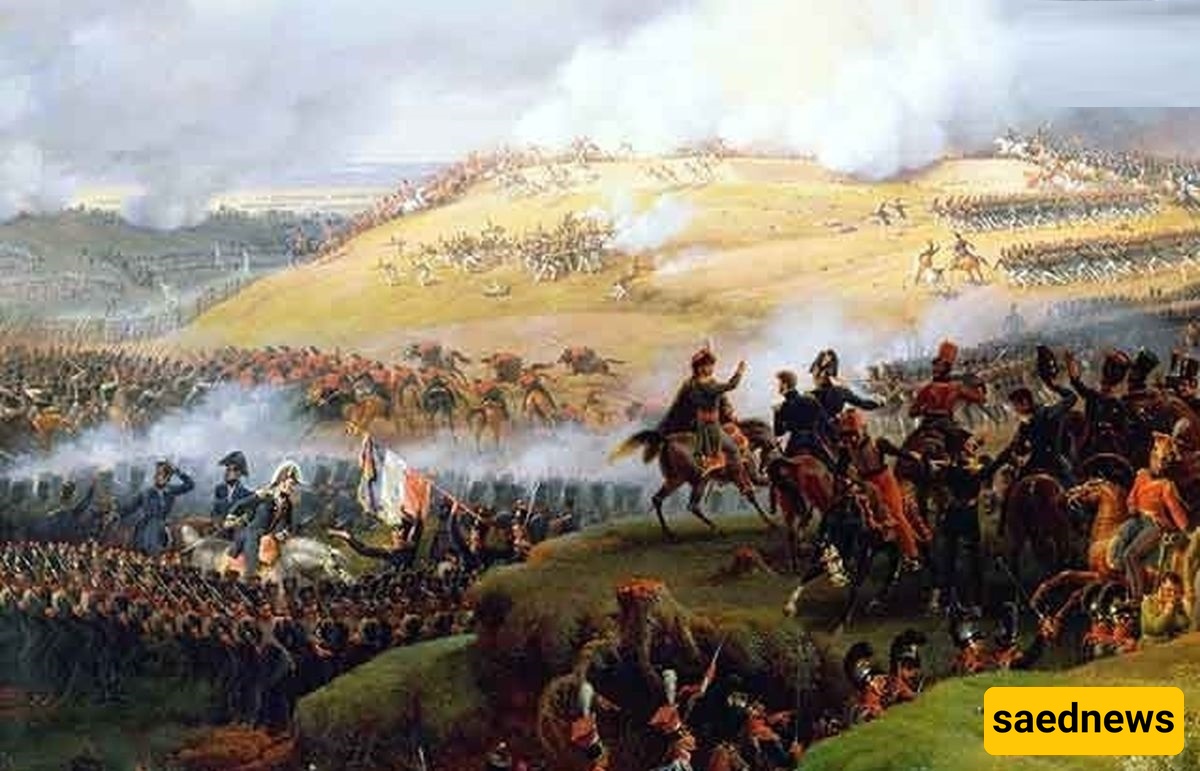
According to the Saednews society desk, throughout the history of art, painters have created striking battle scenes that place the viewer almost inside the heart of combat. These works fall under the category of historical painting, once considered one of the most valuable artistic genres.
According to Faradid, however, directly experiencing the battlefield is fundamentally different from reading historical accounts. Some artists personally took part in wars—as soldiers, nurses, or war artists—and reflected what they saw and felt in their works.
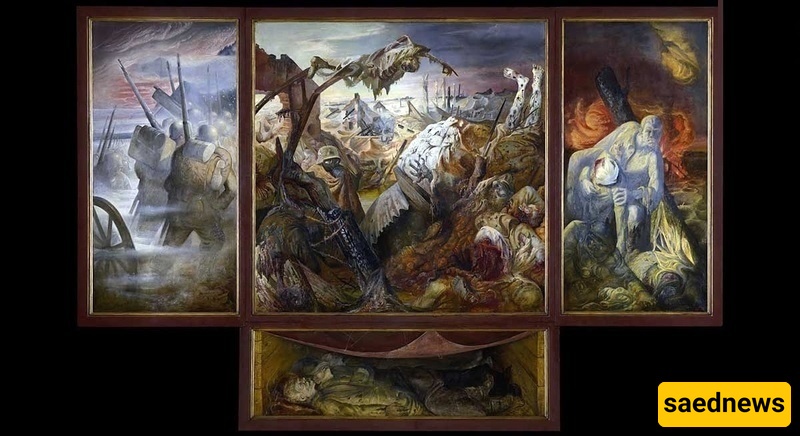
Otto Dix is one such artist who depicted the experience of World War I in a brutally raw and unfiltered manner. The war left around 40 million dead and wounded, and many survivors lived with deep psychological trauma. Dix, like many young Germans of his time, joined the German army in search of honor and fought on various fronts. His famous work “The War” is a multi-panel series showing a single day of battle: from troops advancing to the battlefield itself, to corpses piled in trenches, and a lone surviving soldier whose presence evokes anxiety rather than hope. In another section, a soldier drags his wounded comrade through the flames, while below them, nameless bodies of soldiers lie side by side.
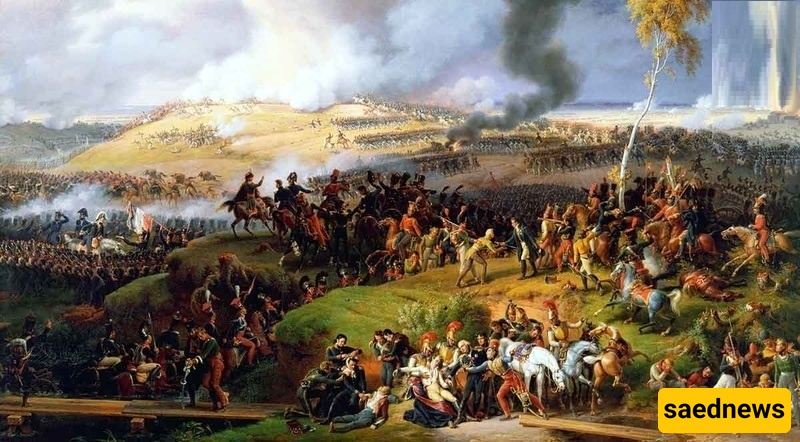
Louis-François Lejeune, a French painter and army officer, also documented the Napoleonic Wars in his art. Alongside his military duties, he continuously sketched scenes, later using them to create large-scale paintings. His work “The Battle of Borodino” depicts Napoleon’s victory over the Russians, yet it remains deeply bloody and mournful. In his memoirs, Lejeune described the battlefield as filled with the wounded and the dead. Nevertheless, his paintings were intended for audiences expecting heroic and grand representations of war, resulting in a blend of realism and grandeur.
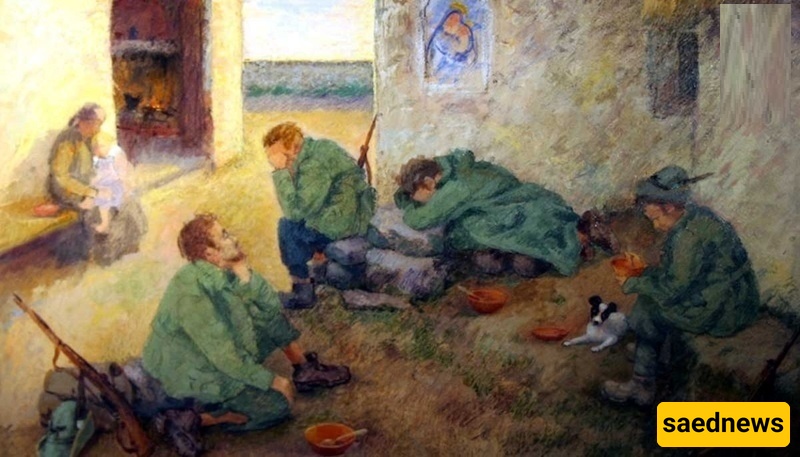
Adriana Filippi, an Italian artist, turned her home into a makeshift medical center for resistance forces during World War II alongside her mother. In addition to providing aid, she documented wartime events in her artwork. One of her paintings shows scattered soldiers after defeat—exhausted and hopeless. At the same time, subtle signs of hope and humanity are present, such as a woman offering them food and a mother holding her child.
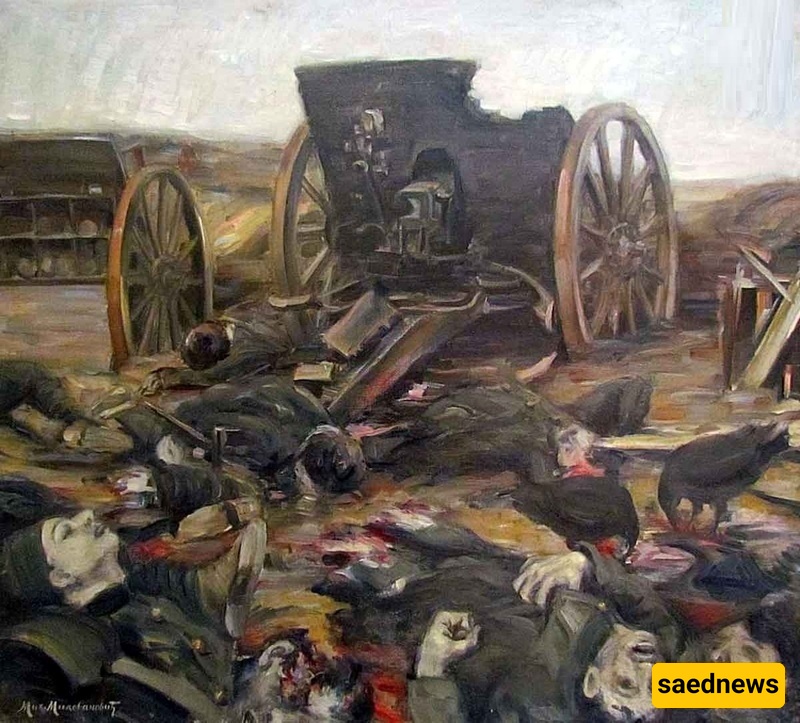
Mihailo Milovanović, a Serbian painter and sculptor, joined the army during the Balkan Wars. His work on the Battle of Kumanovo presents a deeply tragic image of war’s consequences: no living figures are visible, only scattered corpses and extreme violence that create an overwhelming atmosphere of despair.
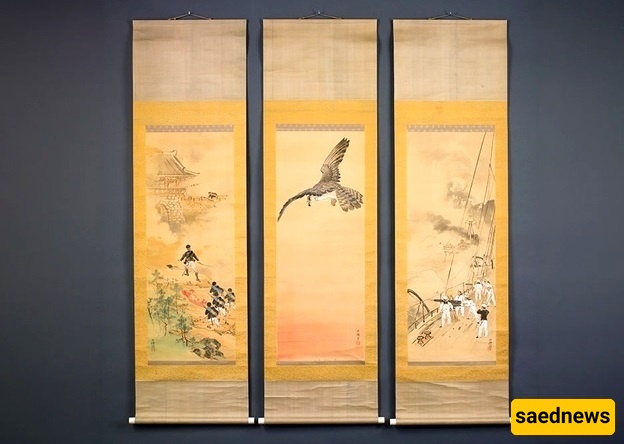
Kobuta Bisen, a Japanese artist of the Meiji era, served as a war artist during the First Sino-Japanese War. His works depict Japanese victory while blending Western artistic influences with traditional Japanese techniques, including the use of empty space and diagonal composition.
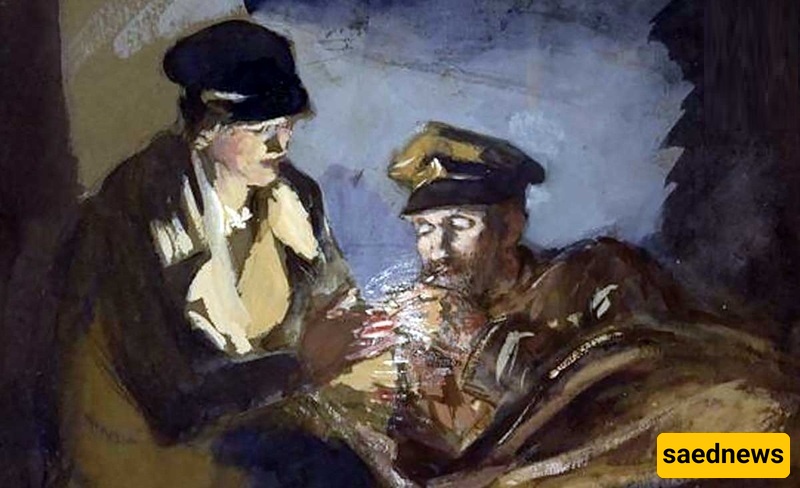
Olive Maddey-Cooke, a British volunteer nurse during World War I, worked in ambulances and medical stations rather than on the battlefield. Her artwork focuses on wounded soldiers. In one of her paintings, an intimate moment between a nurse and a wounded soldier is captured, where the light of a lantern illuminates their faces in the darkness, simultaneously revealing suffering and humanity.
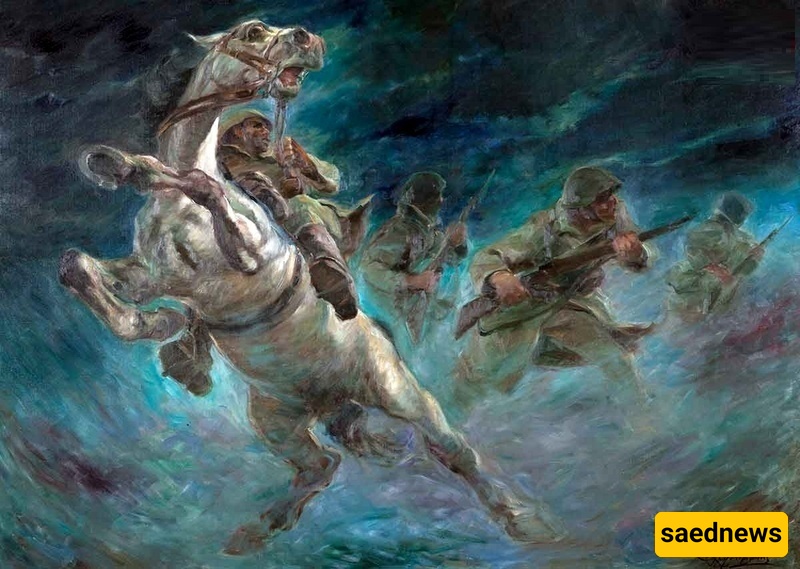
Alexandros Alexandrakis, a Greek artist, was also sent to war and experienced its hardships firsthand. In one of his works, a group of soldiers is shown in the middle of battle, while a frightened horse tries to flee the scene but is pulled back by its rider. The abstract background and strong brushstrokes effectively convey movement, fear, and instability. The painting has a universal quality, allowing soldiers from any time or place to identify with it.