Saed News: With escalating threats from Trump and increasing reciprocal pressures, the ceasefire between the United States and Iran is in a fragile state, and Newsweek has examined five possible scenarios ranging from renewed attacks to a prolonged stalemate.
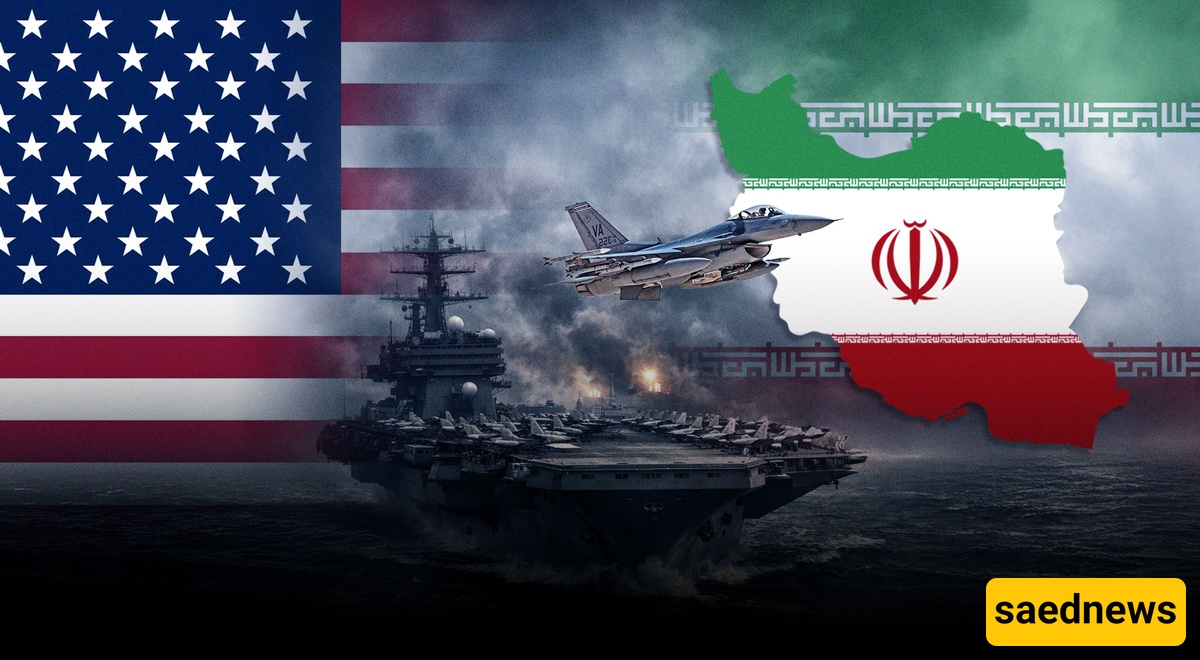
According to SAEDNEWS, citing Newsweek, in a report titled “5 Scenarios of the Iran War Based on Trump’s Decision on Options,” the publication wrote:
After several weeks of a fragile pause in the conflict between the United States and Iran that had created space for diplomacy, the ceasefire now appears to be on the verge of collapse. Donald Trump told Axios that “time is running out” and warned that Tehran would face “much harsher strikes” if it does not present a better deal proposal. According to two U.S. officials, Trump is expected to meet his national security team on Tuesday to review military options.
Will Iran eventually reach a position acceptable to Trump, or will Tehran calculate that time is on its side and decide to continue confrontation? Below are five possible scenarios for the future of the Iran war:
Military options are back on the table, as U.S. officials say Iran has refused to make significant concessions on its nuclear program.
The White House may choose renewed strikes to force Iran back to the negotiating table, gain concessions on its nuclear program, and reinforce Trump’s narrative of “successful coercive diplomacy.” This scenario is considered plausible because Trump’s public demand is simple: Iran must present a better proposal or face stronger attacks.
The risk for Trump is that “greater intensity” becomes a repeated test that he must continue implementing to keep his threat credible. Iran’s current stance remains maximalist: demands for war reparations, lifting of sanctions, release of frozen assets, and sovereign rights over the Strait of Hormuz.
A renewed U.S. bombing campaign may lead to a limited agreement on access, inspections, or shipping before resulting in significant nuclear rollback. Ultimately, it could create a preliminary deal to end the war and open the path to a broader agreement, allowing both sides to claim victory, reducing immediate economic pressure, but postponing core nuclear issues.
The most stable scenario is Iran backing down before the war resumes.
This could appear as “mutual de-escalation,” mediated by Pakistan and Qatar, helping Tehran accept some nuclear or shipping restrictions in exchange for gradual easing of U.S. pressure. Iran has strong economic incentives for a deal, as the current deadlock disrupts Gulf shipping and raises energy prices, increasing pressure on its economy over time.
Trump also has incentives to accept an incomplete deal, as oil surged after the recent standoff and Brent reached over $111, increasing inflationary pressure ahead of midterm elections. Continuing the war also carries political and economic costs for Trump and diverts attention from other issues such as Cuba, Russia–Ukraine, and China.
This scenario requires language in which Iran can claim “non-surrender” while Trump can claim “achievement.” The main obstacle is Trump’s own ultimatum, especially as Iranian state media has described the U.S. proposal as equivalent to surrender.
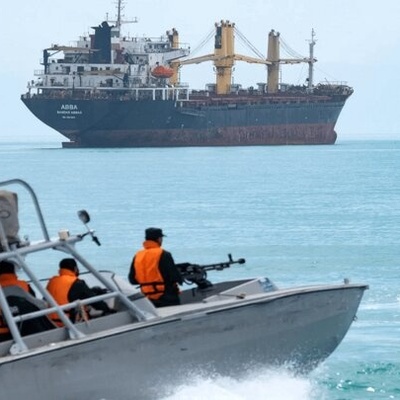
The most likely negative outcome is not immediate regional war, but a cycle of U.S. strikes, Iranian responses, shipping disruptions, and renewed mediation efforts without a clear winner. The ceasefire has already shown instability around U.S. attempts to reopen the Strait of Hormuz. Trump describes the conflict as “limited” and claims “full control,” while Iran effectively restricts the strait.
U.S. military superiority is overwhelming, but Iran does not need parity to impose costs. If it can make the Strait of Hormuz unsafe or unpredictable, the conflict becomes economic competition.
Iran faces reduced exports, storage pressure, and production stoppages, while the U.S. faces higher energy prices, allied pressure, and costs of a prolonged conflict. Both sides may present it domestically as “managed,” but neither achieves its goals.
The most dangerous scenario is when Gulf countries no longer tolerate attacks and openly join the U.S. to force Iran into a deal. This could turn into a regional war with broad humanitarian and economic consequences.
Reports of direct strikes by the UAE and Saudi Arabia against Iran have circulated, though none have been officially confirmed. These actions are said to be in response to Iranian missiles and drones targeting their territories. The drone attack on the Barakah facility in the UAE has intensified concerns.
The UAE foreign minister told the IAEA director that the incident had “no radiological impact,” but politically it increased the likelihood of Gulf support for military action against Iran.
The least dramatic but perhaps most decisive scenario is a ceasefire that formally remains in place, while economic pressure, sanctions, tensions in Hormuz, drone risks, and legal disputes gradually intensify.
In this scenario, Iran’s economy slowly erodes: storage capacity fills, production halts, exports decline, and public services face funding constraints. These pressures continue without direct war, though analysts disagree on their speed. The scenario also creates legal ambiguity under U.S. War Powers law.
The key mistake is treating these scenarios as separate paths. In reality, they overlap. Trump may strike, Iran may retreat, the Strait may escalate, and Gulf states may intervene—but all of them now unfold under a ceasefire that functions more politically than diplomatically.
Unless the next proposal clearly defines how the war ends, how shipping resumes, and how the nuclear program is limited, the U.S. may face the most unusual situation: a war that continues simply because everyone still calls it a “ceasefire.”