SAEDNEWS: Fate does not always decide our lives the way we imagine. Someone like “Farshad Khansari,” born in Arak, could never have imagined that destiny would bring him together with a girl whose mother is the queen of one of Africa’s major tribes.
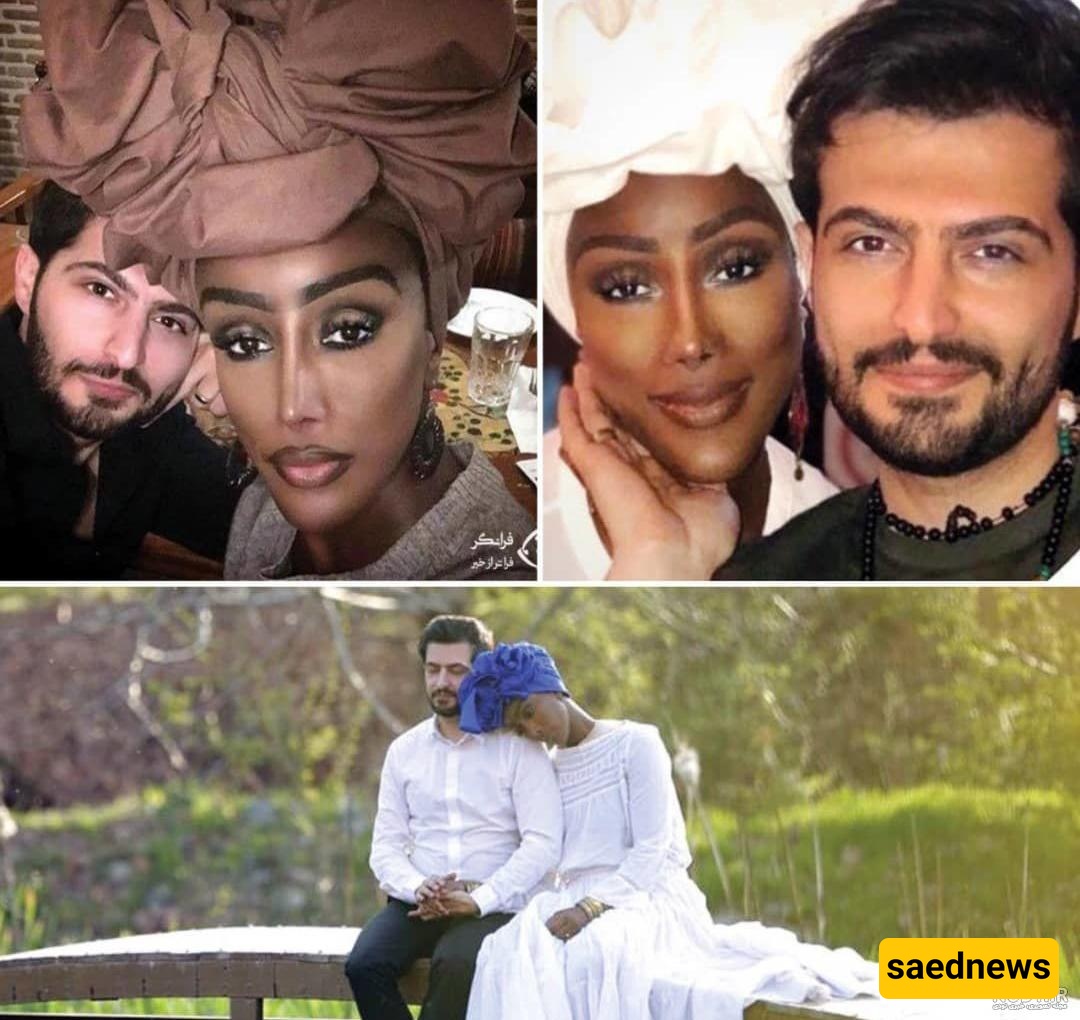
According to Saed News, citing Khorasan Newspaper, while Farshad was living and working in Tehran, a young woman from Mali packed her suitcase and traveled to Iran. She arrived without knowing that she would leave a piece of her heart in Iran’s atmosphere.
They were born far apart from each other and had countless differences—differences that, in many people’s minds, would make their union seem impossible. Yet news of their marriage spread on social media one summer day, and many became curious about how an Iranian man married an African “princess,” in a marriage conducted according to Islamic principles.
Shortly after the beginning of their life together, a video of the couple was shared online. The exact location was unclear, perhaps a small café or a modest shop. The young man, constantly smiling, interacted with curious onlookers gathered around him. The woman’s appearance also stood out compared to other Black women seen in Iran; she wore a voluminous headscarf tied in a style that evoked abstract African art and cubist paintings.
After some searching, I found Farshad’s Instagram page. I went through the photos one by one and was amazed by the contrast between two people who, at first glance, seemed to have little in common and were raised in completely different cultures. This unexpected harmony created a new portrait of love in my mind, prompting me to speak with Farshad about their relationship.
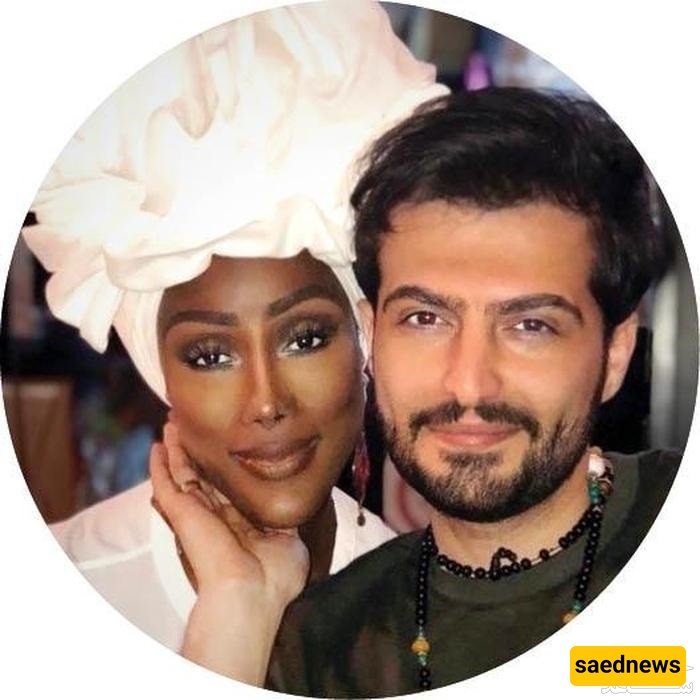
Farshad, originally from Arak, studied civil engineering and is 29 years old. His wife, “Fati Boukom,” is also the same age. Alongside his engineering work, Farshad also works part-time as a French interpreter.
He explains that they met in Iran:
“You may find it surprising, but we met here in Iran. Two years ago, Fati came to Iran to visit a Persian-speaking friend. Around the same time, I went to her hotel for translation work, and that is how our love story began.”
Fati is originally from Mali. Her mother is described as a tribal queen, and her father is a diplomat who occasionally travels to Iran to meet an old Iranian friend. Through these connections, Farshad gradually became closer to her family, and shared interests slowly formed between them. Soon, they decided to stay in contact more seriously.
After a short time, Fati unexpectedly returned to Iran on Farshad’s birthday. He recalls:
“Fati knows how to make me happy. She understands my concerns, and our goals align. Our love was not a one-day attraction. We spent about a year getting to know each other before deciding to marry.”
The couple had to agree on many issues, including where they would live and cultural traditions such as dowry customs.
Farshad explains:
“My wife lives and works in London. We agreed to spend the first five years of our marriage in London and then move to Iran. She has no problem living in Iran and has become very fond of the country due to the positive experiences she has had with Iranians.”
When asked about dowry traditions, he adds:
“When I spoke to her about it, she thought for a moment and jokingly said she wanted ten white camels. Then she laughed and said she was only joking. In the end, she didn’t ask for anything.”
They also organized their wedding themselves using their savings. According to Farshad, they did not feel the need for new household items, as both already had basic necessities for starting a life together. His wife also had no issues with Iranian dress codes, as she already used a traditional head covering from her culture and believes modesty helps preserve personal boundaries.
Farshad describes their wedding as unusual mainly because of its international guests:
“We had guests from all over the world—Russia, Canada, Mali, France, and more. Unfortunately, there are many false narratives about Iran that discourage tourism. But those who came trusted us, and they all fell in love with Iran and plan to return.”
The wedding also featured a mix of cultural elements. Fati’s mother designed traditional African outfits for them, and the ceremony included diverse food, clothing, and customs, making it a unique and memorable celebration.
Farshad reflects on cultural differences in marriage expectations:
“Some people exaggerate small differences. Focus on what truly matters. Character, honesty, and understanding are the most important things. Culture, nationality, or appearance should not determine your happiness.”
The couple says they often attract attention in public.
“Wherever we go, people gather around us and take photos—on the streets, in markets, even in tourist places like Masuleh. We can rarely enjoy privacy,” Farshad says.
Despite this, he expresses gratitude toward the Iranian people for their kindness, noting that their behavior has helped his wife feel comfortable in Iran.
Fati is currently learning Persian through language classes, though she already knows a few conversational phrases. Farshad adds that Persian is so beautiful that sometimes his wife thinks he is speaking poetry when he talks.
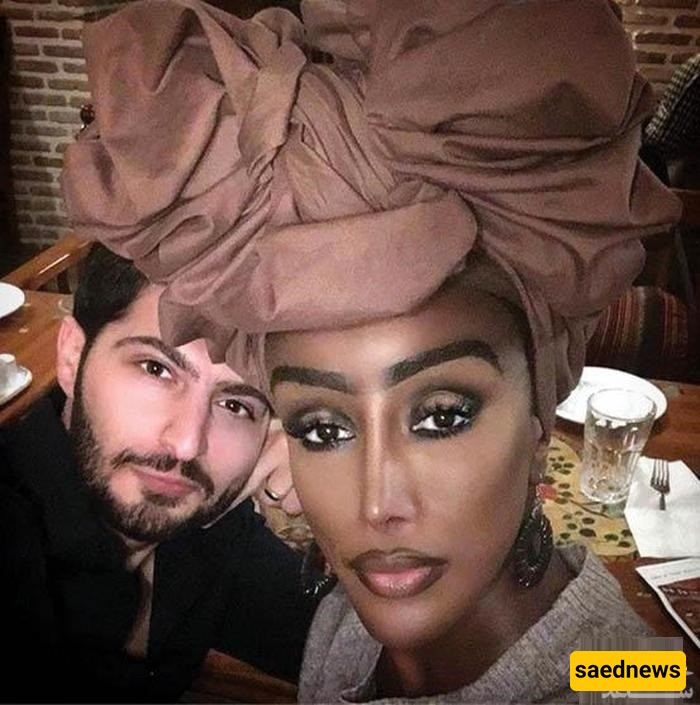
Farshad believes the two cultures are more similar than people assume:
“My family is very understanding, and her family also had no objection to our marriage. Iranian hospitality played a big role in making her feel welcome.”
He describes the first meeting between Fati and his family as very warm. His mother welcomed her kindly when they visited Arak.
He continues:
“We were engaged for about one year and four months. I realized that our cultures share many similarities, especially in respecting elders and maintaining strong family values. In ancient times, Iran and Mali also had historical relations.”
He adds that despite geographical distance, he and his wife share remarkably similar thoughts and goals:
“It still feels like a miracle to me that someone so far away can think so similarly to me.”
At the end of the interview, Farshad shares a broader message:
“Stop being overly negative. Don’t focus only on problems like rising prices. There are still many good things in our country. Life is short, so value it.”
He emphasizes that differences in background should not define relationships:
“I wasn’t concerned about where my wife came from. I was looking for someone with shared values. If someone brings you peace and understanding, don’t let unnecessary differences take that away from you.”
He concludes by encouraging people to focus on understanding rather than judgment, and to treat others with humanity and openness.