SAEDNEWS: Afghan-style okra transforms 700 grams of fresh okra into a deeply seasoned dish with tomatoes, garlic, onion, coriander seeds and lemon juice. The recipe is simple enough for a home kitchen, while a few preparation tricks can help control the vegetable’s naturally slippery texture.
According to SaedNews: Okra has a reputation for being a little tricky. Cook it the wrong way and its naturally slippery, mucilaginous texture can dominate the dish. Prepare it carefully, however, and the same vegetable can become the centerpiece of a comforting, aromatic meal.
Afghan-style okra takes that second approach.
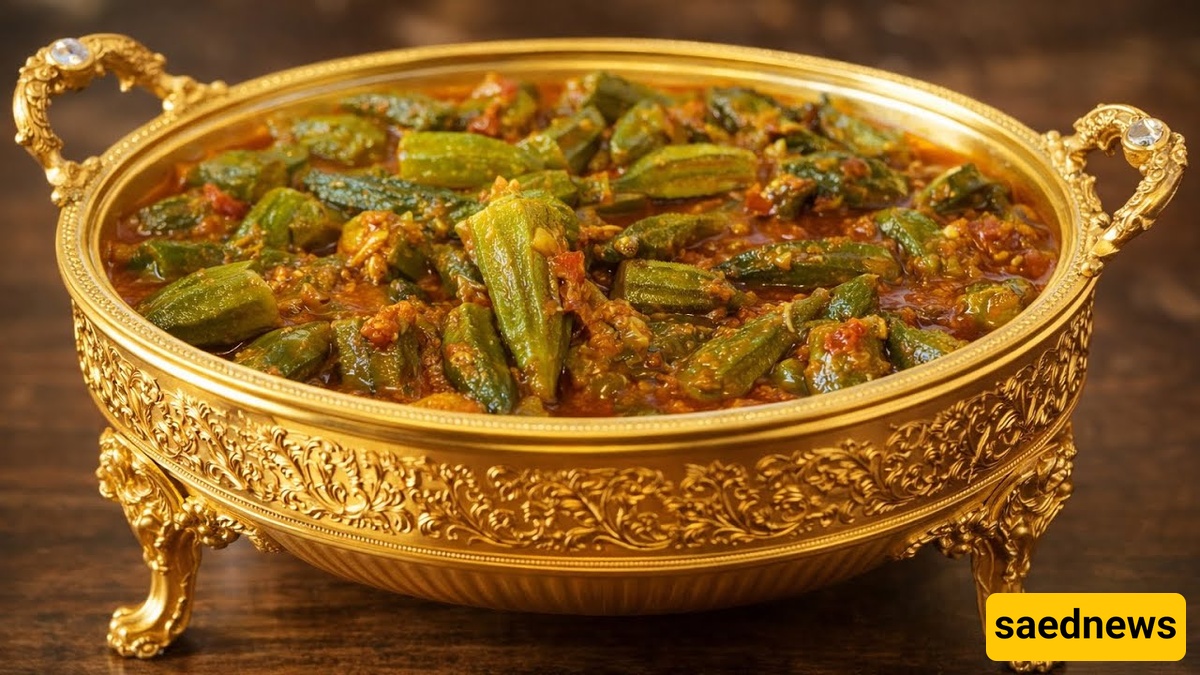
Built around fresh okra, tomatoes, onion and garlic, the dish gets its character from a combination of turmeric, black pepper, coriander seeds, red pepper and tomato paste. A final splash of lemon juice adds acidity that cuts through the richness and brings the flavors together.
The recipe is traditionally served with rice or bread, making it suitable as a main meal or as an appetizer or side dish.
The appeal of this preparation lies in its balance.
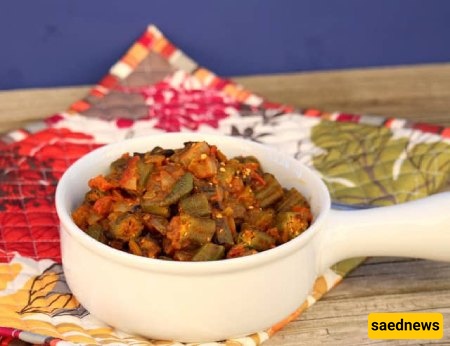
The okra remains at the heart of the dish, but it is surrounded by a tomato-based sauce flavored with garlic and warm spices. The lemon juice adds a bright finish, while the tomato paste deepens the overall flavor.
It is also a practical recipe. The ingredient list is relatively straightforward, and the cooking process relies on familiar techniques such as sautéing, simmering and seasoning.
For the recipe, 700 grams of okra are combined with one large onion, three tomatoes and three garlic cloves. The sauce also includes 100 milliliters of oil, two tablespoons of tomato paste, one and a half teaspoons of salt, half a teaspoon each of black pepper, turmeric and red pepper, plus one teaspoon of coriander seeds.
Two tablespoons each of water and lemon juice complete the basic cooking mixture.
Start by washing the okra and trimming off the ends.
The recipe then calls for cutting each piece horizontally into two portions. At this stage, one of the most important issues is moisture and the vegetable’s natural mucilage—the substance responsible for the characteristic slippery texture some people dislike.
The supplied recipe suggests soaking the okra in salted water for about 30 minutes before cooking. This is presented as a way to help reduce the mucilaginous effect.
For particularly firm okra, another option in the recipe is to boil it in water for about 10 minutes before adding it to the main dish.
There is also an important warning: overcooking can make the texture excessively gelatinous, so the okra should not be cooked for longer than necessary.
Once the okra is prepared, turn to the sauce.
Peel and finely dice the onion. Grate the garlic.
Heat the oil in a large pot, then sauté the onion until it softens. Add the garlic and continue cooking until it becomes golden.
Next comes the tomato paste.
Stir it into the pot and cook it briefly until its color opens up and its flavor develops. The fresh tomatoes are then peeled, puréed and added to the mixture.
At this point, the kitchen starts to fill with the aromas that define the dish.
Add the salt, black pepper, turmeric, coriander seeds and red pepper, stirring so the seasonings are distributed through the tomato base.
Add the prepared okra and sauté it with the tomato mixture for about 10 minutes.
Then add two tablespoons of water and two tablespoons of lemon juice.
Lower the heat and allow everything to cook gently for around 30 minutes.
This final simmer gives the okra time to absorb the tomato and spice flavors while the sauce develops a richer consistency.
The result is a dish in which the vegetable is no longer an isolated ingredient. Instead, every piece is coated with the seasoned tomato mixture, with lemon providing a sharper finish.
For many people, texture is the deciding factor when it comes to okra.
The vegetable naturally contains mucilage, which can produce a slippery or somewhat gelatinous consistency during cooking. The recipe specifically highlights soaking the okra in salted water beforehand as one way to address this issue.
Another suggested method is briefly boiling particularly firm okra before incorporating it into the dish.
But cooking time remains important.
Keeping the okra on the heat for too long can work against the desired result. The recipe therefore recommends avoiding excessive cooking to prevent the vegetables from becoming overly gelatinous.
These small preparation details can make a noticeable difference in how the finished dish feels on the plate.
Although the basic version is centered on vegetables, the recipe can be adapted.
Ground meat, chicken or fish can be added for a heartier meal. Some variations also include cumin powder or curry seasoning.
That flexibility makes the dish easy to adjust depending on what is available in the kitchen and how substantial you want the final meal to be.
For a vegetarian table, the vegetable-based version can stand on its own alongside rice or bread. For a more filling dinner, adding meat or another protein creates a different interpretation of the same Afghan-style preparation.
Beyond its culinary appeal, okra is described in the source as a low-calorie vegetable containing fiber, vitamin C, vitamin A, potassium and folate.
Fiber is associated with digestive health and is also linked to helping manage cholesterol as part of an overall healthy diet.
Vitamin C contributes to normal immune function, while vitamin A is important for eye health and vision.
Potassium plays a role in regulating blood pressure, and folate is particularly important during pregnancy because of its role in fetal growth and development.
These nutritional qualities add another reason to include okra in a varied diet, although no single food should be viewed as a substitute for medical treatment or a balanced overall eating pattern.
Once the okra has finished cooking, it can be brought directly to the table.
The traditional serving suggestion is simple: pair it with rice or bread.
A scattering of chopped parsley or fresh cilantro can be used as a garnish, adding a fresh visual contrast to the rich tomato-colored sauce.
The dish can work as a main meal, but it can also be presented as an appetizer or side dish depending on the rest of the menu.
Afghan-style okra demonstrates how a familiar vegetable can change dramatically depending on the ingredients and cooking method around it.
There is nothing complicated about the basic process: prepare the okra, build a tomato and garlic base, season it generously, sauté the vegetables, then let everything simmer gently with lemon juice.
Yet the combination produces a dish with several layers of flavor—savory tomato, aromatic garlic, warm spices and a bright citrus finish.
For anyone who has avoided okra because of its texture, the preparation techniques in this recipe may be worth trying. And for those who already enjoy the vegetable, the Afghan-style version offers another way to put it at the center of the meal.
Sometimes, the difference between an ordinary vegetable dish and one people remember comes down to a few simple details.