SAEDNEWS: Rose-shaped baklava is one of the eye-catching traditional sweets associated with Qazvin, combining delicate pastry with pistachios, almonds, cardamom and rosewater.
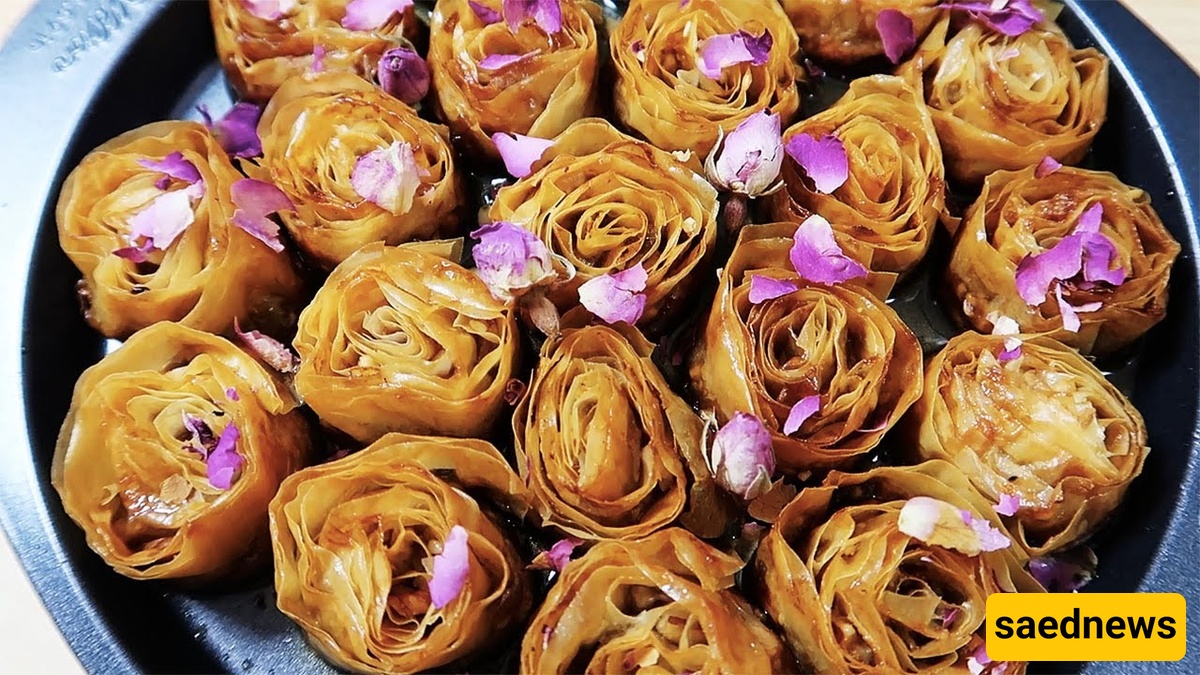
According to SaedNews: Some desserts are remembered for their flavor, while others make an impression before the first bite. Rose-shaped baklava belongs to both categories. Its delicate spiral form resembles a small flower, turning a familiar nut-filled pastry into a dessert that can immediately stand out on a serving platter.
The Qazvin version is traditionally known as rose baklava and is also referred to as Parchami or Pich baklava. It is made using dough that can be shaped by hand into a flower-like form, filled with a fragrant mixture of pistachios and almonds, and finished with sweet syrup flavored with rosewater.
One of the appealing features of this recipe is that there is more than one way to prepare it. The shaped baklava can be baked in the oven, or it can be fried in hot oil before being placed in syrup. That flexibility makes the dessert suitable for different kitchen preferences.
The beauty of this baklava lies in its combination of appearance and texture.
The pastry is rolled very thin, then filled with a mixture of ground pistachios, almonds and powdered sugar. Rosewater and cardamom add the characteristic fragrance associated with the filling.
For the dough, the recipe uses one egg yolk, one-quarter cup of milk, one tablespoon of butter, between 75 and 100 grams of flour, and one-quarter teaspoon of baking powder. An additional 20 grams of butter is used during shaping and baking.
The filling consists of one cup of ground pistachios, one cup of ground almonds, half a cup of powdered sugar, one tablespoon of rosewater and half a teaspoon of cardamom powder.
The syrup is deliberately simple: one cup of sugar, half a cup of water and one teaspoon of rosewater.
Begin by melting one tablespoon of butter. Combine it with lukewarm milk, the egg yolk and baking powder, stirring until the mixture is smooth.
Add the flour gradually rather than all at once. The exact amount may vary, so the dough should be mixed until it comes together without relying blindly on the upper or lower end of the suggested quantity.
Once the dough has formed, cover it and let it rest at room temperature for about two hours.
This resting period is an important part of the preparation because the dough needs time before it is rolled and shaped.
While the dough rests, prepare the filling.
Mix the ground pistachios, ground almonds and powdered sugar, then sift the mixture so that it remains fine and evenly textured. Add the rosewater and cardamom and combine everything thoroughly.
Cover the filling and set it aside until the dough is ready.
This mixture provides the central flavor of the dessert. Pistachio contributes richness and color, almond gives body to the filling, while rosewater and cardamom create the distinctive Persian-style aroma.
This is the stage where the recipe becomes especially interesting.
Roll the rested dough out on a lightly floured surface until it is very thin. Use a large round cutter to cut circles from the dough.
Melt the additional 20 grams of butter and brush it onto the center of each piece. Place about half a tablespoon of filling in the middle, then gather and twist the dough around the filling to create a flower-like shape.
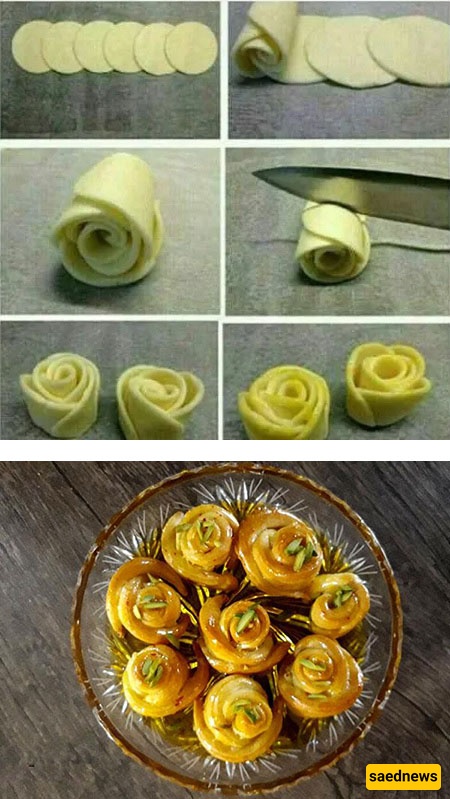
There is another shaping method for those who want a more defined rose appearance.
Use a smaller round cutter and arrange four or five dough circles in a horizontal line, overlapping each circle by about one-third. Place the filling near the first circle, then roll the connected circles around the filling. Trim the end of the dough with a knife so the base is even, and gently open the edges of the circles to make the flower shape more pronounced.
The shaping process may require a little patience, but it is also the step that gives the finished dessert its visual appeal.
Preheat the oven to 160 degrees Celsius.
Line a baking tray with parchment paper and arrange the shaped baklava on it. Brush the tops with butter and bake for about 20 minutes, or until the edges begin to turn lightly golden.
Do not immediately pour the syrup over the hot pastries. According to the recipe, the baked baklava should first cool completely.
Meanwhile, prepare the syrup by combining the sugar and water in a saucepan. Let the sugar dissolve over the heat without stirring. Once the syrup thickens, add the rosewater and remove the pan from the heat. A pinch of citric acid can be added to help prevent crystallization.
When the baklava has cooled, place it in the warm syrup. Leave it there for about three hours before removing it.
For those who prefer not to bake the baklava, there is another option.
The shaped pastries can be fried in hot oil until cooked and lightly colored. Once removed from the oil, place them on paper towels to absorb excess oil, then transfer them into the syrup.
This method produces a different cooking experience while preserving the basic combination of pastry, nuts and syrup.
Rose-shaped baklava is not limited to the Qazvin tradition. A Turkish-style version can also be prepared with ready-made phyllo pastry.
For this version, the filling uses chopped walnuts, chopped pistachios, brown sugar and sesame seeds. Melted butter is also needed for brushing the pastry.
The syrup is made from 200 milliliters of water, 100 grams of brown sugar, one tablespoon of rosewater and one teaspoon of lemon juice.
The Turkish-style preparation begins with the syrup. Combine the water and brown sugar and heat until the sugar dissolves. Once the mixture boils, add the rosewater and lemon juice and let it simmer for about five minutes until it thickens. Set it aside.
For the pastry, combine the walnuts, pistachios, sugar and sesame seeds.
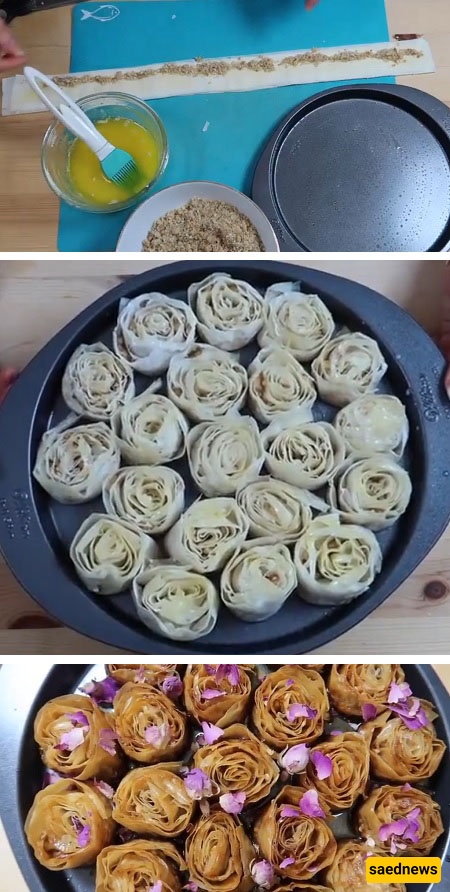
Brush the bottom of a baking dish with melted butter. Cut the phyllo sheets into strips approximately 5 to 6 centimeters wide and brush them with butter.
Place a narrow line of the nut mixture along one side of each strip. Fold the other side over the filling and roll the pastry into a rose-like shape. Arrange the rolls in the baking dish and cover them with a damp towel while working so the phyllo does not dry out.
Finally, brush the shaped baklava with butter and bake at 180 degrees Celsius for about 20 minutes, until the edges become golden.
Unlike the Qazvin method, the Turkish-style version is covered with syrup while it is still hot after coming out of the oven. It is then left to cool.
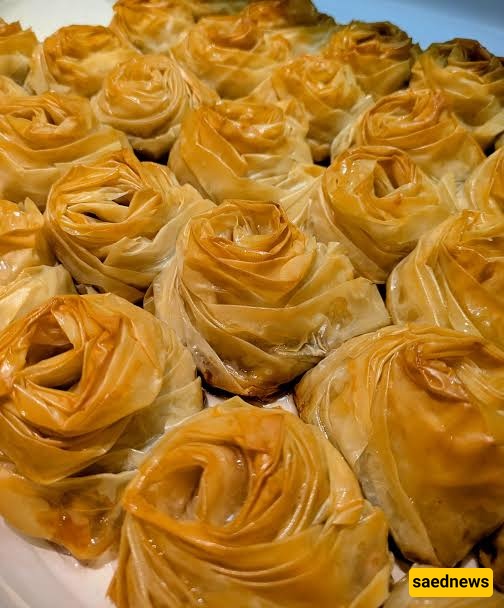
What makes rose-shaped baklava particularly appealing is the way its presentation becomes part of the recipe itself. The floral shape transforms a traditional pastry into something that looks carefully crafted, even though the ingredients remain relatively familiar.
The combination of nuts, butter, delicate pastry, rosewater and cardamom also gives the dessert a distinctive character. Whether prepared in the Qazvin style with homemade dough or the Turkish-inspired method using phyllo sheets, the finished result offers both visual appeal and a rich, sweet flavor.
For anyone planning a special dessert, rose-shaped baklava can turn an ordinary serving tray into something much more memorable. And perhaps that is the real charm of this traditional sweet: with a little patience during shaping, simple pastry and nuts can become a dessert that looks almost like a bouquet.