SAEDNEWS: Feeling sleepy after a meal is a common experience caused by several factors. Meals high in carbohydrates, heavy fats, or large portions can affect energy levels and make the body feel tired. Understanding these causes can help people choose foods that support better focus and energy.
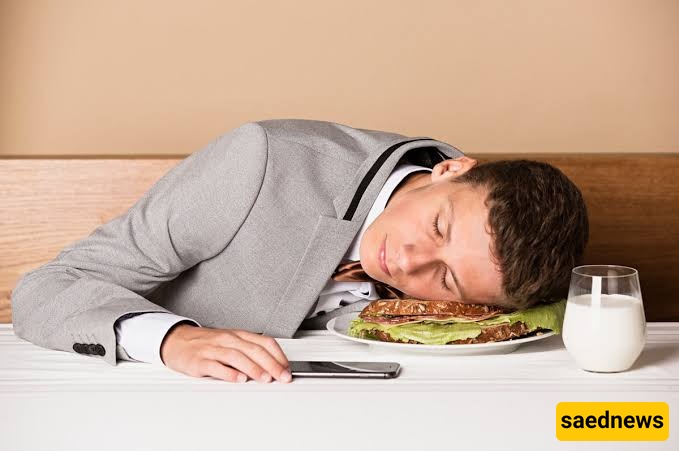
According to SAEDNEWS, After eating, the body directs more energy toward digestion and nutrient absorption. The digestive system becomes more active as it breaks down food, which can create a temporary feeling of relaxation and tiredness. Large meals require more effort from the body, making post-meal sleepiness more noticeable.

Foods rich in simple carbohydrates, such as sweets, white bread, and sugary drinks, can quickly increase blood sugar levels. The body responds by releasing insulin to help move sugar into cells. A rapid rise followed by a drop in blood sugar may leave people feeling weak, tired, or less focused.
Some foods contain nutrients that influence brain chemicals related to relaxation and sleep. For example, foods with carbohydrates can help the body produce more serotonin, a chemical associated with calmness and improved mood. Protein-rich foods containing tryptophan may also contribute to feelings of relaxation when combined with other nutrients.
Eating very large portions or foods high in fat can slow digestion and make the body feel heavier. Fried foods, rich sauces, and oversized meals often require more time and energy to process. As a result, people may experience reduced alertness and a desire to rest after eating.
To avoid excessive sleepiness after meals, balanced portions with vegetables, lean proteins, whole grains, and healthy fats can help maintain stable energy levels. Eating slowly, avoiding overeating, and staying hydrated are also useful habits. Making smarter food choices allows the body to digest efficiently without causing strong feelings of tiredness.