SAEDNEWS: Historians suggest that hookah smoking, believed to have originated in the Indian–Persian region, may have begun during the reign of Shah Tahmasp I and became widespread during the Qajar dynasty.
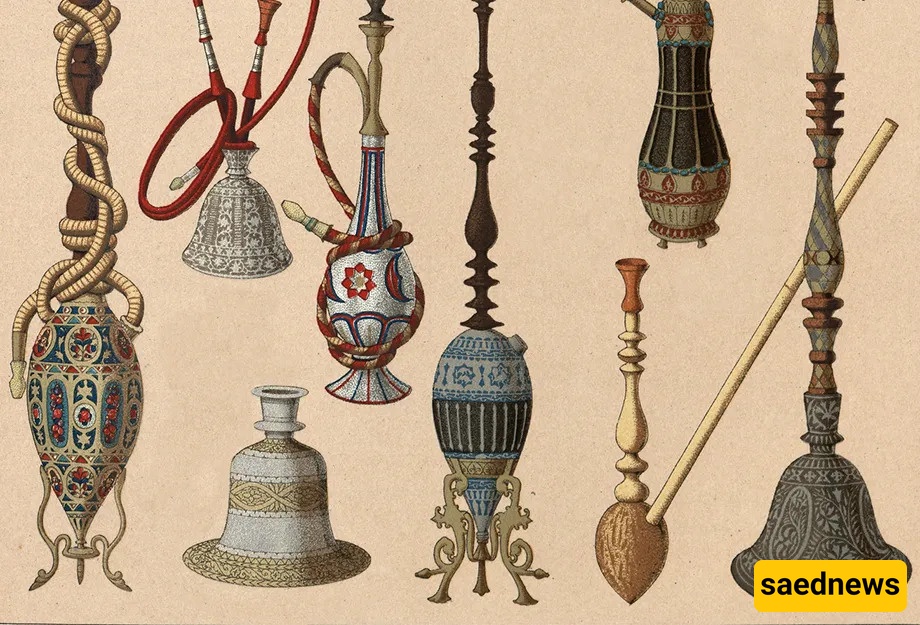
According to Saednews, For those interested in the history of everyday objects and who invented them, it may be fascinating to learn how far back the history of hookah smoking in Iran goes—and who first smoked it.
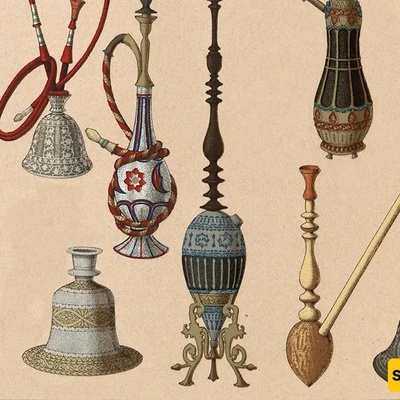
Abu’l-Fath Gilani (died 1588), an Iranian physician at the court of Akbar I, the Mughal emperor of India, is credited with introducing a method of passing tobacco smoke through a container of water to cool and supposedly purify it. This innovation is associated with the development of the hookah, known as a huqqa in the Indian subcontinent.
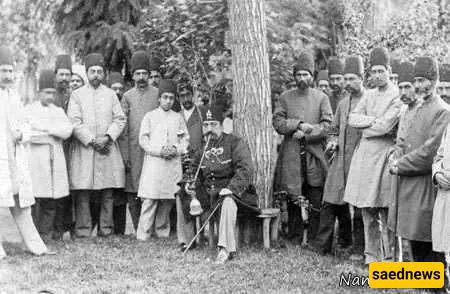
Historians suggest that hookah smoking, an invention with Indian and Iranian roots, may have begun during the reign of Shah Tahmasp I and became widespread during the Qajar dynasty. During the reign of Naser al-Din Shah, it even became a symbol of public protest.
The Tobacco Protest was a social movement opposing the granting of an exclusive 55-year tobacco concession to the British-owned Regie Company. Following a religious decree issued by Grand Ayatollah Mirza Shirazi, tobacco consumption was declared forbidden. People responded by smashing their hookahs, marking one of Iran’s early major anti-colonial protests.
On the day Mirza Shirazi issued his decree prohibiting tobacco use, people in Tehran reportedly smashed their hookahs by the afternoon and set fire to tobacco warehouses. In one city, a group of young men even stormed the governor’s residence to stop him from smoking a hookah.
They reportedly told him, “Mirza has declared that using tobacco is equivalent to waging war against the Hidden Imam! We will not allow you to go to war against the Imam of the Age!”
Even inside the royal palace, the women broke their hookahs. When Naser al-Din Shah asked Anis al-Dawla why the hookahs were being taken apart and collected, she replied, “Because hookah smoking has been forbidden.”
The Shah frowned and asked, “Who has forbidden it?”
She answered calmly, “The same person who made me lawful for you.”
The Shah said nothing more and walked away. To avoid damaging his royal dignity, he subsequently refrained from ordering his servants to bring him a hookah. The hookahs were removed throughout the royal court.
This may have been one of the earliest bans on hookah smoking in Iran. Since then, however, hookah consumption has been prohibited and permitted several times for social, medical, and regulatory reasons—not only because of religious rulings.
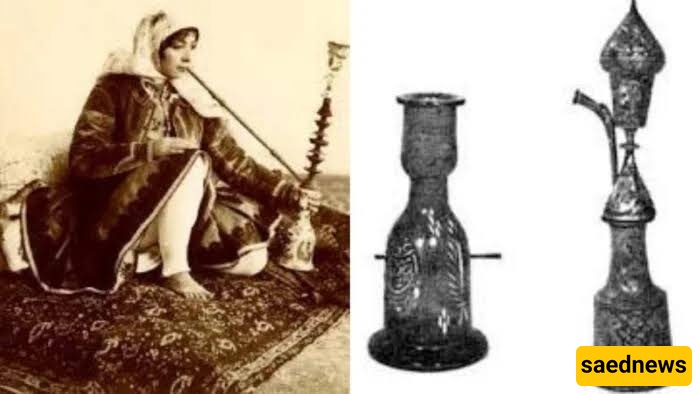
Whether people approve of it or not, hookah smoking appears to have become firmly embedded in Iranian society in recent years. Some young women and men have even surpassed Naser al-Din Shah in their enthusiasm for it.
Today, hookah smoking is no longer confined to traditional teahouses and coffeehouses. It can be seen in parks, recreational areas, shopping districts, and outside shops. Its popularity is also evident in private homes and family gatherings.
Following the Tobacco Protest during the Qajar era, another significant effort to restrict tobacco use came in 1992, when Iran’s Anti-Tobacco Association proposed banning hookah smoking to the Cabinet, the Presidency, and Parliament.
Between 1992 and 1997, government and Expediency Discernment Council decisions established restrictions prohibiting cigarette smoking and the use of tobacco products in public places. Nevertheless, regulations changed several times, and hookahs eventually returned to traditional coffeehouse tables.
In 2004, hookah smoking was again prohibited in public places across Iran. However, the ban did not last. In 2005, an amendment to the regulations governing smoking and the distribution of cigarettes and other tobacco products in public places allowed coffeehouses and traditional restaurants to serve cigarettes and tobacco products.
Less than a year later, hookahs were once again removed from establishments.
Between then and 2007, coffeehouse owners faced relatively limited scrutiny from the Ministry of Health’s health authorities. During President Mahmoud Ahmadinejad’s administration, the issue of banning hookahs resurfaced. Opposition from the Cultural Heritage Organization and the coffeehouse owners’ trade association led to a more moderate approach.
As a result, hookah smoking was permitted in a limited number of coffeehouses. It was allowed only in licensed establishments and on the condition that flavored tobacco was not used.
During the following administration, however, the Ministry of Health once again focused on banning hookah smoking. When the General Board of the Administrative Justice Court ruled in favor of removing hookahs from coffeehouses, the head of Iran’s traditional coffeehouse union warned that the industry could soon face widespread closures.
Alaei stated that when coffeehouses were shut down in 2007, customers moved to underground venues, creating numerous additional problems.