SAEDNEWS: In this article, we explore the history of this dish in Iran and around the world.
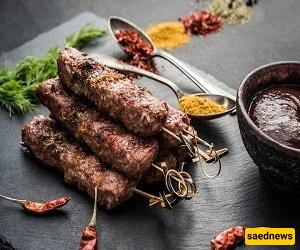
According to SAEDNEWS, Kebab koobideh is considered one of Iran’s premier dishes and has a large following. For many, learning about the history of this dish in Iran and beyond can be fascinating. Kebab koobideh was invented around 140 years ago in the court of Naser al-Din Shah Qajar by Caucasian chefs. They minced meat, tail fat, and onions with a cleaver to create a special dish that pleased the Shah. Due to the preparation method, it became known as “kebab koobideh.” Initially reserved for the royal court, it later gained popularity among the general public when these royal chefs opened restaurants. In this article, we explore the history of kebab koobideh in Iran and around the world.
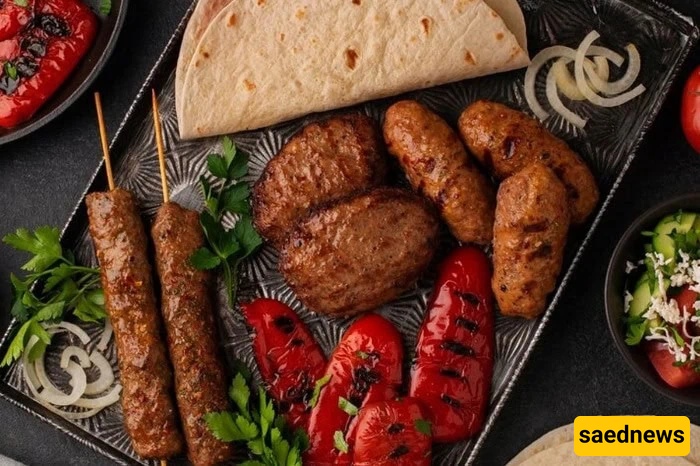
Kebab koobideh has only been around for about 140 years; before that, it did not exist in Iran. As mentioned, it was created during the reign of Naser al-Din Shah Qajar by chefs from the Caucasus in the royal kitchen. By mincing meat, tail fat, and onions with a cleaver, they made a dish that won the Shah’s favor, earning the name “kebab koobideh.” The preparation method, however, evolved over time, and Iranian chefs refined it into the version we know today. Later, these chefs introduced this royal dish to the public by opening restaurants.
The first traditional rice-and-kebab restaurants (chelo-kebab) in Iran appeared in Tabriz and later in Tehran, with establishments such as Nayeb, Morshed, Shayesteh, and Raftari. Cooking manuals from the Qajar era mention dishes like “kebab koobideh,” “lula kebab,” and “onion kebab.”
Historical references, such as the 7th-century poem Sheikh Aṭ‘imeh, show that kebabs have long been part of Iranian culinary culture. Chelo-kebab also spread beyond Iran’s borders during the Qajar period. About 90 years ago, Ahmad Shah’s chef, Javad Farifteh, introduced chelo-kebab koobideh to Paris through his restaurant, Farifteh.
Thus, kebab koobideh is one of the most popular types of kebabs in Iran and holds a special place in Iranian households. However, its origin is debated: some sources credit the royal chefs of Naser al-Din Shah Qajar, influenced by Caucasian cuisine, while others cite Tabriz as the birthplace of this iconic dish.
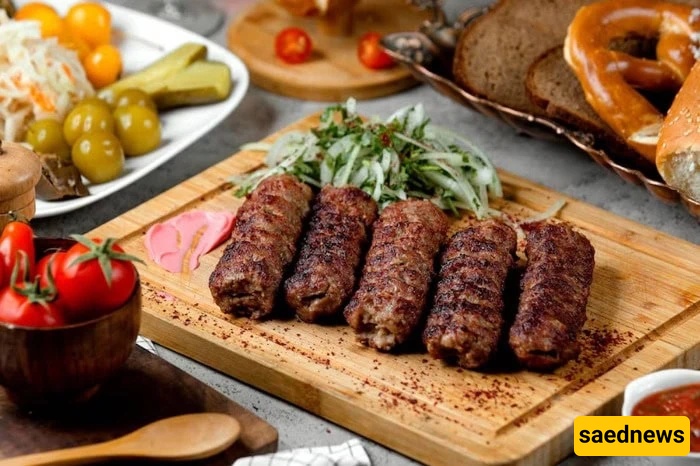
While kebab koobideh took its modern form in Iran, the method of grilling minced meat over open flames has a long history across the Middle East, the Caucasus, and Central Asia. Neighboring countries feature similar dishes such as lula kebab, Adana kebab, and kofta kebab, which share similarities with Iranian koobideh.
Where Did Kebab Originate?
Kebab as a cooking method has a history spanning over a thousand years and has been widespread across the Middle East, the Caucasus, Central Asia, and South Asia. Nearly all of these cultures have a version of minced or ground meat kebab. Some notable examples include:
Turkey: Adana kebab and Urfa kebab, made from minced meat and spices, resemble koobideh.
Armenia and Azerbaijan: Lula kebab is very similar to kebab koobideh and may have influenced its development in Iran.
Lebanon and Syria: Kofta kebab combines minced meat with onions, spices, and herbs, then grills it over coals.
India and Pakistan: Seekh kebab and Shami kebab use minced meat but feature distinct South Asian flavors.
Although kebab koobideh is one of Iran’s most recognized national dishes, the practice of grilling minced meat on skewers has a long-standing presence across neighboring cultures. In countries like Azerbaijan, Turkey, Armenia, Afghanistan, India, Pakistan, and some Arab regions, similar dishes are prepared under names such as lula kebab, Adana kebab, kofta kebab, or seekh kebab.
These similarities highlight a shared culinary heritage shaped by historical exchange, migration, and trade. Yet, Iranian kebab koobideh is unique due to its specific preparation method—mincing, cleaving, and mixing meat with onions and tail fat—as well as its traditional serving style with rice, raw onions, sumac, and grilled tomatoes, setting it apart from other regional variants.
Rooted in ancient Iranian culinary traditions and influenced by historical travel and cultural exchange, kebab koobideh has become not only a beloved dish throughout Iran but also a symbol of Iranian culinary identity worldwide. From simple family grills to international restaurants, this smoky, aromatic dish has traveled far and wide, maintaining its popularity across generations.