SAEDNEWS: In this article, observe the traces of Farah Diba's luxury in Niavaran Palace (her residence and office).
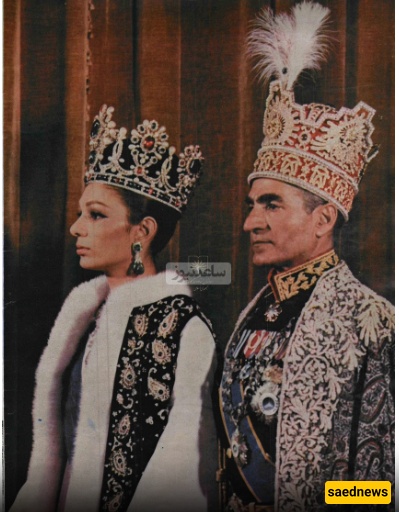
According to the Tourism Service of Saed News, right in a quiet corner of bustling Tehran, there is a palace where the taste of royal art still lingers. The Niavaran Private Palace, with French curtains, Italian furniture, modern paintings, and exquisite Iranian carpets, is a legacy of a woman who wanted to make monarchy more artistic.
When Mohammad Reza Shah ordered the royal family to reside in Niavaran Palace, his wife, Farah, who was also educated in architecture, made changes to its architecture and interior layout. In this article, we take a detailed look at the palace’s architecture, the interior decoration of Niavaran Palace, and Farah Diba’s personal study.
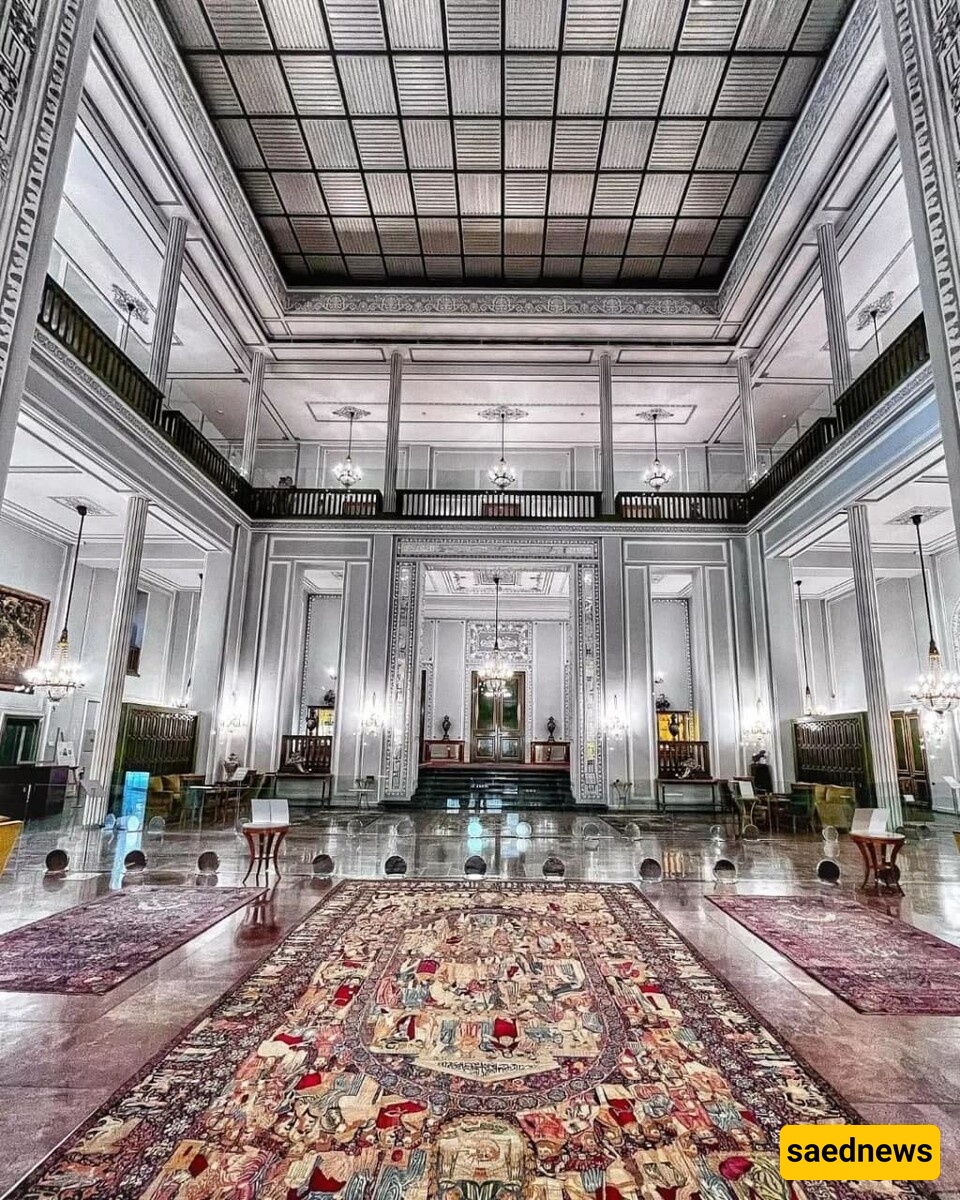
Qajar Era:
The history of Niavaran Garden dates back to the Qajar period during the reign of Fath-Ali Shah. At that time, a summer garden called “Niawaran” was established in this area, which later became known as Niavaran.
Pahlavi Era:
During the reign of the first Pahlavi, the Sahebqaranieh Palace was located in this garden and was renovated for the wedding ceremony of Mohammad Reza Pahlavi and Fawzia, although the wedding was held elsewhere.
Construction of the Private Palace:
Construction of the Niavaran Private Palace began in 1958 (1337 AH) and was completed in 1967 (1346 AH). This palace was designed with modern architecture incorporating elements of traditional Iranian design.
After the Revolution:
Following the Islamic Revolution, Niavaran Palace was transferred to the Ministry of Culture and Islamic Guidance and was converted into a museum in 1986 (1365 AH).
Conversion into a Museum:
Today, the Niavaran Private Palace, along with other structures in the complex, is open to the public as a museum, including sections such as Sahebqaranieh Palace, Ahmad Shah Pavilion, Jahan Nama Museum, and more.
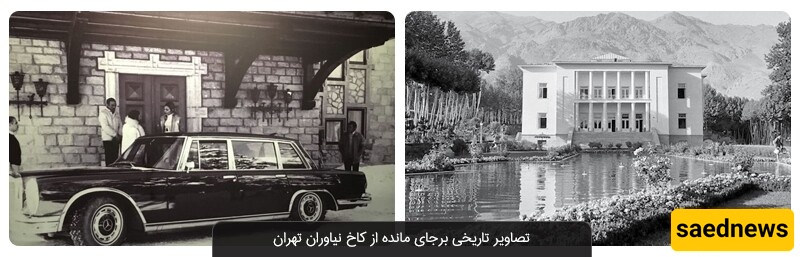
The Main Hall: A Room with a Movable Ceiling and Private Cinema
When you enter, the first thing that catches your eye is the high ceiling and tall columns. If you look slightly upward, you’ll see the aluminum or sunroof ceiling that can open and close. This allows sunlight to fill the room during the day and lets visitors watch the stars at night. Spotlights can even illuminate the sky, enhancing the experience.
The palace has two floors and a mezzanine. The architect was an Iranian engineer named Mohsen Foroughi, who also designed Saadiyeh in Shiraz. The interior decoration was handled by a French team.
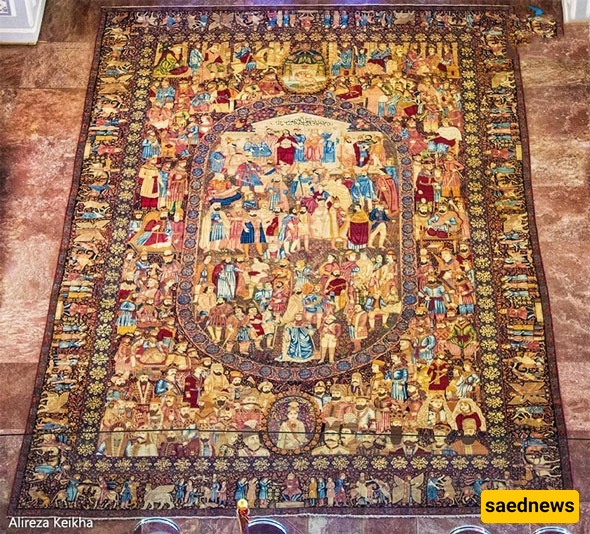
A few steps further, you reach the main hall, surrounded by Kerman Ravand carpets and French furniture. One carpet depicts 109 Iranian kings around its border, with 56 notable figures from around the world in its center, including Confucius, Prophet Solomon, and Prophet Moses—earning it the name “Carpet of Celebrities.” On your left, there is another similar carpet featuring 72 legendary kings from the Shahnameh, aptly named the “Carpet of Monarchs.”
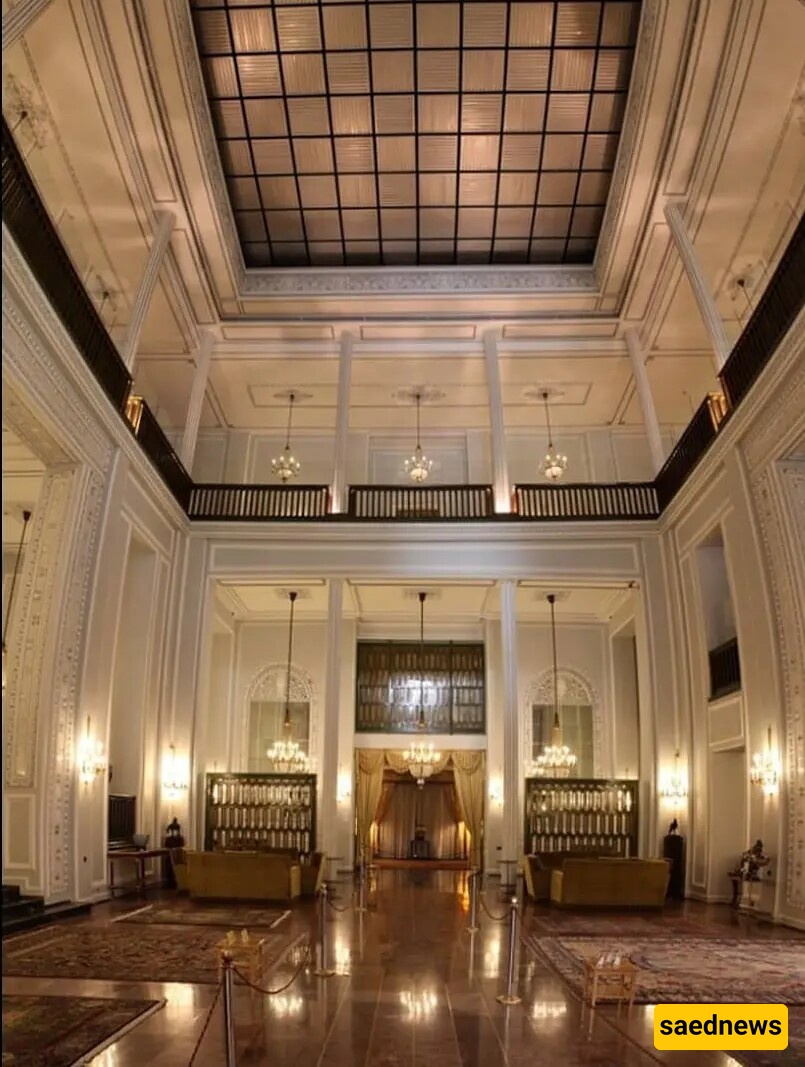
Farah Pahlavi personally selected the palace furniture from prestigious European brands, especially from France and Italy, including Roche Bobois and Ligne Roset.
The arrangement combined modern furniture with traditional Iranian elements, such as handwoven rugs, miniature paintings, and Persian pottery.
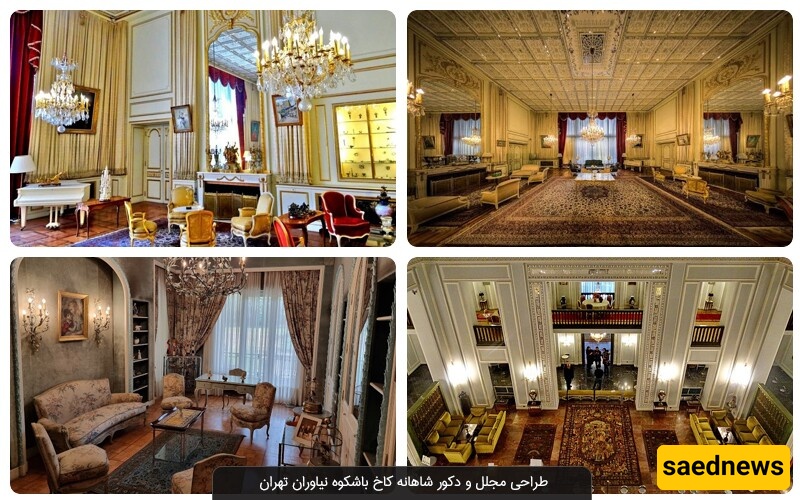
The palace houses valuable paintings created by renowned domestic and international artists. The ceramics and other objects in the palace are all precious and valuable.
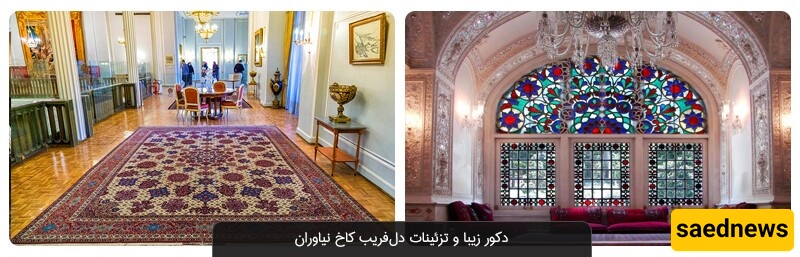
Handcrafted crystal chandeliers from Austria and France were chosen for the formal areas of the palace.
Lighting in the more private areas was minimalistic and modern, creating a calm and artistic environment.
A prominent architectural feature is the movable ceiling. Mohsen Foroughi’s design emphasized natural light in the building, known as “architecture of light.”
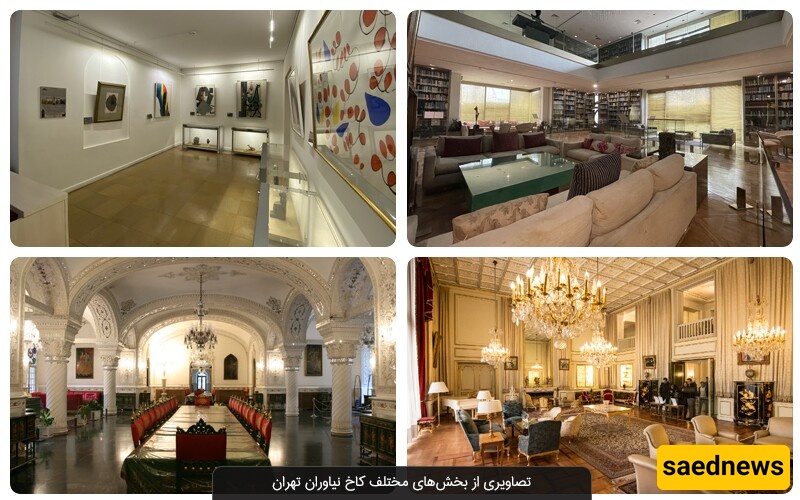
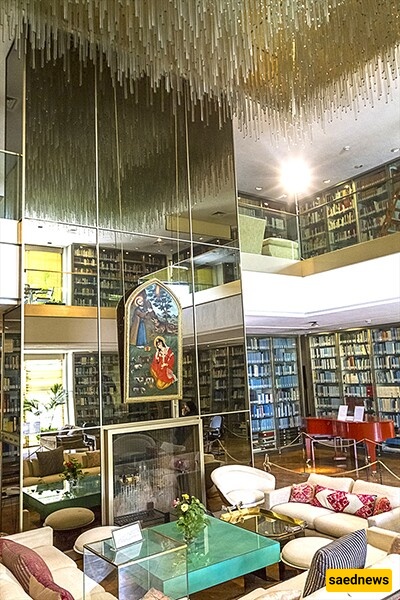
One of the palace’s most captivating spaces is the modernly designed library with uniform wooden shelves.
Niavaran Palace Library, or Farah Pahlavi’s private library, was built in 1976 (1355 AH) with two floors and a basement on the east side of the Niavaran cultural-historical complex, adjacent to the Pahlavi residence. It features unique architectural and structural elements.
The royal library of Niavaran houses over 23,000 books with 16,000 titles. Among its historic volumes is a 144-year-old Divan of Hafez, gifted to Naser al-Din Shah Qajar in 1873 (1252 AH).
One of the most beautiful palace rooms, featuring a French bed, velvet fabrics, silk curtains, paintings by female artists, a beautifully designed dressing table, and mirrors with silver frames.
Almost all rooms in the palace are interconnected, especially the bedrooms of the Shah and Farah. Farah’s dressing room, filled with American cosmetics and crystal and bronze chandeliers, connects on the left to her music and exercise room and on the right to her shared bedroom with Mohammad Reza.
Additionally, she had a wardrobe room on the same floor, where some of her Balochi embroidered dresses are still displayed. Her mezzanine office also includes a workspace and rooms for her young daughter Leila and her maid.
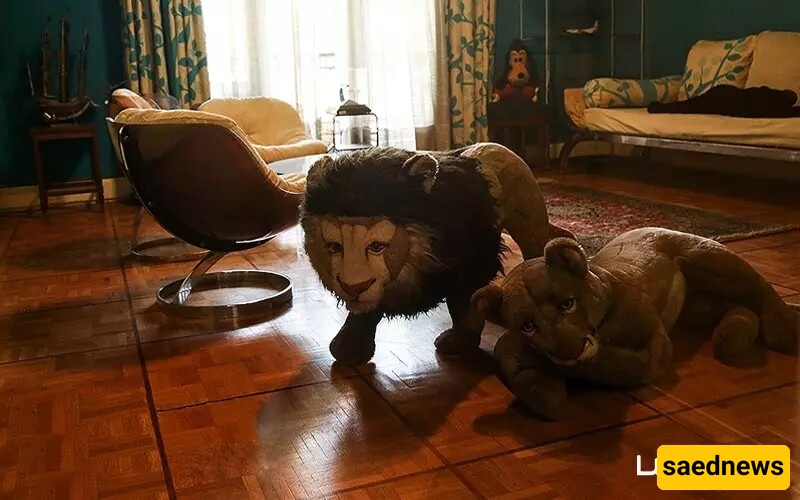
Each room was designed according to the child’s age and personal interests. The Crown Prince’s room included a world map, photos from international trips, and a collection of history and aerospace books. Alireza and Leila’s rooms featured toys, children’s books, paintings, and family photos, creating a completely child-friendly environment.
Private Cinema:
One of the most unique sections of the palace is the small but professional cinema, equipped with film projection systems, comfortable seats, acoustic walls, and a projection screen. The royal family sometimes watched films here with special guests.
Music Room and Sound Equipment:
This section contained cassette players, modern gramophones, and an archive of classical and Iranian music.
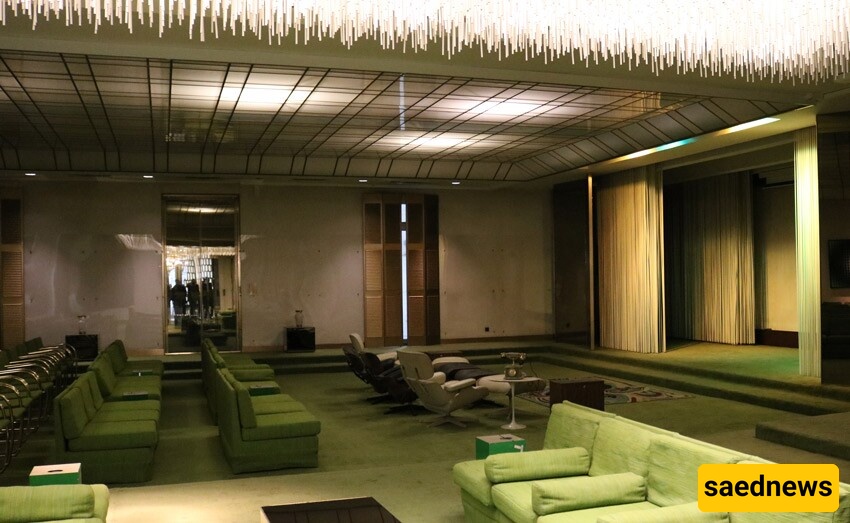
Her office was located on the same floor, adjacent to her bedroom, serving as her personal and work space.
As seen, every item in this palace was purchased with meticulous attention from the world’s most famous brands, and considerable expense was spent on each piece. Had the royal family invested even a fraction of the effort and resources they dedicated to building their home, travel, and lavish parties into the development of Iran, ordinary people would not have suffered from poverty and lack of basic facilities.