SAEDNEWS: Iran Warns Regional Countries Against Supporting US-Israeli Military Actions
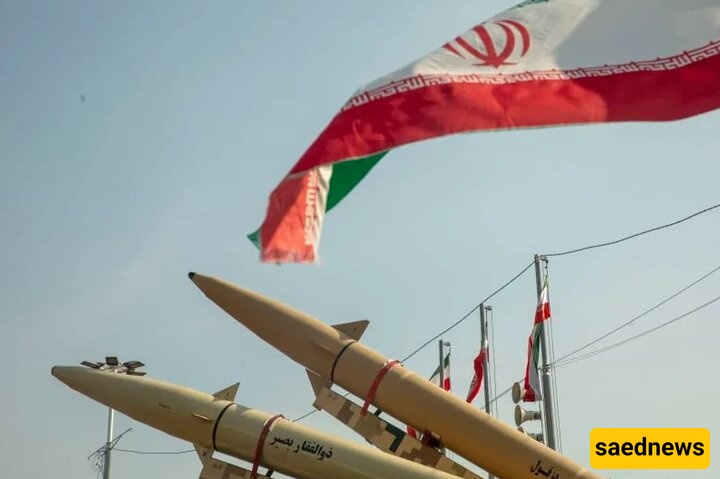
According to Saednews, The threats issued by American and Israeli officials against Iran have intensified once again. From discussions of deploying heavy bombs to calls for what has been described as “finishing off Iran,” the rhetoric suggests that advocates of military confrontation continue to seek to impose their will on the Islamic Republic. However, decades of experience, particularly recent military confrontations, have demonstrated that threats and military pressure do not necessarily achieve Washington’s and Tel Aviv’s political objectives.
Against this backdrop, the issue extends beyond Iran’s confrontation with the United States and Israel. Regional countries must also make a clear decision about their role in the developments ahead. Contrary to the assumptions of some governments, regional security is indivisible. No country can allow its territory, airspace, or infrastructure to be used for military operations against a neighboring state while expecting to remain unaffected by the consequences. Tehran’s message to regional governments is clear: supporting military action against Iran will not guarantee their security but could instead expand the scope of regional instability.
American and Israeli officials are discussing increased pressure on Iran at a time when both countries face domestic political challenges and electoral concerns. Benjamin Netanyahu is under domestic pressure to maintain his political position, while Donald Trump must contend with the political consequences of his administration’s policies in the United States. Although military threats cannot be explained solely by electoral considerations, the political exploitation of confrontation and displays of military strength remain important factors in understanding the behavior of leaders on both sides.
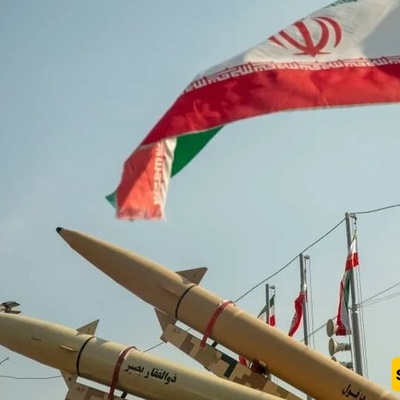
The fundamental issue is that renewed threats do not alter the region’s strategic realities. Iran possesses considerable military, geographical, and human resources, meaning that any military action against it could produce consequences extending well beyond the initial calculations of its adversaries. Recent conflicts have also demonstrated that the ability to inflict damage should not be confused with the ability to impose political objectives on Iran.
One of the most significant factors in any escalation is the role played by certain regional countries. According to Iran’s stated position, some countries made their territory or military facilities available to the United States during recent confrontations. If such cooperation facilitates attacks against Iran, these countries will no longer remain mere observers of regional developments but will become part of the conflict’s broader security equation.
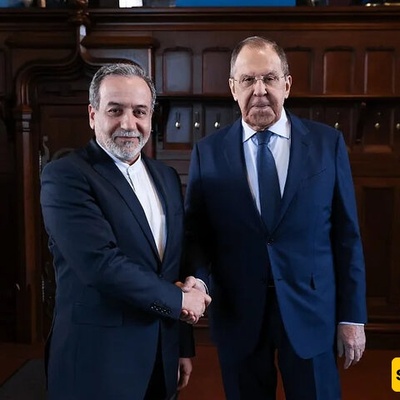
Iranian Foreign Minister Seyed Abbas Araghchi emphasized the interdependence of regional security during a meeting of the Council of Foreign Ministers of the Organization of Islamic Cooperation in Baghdad, stating: “Either we build security together, or we will endure insecurity together.”
This statement is more than a diplomatic warning; it reflects a fundamental reality of the political geography of the Persian Gulf and West Asia. Regional countries are interconnected through geography, trade, energy supplies, economic relations, and communications infrastructure. A widespread conflict could disrupt shipping routes, destabilize energy markets, undermine investment, interrupt transportation networks, and weaken economic stability.
Consequently, no government can facilitate military operations against a neighboring country while assuming that the resulting crisis will affect only the intended target.
This consideration is particularly important for countries hosting American military bases. Hosting foreign military forces does not automatically constitute participation in every military operation. However, if a country's territory, airspace, or infrastructure is used to launch attacks against Iran, that country must also consider the political and security consequences of its decisions.
Regional governments must therefore distinguish between conventional defense cooperation and participation in military actions that could trigger a broader regional war.
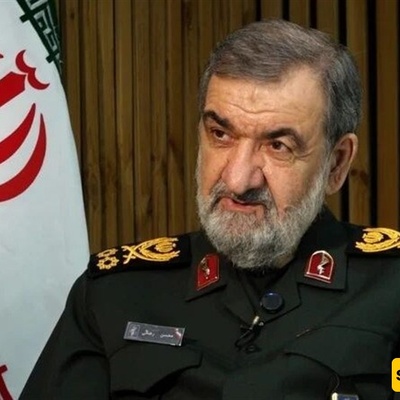
This position is consistent with previous statements by Iranian officials. Mohsen Rezaei, who was serving as a member of Iran’s Expediency Discernment Council when the remarks were made, warned Arab and Muslim countries in the region about the objectives of the Israeli regime. He cautioned that supporting efforts to expand regional divisions and conflict could carry serious consequences.
The underlying argument is that undermining regional security serves no country's long-term interests. If political rivalries or short-term calculations encourage regional governments to cooperate in military operations against one another, the consequences could include greater dependence on external security powers, widening instability, and increased vulnerability of critical infrastructure.
Under these circumstances, the costs of decisions made today could far exceed governments’ initial expectations.
Mohammad Bagher Ghalibaf, Speaker of Iran’s Parliament, has also warned against providing financial and infrastructural support to companies that, according to his statements, contribute to military aggression. He has specifically raised concerns about cooperation involving data and artificial intelligence.
These remarks indicate that, from Tehran’s perspective, support for military operations extends beyond the provision of military bases and combat equipment. Economic resources, technological capabilities, data infrastructure, and artificial intelligence systems may also become factors in regional security calculations.
The message to regional governments is therefore straightforward: before facilitating any military operation against Iran, they must carefully assess the direct and indirect consequences. Participation in military escalation, even when initially limited or indirect, could increase both their exposure to retaliation and their vulnerability to a wider crisis.
For the Islamic Republic of Iran, the confrontation is not simply a temporary dispute or a limited regional rivalry. When American and Israeli officials express objectives that Tehran considers threats to Iran’s existence and independence, national defense naturally becomes central to the country’s strategic calculations.
Under such circumstances, assuming that Iran will surrender in response to threats and military pressure is an unrealistic assessment of its political resolve.
Iran’s Supreme Leader has also emphasized the continuation of resistance in a recent message to Hezbollah forces, stating: “No path remains ahead except jihad and resistance, and steadfastness on this path will grant the mujahideen on the path of truth the promised divine assistance.”
Within this framework, Tehran’s warnings to regional governments can be understood as an attempt to establish clear security red lines. Iran expects neighboring countries to prevent their territory, military facilities, and infrastructure from being used as instruments for attacks against the country.
According to Tehran’s position, this warning is not a call to widen the conflict but an insistence that preventing further escalation requires responsible decisions by every government in the region.
Regional countries now face a consequential decision. They can avoid involvement in military adventures, work to reduce tensions, and pursue collective security arrangements. Alternatively, they can facilitate hostile actions and expose themselves to the foreseeable consequences of a wider regional crisis.
Sustainable security cannot be achieved by using neighboring countries’ territory and infrastructure as instruments of military pressure. Nor can governments reasonably expect to remain insulated from the consequences of a conflict that threatens the interconnected political, economic, and security systems of West Asia.
Iran’s message is unequivocal: regional security must be shared by all countries, rather than pursued at the expense of others. In a region where security interests are deeply interconnected, no country can set fire to its neighbor’s house and be certain that the flames will never reach its own.
Is this conversation helpful so far?