SAEDNEWS: The unveiling of Iran’s Qasem Basir ballistic missile represents a significant development in the country’s defense strategy. With enhanced range and precision, the missile reflects more than a technological advancement; it signals a broader strategic shift from a primarily reactive posture toward a more proactive approach to deterrence.
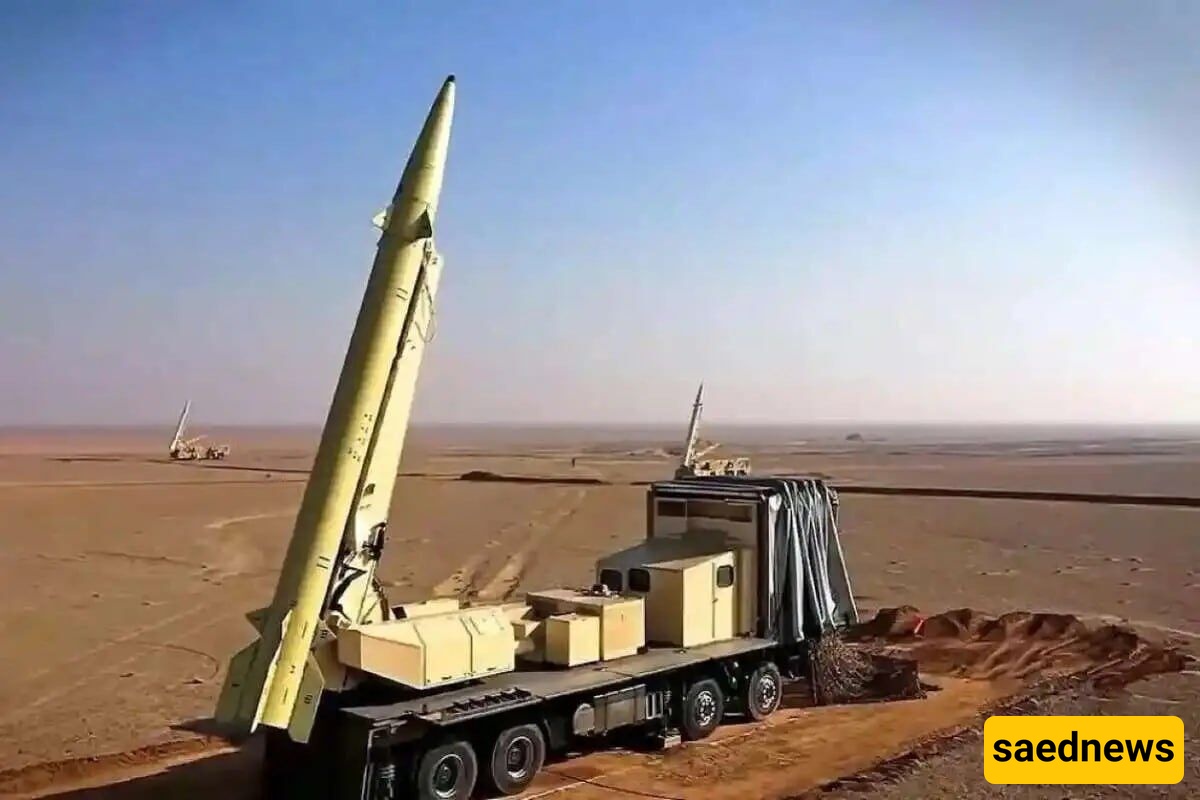
According to Saednews, Iran is increasingly signaling that it intends to confront potential threats before they develop into actual attacks. The solid-fueled Qasem Basir, equipped with electro-optical guidance and a roughly half-ton warhead, represents one of the key capabilities associated with this emerging approach. Its development sends a broader message to Iran’s adversaries: Tehran is seeking to move beyond simply retaliating after an attack and toward a doctrine centered on deterrence and preemptive action.
Developments over the past several months point to a possible change in the way Iran approaches military and security threats. Recent remarks by Supreme National Security Council Secretary Mohsen Rezaei, together with the continued expansion of Iran’s missile forces, naval capabilities, and operational infrastructure, suggest a gradual movement away from a predominantly reactive posture toward a more proactive model of deterrence.
Under this approach, the objective is no longer limited to responding after an attack has taken place. If credible indications of a serious and imminent threat emerge, Iran could seek to impose costs before that threat develops into a larger-scale assault. In practical terms, this represents a shift from the traditional pattern of “they attack, we respond” toward a model in which Iran seeks greater control over the timing, location, and scale of its response once a threat reaches a critical threshold.
This development goes beyond political messaging. Its greater significance lies in the military capabilities being developed to support such a strategy. More accurate missiles, advanced reconnaissance and targeting systems, anti-ship weapons, unmanned aerial vehicles, and improved long-range operational capabilities together provide Tehran with a broader set of options for implementing a more active deterrence policy.
Among Iran’s newer missile systems, the Qasem Basir occupies an important position. Its development can be viewed as part of a broader effort to move beyond simply increasing missile range and destructive power. Greater emphasis is now being placed on accuracy, survivability, target discrimination, and the ability to overcome increasingly sophisticated defensive systems.
The strategic value of a missile such as the Qasem Basir cannot be measured only by its range or warhead size. In contemporary warfare, precision and survivability can be just as important as raw destructive capability. A weapon capable of accurately striking a designated target, penetrating advanced air-defense networks, and hitting strategically important locations can provide a substantially greater deterrent effect.
For Iran, the development of systems combining precision guidance, improved targeting, and greater operational flexibility therefore represents more than a technological upgrade. It reflects a broader evolution in military thinking—one in which deterrence increasingly depends on the ability not only to retaliate against an attack, but also to threaten decisive action before an adversary can fully execute one.