SAEDNEWS: Leonardo da Vinci Used a Unique Chemical Mixture to Create the Paint Colors in the Mona Lisa
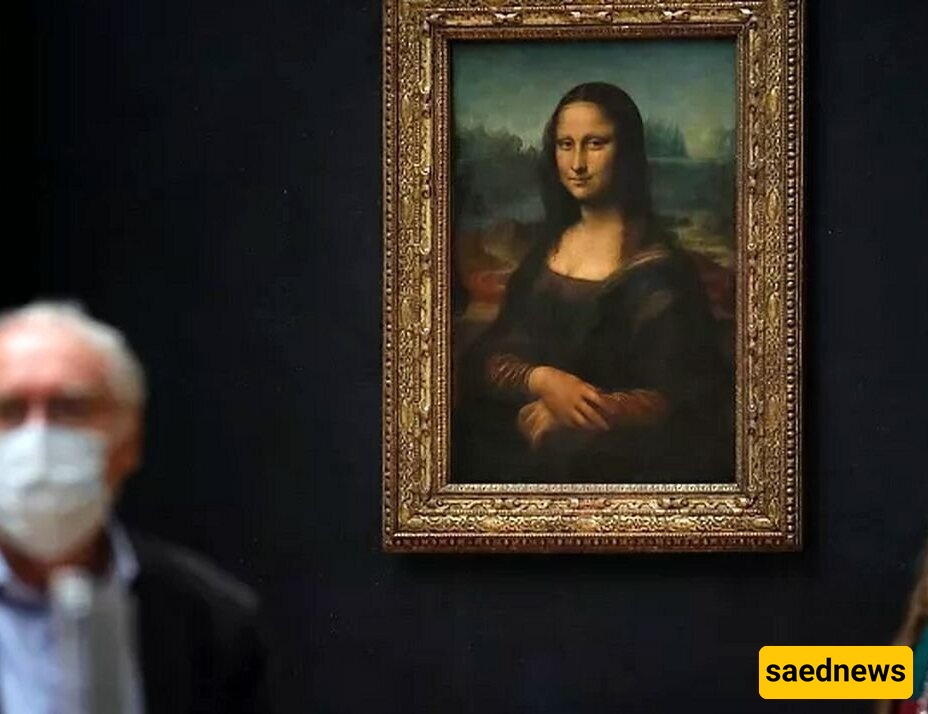
According to the Saed News analytical website, citing Faradeed, scientists using X-ray imaging have succeeded in uncovering the chemical structure of a technique Leonardo da Vinci used in creating his famous portrait, Mona Lisa.
Experts say the new findings suggest that the innovative Italian Renaissance artist likely had an inclination to experiment with different methods while working on the painting in the early 16th century.
A team of scientists and art historians from France and the United Kingdom discovered that the recipe for the oil-based paint used by Leonardo as the initial and foundation layer for the poplar wood panel of the Mona Lisa differs chemically from those used in his other works.
Victor Gonzalez, the lead author of the study and a chemist at a French research center, said: “He was someone who loved experimenting, and each of his paintings is technically quite different.”
Dr. Gonzalez, who has analyzed the chemical composition of dozens of works by Leonardo da Vinci, Rembrandt, and other painters, told the Associated Press: “In this case, it is interesting to see that there is actually a specific technique used for the background layer of the Mona Lisa.”
In particular, researchers identified a rare chemical compound called plumbonacrite in the first paint layer applied by Leonardo da Vinci.
According to Gonzalez, this discovery confirms a hypothesis long suggested by art historians: that the artist likely used lead oxide powder to thicken his paint and help it dry faster.
Carmen Bambach, an Italian art specialist and curator at the Metropolitan Museum of Art in New York, described the study as “very exciting,” stating that finding plumbonacrite in the Mona Lisa reflects Leonardo’s experimental spirit as a painter, which makes him timeless and modern.
The paint sample analyzed from the base layer of the artwork was less than the width of a human hair and was barely visible to the naked eye. It was taken from the upper right edge of the painting.
The Mona Lisa, housed in the Louvre Museum in Paris, was examined using X-ray beams at a synchrotron accelerator, a large machine that accelerates particles to nearly the speed of light, allowing scientists to analyze its atomic structure and determine its chemical composition.
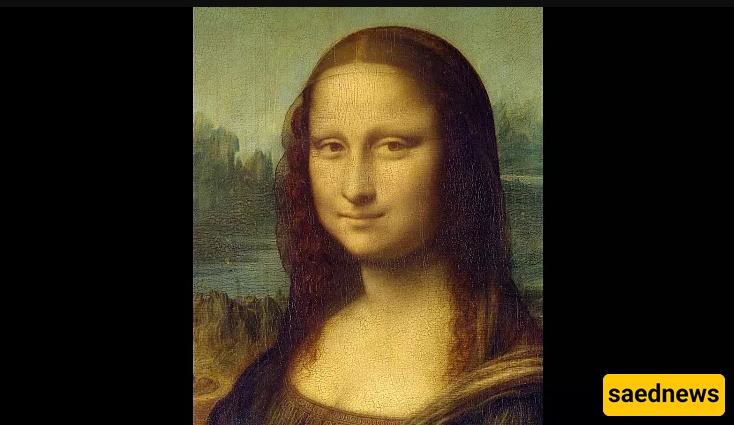
Plumbonacrite is a byproduct of lead oxide, which supports the conclusion that Leonardo likely used this substance in preparing his paint.
Gonzalez added: “Plumbonacrite is his chemical fingerprint. This is the first time we can confirm it scientifically. It also shows that paint-making techniques were passed down through generations, and this formulation was an excellent one.”
Researchers believe that after Leonardo da Vinci, the Dutch painter Rembrandt may have used a similar paint preparation method in the 17th century. Gonzalez and other researchers have previously identified plumbonacrite in his works as well.
It is believed that Leonardo mixed lead oxide powder, which has an orange color, into linseed or walnut oil and heated it to create a thicker paint that dried more quickly.
As Gonzalez explained: “What you get with this method is an oil with a very beautiful golden tone. It’s almost like honey.”
Historians believe that the Mona Lisa, a portrait of Lisa Gherardini, the wife of a Florentine silk merchant and currently housed in the Louvre Museum in Paris, still holds many undiscovered secrets.