SAEDNEWS: Iran–US Talks Accelerate as Pakistan Mediates, Iran Seeks Indirect Engagement via U.S. Vice President J.D. Vance
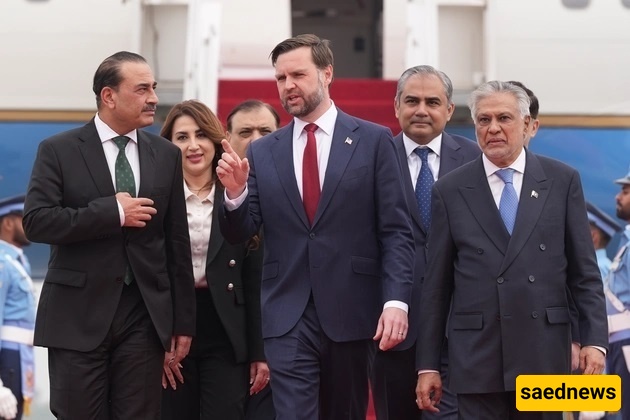
According to the policy section of Saed News Agency, Javad Heiran-Nia, head of Gulf Studies at the Middle East Studies Center of Iran, said that Iran initially viewed Steve Witkoff as a moderate figure within Donald Trump’s inner circle and therefore accepted his role in negotiations. When Jared Kushner joined the talks ahead of the February round, Tehran interpreted his close ties to Trump as a sign of serious intent.
Al Jazeera has examined the role of U.S. Vice President J.D. Vance in negotiations with Iran and why Tehran may prefer engaging with him.
U.S. President Donald Trump, speaking to reporters at the White House (before the ceasefire), said in response to a question about whether a truce with Iran was achievable: “We have an active and eager party on the other side of the table.” He added that the proposal on the table was “an important step,” but immediately stressed it was “not good enough.”
When asked who was leading Washington’s diplomatic efforts, Trump confirmed what had been circulating through back channels, stating: “They’re doing it along with Marco and J.D. We have a lot of people involved.” For the first time, he named Vice President J.D. Vance and Secretary of State Marco Rubio as senior negotiators in his administration.
In an administration that has struggled to present a coherent diplomatic strategy since the start of a conflict that began more than five weeks earlier, Vance has largely maintained a calculated distance from the “Epic Fury” military operation.
However, Trump’s remarks publicly confirmed that Vance has quietly emerged as a central figure in recent diplomatic efforts, reportedly mediated by Pakistan, aimed at pulling the United States and Iran back from the brink of a major escalation.
Trump had previously threatened to bomb Iran’s energy infrastructure if Tehran did not reopen the Strait of Hormuz by a self-imposed deadline. He also issued harsh rhetoric on his Truth Social platform, warning of catastrophic consequences.
Iran’s Islamic Revolutionary Guard Corps responded by warning that any further escalation would remove all constraints on targets, putting the region on heightened alert. Earlier, Iran’s Kharg Island oil export terminal was reportedly bombed, and Iran allegedly struck Saudi Arabia’s Jubail petrochemical facilities.
On the night of Trump’s remarks, Pakistani officials confirmed to Al Jazeera that Field Marshal Asim Munir, Pakistan’s army chief, had spoken with Vance, envoy Steve Witkoff, and Iranian Foreign Minister Abbas Araghchi.
This was part of intensive mediation efforts led by Pakistan since late March, including coordinated meetings involving Turkey, Saudi Arabia, and Egypt aimed at reducing tensions.
Previously, Trump had asked Vance in a cabinet meeting to formally communicate with Iranian officials, confirming his diplomatic role.
According to Pakistani media citing an official familiar with the talks, a U.S. delegation led by Vance had twice been prepared to travel to Islamabad for direct discussions with Iranian counterparts. Both trips were cancelled at the last moment after Iran requested more time for internal consultations and ultimately declined participation.
Despite this, progress was reportedly made last week, with Iran acknowledging receipt of a ceasefire proposal but later rejecting it as “irrational.”
Iran’s apparent preference for Vance dates back before the conflict.
In February, Witkoff and Jared Kushner concluded a round of indirect nuclear talks with Iranian Foreign Minister Abbas Araghchi in Geneva. Oman’s foreign minister, acting as mediator, expressed optimism that “a peace agreement is within reach.”
Shortly afterward, U.S. and Israeli forces reportedly struck multiple Iranian sites, marking the beginning of the war. Iranian officials view this as a second betrayal, recalling earlier negotiations that were followed by military action.
Javad Heiran-Nia said Iran initially considered Witkoff a moderate voice within Trump’s circle. Kushner’s involvement was also seen as a sign of seriousness due to his proximity to Trump.
However, the U.S. decision to join Israel in military escalation during ongoing talks reversed Tehran’s assessment. Iranian officials now believe negotiations may have been used to buy time for military preparations.
Western media later reported Iran’s reluctance to continue engagement with Witkoff or Kushner after the Geneva talks. CNN sources indicated Iran sees Vance as more sympathetic toward ending the conflict.
Heiran-Nia added that internal Iranian political dynamics also shape this preference. After the killing of Supreme Leader Ayatollah Ali Khamenei, power struggles intensified within Iran’s political system, strengthening the Revolutionary Guard while limiting the civilian government’s authority.
He noted that acceptance of negotiations, including Pakistani mediation, came from higher levels of Iran’s system, but the format remains politically sensitive.
By Tuesday in Islamabad, officials described negotiations as advanced. The emerging framework envisions a phased process: an initial agreement on confidence-building measures followed by a formal ceasefire if conditions hold.
Iran’s ambassador to Pakistan, Reza Amiri-Moghadam, described progress as “positive and constructive,” saying mediation efforts were approaching a “critical and important stage.”
Despite diplomatic momentum, Trump simultaneously intensified his rhetoric.
Iran’s preference for Vance is not only based on personality but also his political record. As a senator, Vance previously argued that Trump’s success depended partly on avoiding new wars.
He is seen in Tehran as having initially opposed military escalation and not being involved in earlier decisions leading to conflict.
Analysts suggest Vance’s behavior during the war has reinforced perceptions that he is positioning himself for a potential 2028 presidential run, balancing loyalty to Trump with caution over prolonged Middle East conflicts.
Observers note both Vance and Rubio face political risks depending on how the conflict ends. Vance risks appearing disloyal if he distances himself too much from Trump, while Rubio could face backlash if the war ends poorly after supporting escalation.
In Iran’s view, Vance’s positioning as a potential mediator and future presidential contender makes him a strategically significant interlocutor, seen as potentially more open to de-escalation than other figures in Washington.