SAEDNEWS: Many Muslim children in Europe and North America are growing up amid rising Islamophobia and frequent exposure to negative portrayals of their identity in the media. Now, an animated series created by a Muslim couple aims to change that narrative and offer a more positive and authentic representation.
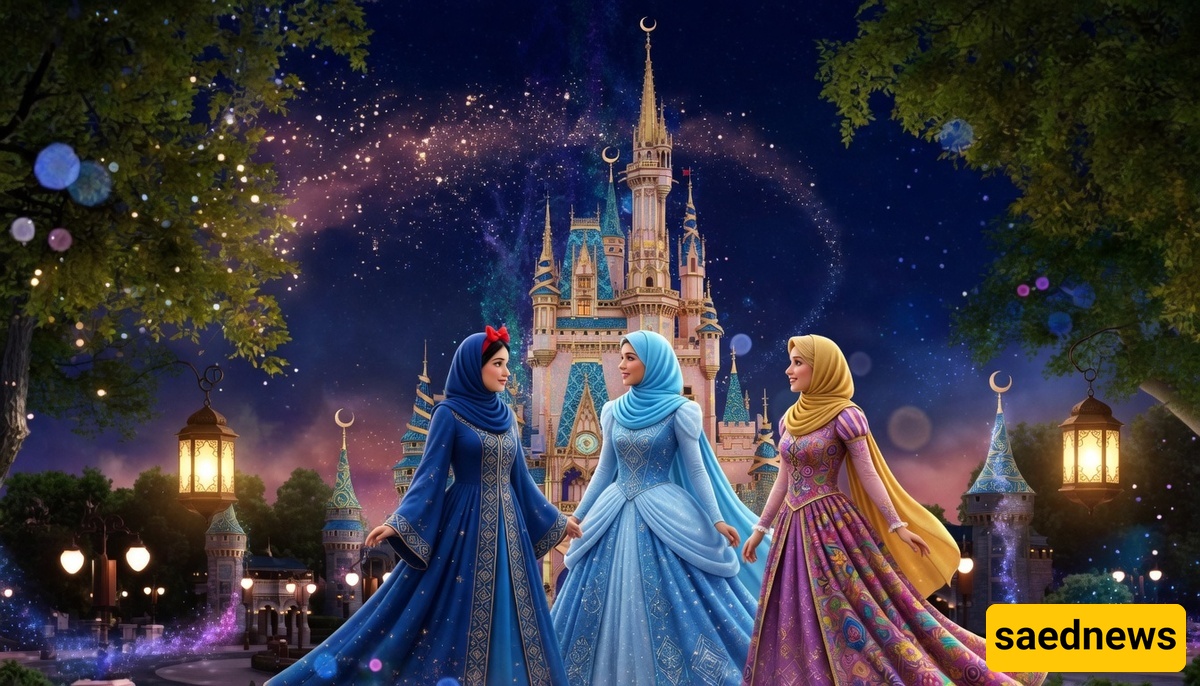
According to the Arts and Media service of Saednews, “Some people said it didn’t exist; it was just a fantasy.” This is how Flor Deliza De Ritt describes the Silk Road—a vast network of trade routes that once connected Asia, Africa, and Europe. This idea became the starting point for the animated film Time Travelers: The Silk Road, which she created with her husband, Michael Milo.
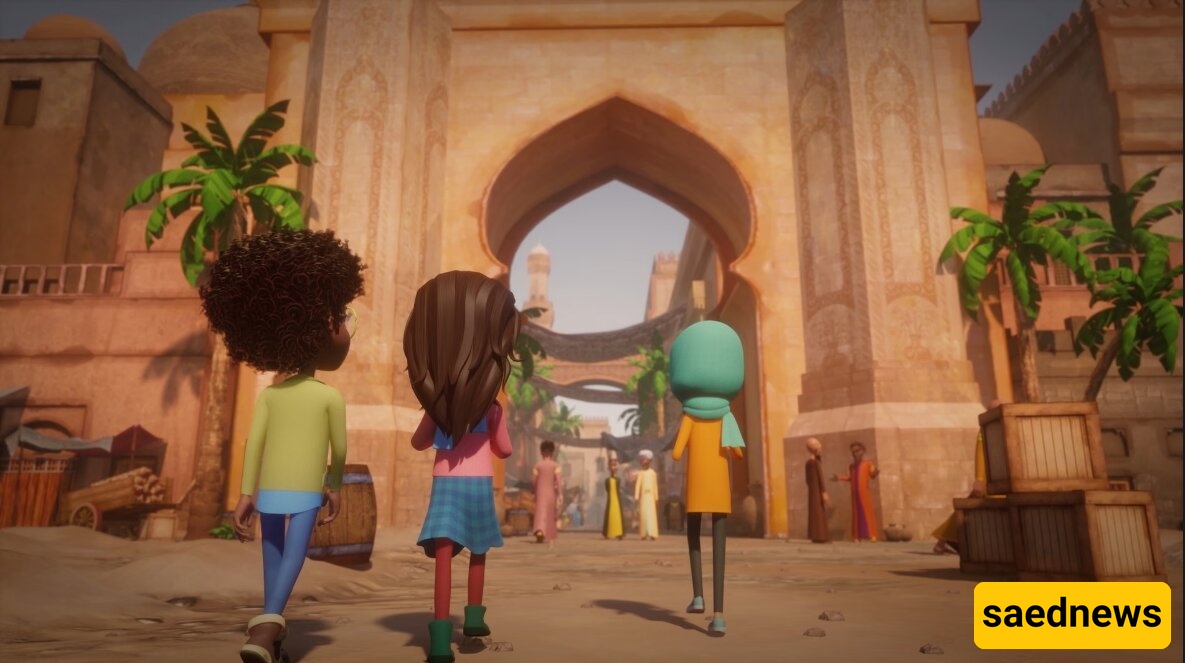
The couple explains that what began as personal curiosity evolved into something far more ambitious. With a theatrical release in the United Kingdom, Time Travelers transforms that curiosity into a fast-paced adventure for children: a story in which four young heroes travel back to the medieval Islamic world and meet scientists and scholars whose discoveries have shaped our everyday lives.
Milo says: “It’s a science-fiction time-travel adventure for families and children that turns into a chase.”
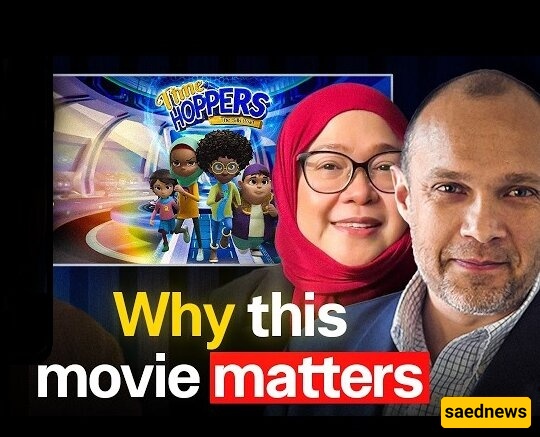
Abdullah, Aisha, Khalid, and Laila encounter a time-travel device in a laboratory and discover that a rogue alchemist has unlocked its power and is now pursuing them. As the story unfolds across cities, countries, and centuries, the group is tasked with retrieving the device while also protecting key historical figures from interference.
Milo adds: “Our goal is to make learning about that era fun and engaging. The people the children meet are highly influential scientists and scholars.”
Among them are Al-Khwarizmi, the father of algebra; Ibn al-Haytham, a pioneer in the study of optics and the camera obscura; and Mansa Musa, ruler of the Mali Empire, widely believed to be the richest man in history. The film also highlights figures such as Mariam al-Ijliya, a 10th-century Syrian woman who helped develop the astrolabe.
De Ritt says: “We wanted to show that it wasn’t only male scholars and scientists—many women were at the forefront as well.” From the beginning, her aim was not to create something exclusively for Muslim audiences. “We wanted the rest of the world to enjoy it too.” When children watched the film, she noted that they responded “with very open minds” and “loved learning about different places and histories.”
The roots of the project lie in education rather than cinema. Before becoming a feature film, Time Travelers began as an e-book, later expanding into a game and an unreleased television series as part of a broader ecosystem developed through Muslim Kids TV, a platform the couple founded nearly two decades ago.
Milo says: “We’ve been producing content for children for almost 20 years. We knew that Muslim children were not being represented enough in media.”
Both he and De Ritt independently converted to Islam in 1995 and married the following year. Their experiences shaped the direction of their work. Muslim Kids TV began as educational entertainment for their own children but grew into a broader mission: creating stories in which Muslim children could see themselves reflected.
De Ritt explains: “It was very important for us to have stories where, first and foremost, children are the heroes.” This connects to a wider idea of representation: “It’s not just about being seen, it’s also about possibility.”
For both creators, this mission is influenced by the experiences of many Muslim children in Europe and North America, who often grow up facing increasing Islamophobia and negative media portrayals. De Ritt says: “When you constantly hear it in the news and daily life, you start to believe you don’t belong in these spaces. It’s important for them to know they do belong.”
Time Travelers: The Silk Road is part of an effort to counter that narrative by reimagining history. The production team worked with researchers to accurately depict each era—from architecture to clothing—introducing young audiences to a broader range of historical figures beyond what is typically taught in schools. Milo notes: “They learn about Aristotle or Plato, but it’s equally important to understand that other people contributed to the world as well.”
The film’s release strategy also shaped its impact. It began with a limited rollout that quickly expanded due to strong audience reception. In the United States, it screened in 660 cinemas and sold more than 35,000 tickets. In the United Kingdom, it expanded from 200 to 299 cinemas. The team is now working on a sequel.
De Ritt says: “What we are showing the film industry is that Muslim stories are not limited. They can be global and commercially viable.” Much of this momentum has been driven by grassroots and community support. Milo adds: “We have local supporters who get people excited and spread the message.”
“Our goal has always been to become the Disney of the Muslim world,” De Ritt says. For now, however, the focus remains on young audiences. “We want children to feel proud and to know they can make a difference.” Or, as she puts it in the message she shares with children and hopes audiences take away: “Hands are for helping, words are kind, and ideas are brave.”