SAEDNEWS: Spain has introduced temporary border controls on air and sea travel from Italy as tensions between Madrid and Rome intensify over migration linked to the recent influx into Ceuta.
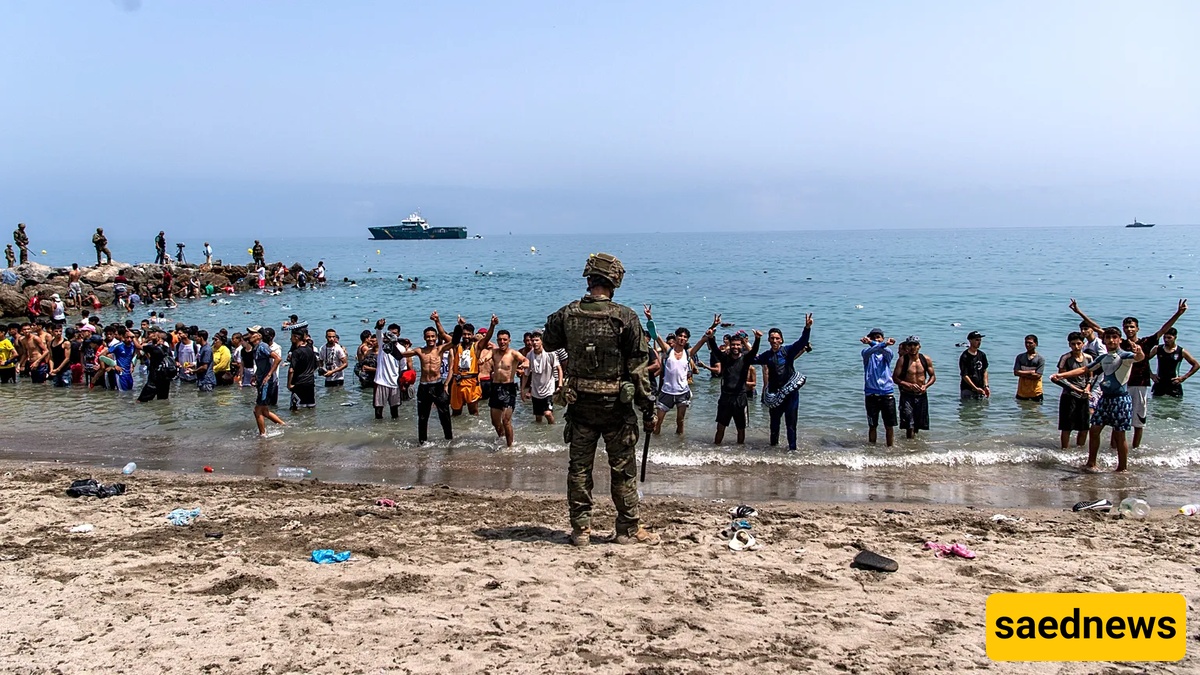
According to SaedNews: A migration dispute that began around Spain’s North African exclave of Ceuta has now spilled directly into relations between two major European Union countries, with Spain and Italy imposing competing border measures and openly challenging each other’s positions.
Spain has introduced controls on air and sea travel from Italy, with the measures beginning at midnight local time, or 22:00 GMT. The restrictions are scheduled to remain in place for one month, although the Spanish government has said they could be changed earlier if the circumstances that prompted them change.
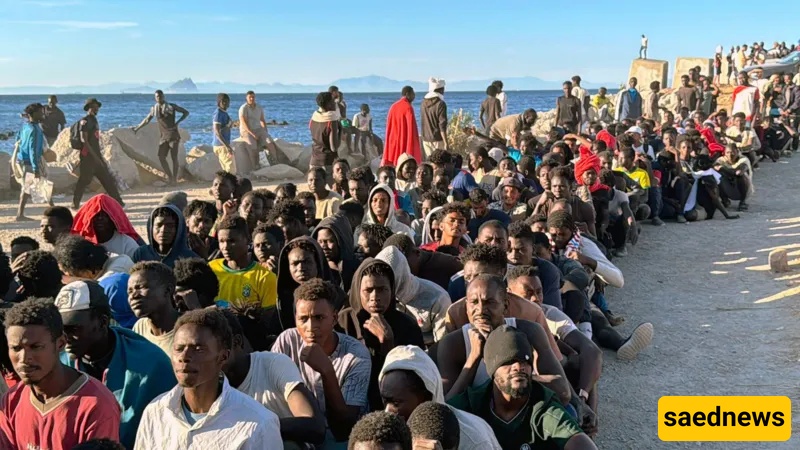
Madrid’s move came after Italy introduced its own temporary restrictions following the arrival of about 78,000 migrants from Morocco into Ceuta. Rome has argued that its decision was necessary to prevent people who had entered the Spanish exclave from continuing onward toward Italy.
Spain strongly rejected that explanation.
On Friday, Madrid demanded that Italy reverse its checks by Sunday. Rome responded that it would not accept what it described as “ultimatums” and said its restrictions would remain at least until 15 August.
The disagreement has placed Spanish Prime Minister Pedro Sanchez and Italian Prime Minister Giorgia Meloni on opposite sides of an increasingly sensitive migration debate.
Meloni has long pushed for tougher European migration policies, while the latest dispute has focused on whether Italy’s decision to suspend parts of the border-free Schengen arrangements for certain arrivals from Spain was justified.
Italy says its restrictions are designed around security concerns. The government has argued that it is seeking to prevent migrants who reached Ceuta from moving onward to Italian territory and has also referred to security and terrorist risks.
Rome has made clear that it does not currently intend to reconsider the measures before 15 August, and potentially longer if it believes the relevant security risks have not been eliminated.
Madrid, however, has dismissed the reasoning behind the Italian decision as based on “spurious arguments.” Spanish authorities have argued that the migrants who reached Ceuta had no route into the Schengen area, challenging the premise behind Italy’s checks.
The dispute has also created practical problems for travelers.
Italian officials have said local authorities are doing everything possible to make checks as comfortable as possible for Spanish and other European travelers arriving from Spain. Rome has also emphasized that Spanish citizens are exempt from the additional controls, which are aimed at non-EU residents.
Yet reports from Spanish newspaper El Pais have described long queues and delays at several airport terminals. Passengers arriving from Spain have reportedly been directed into dedicated lines for additional checks.
Spain’s response goes further. Under Madrid’s counter-measures, Italian passengers and visitors from other countries arriving from Italy face passport, nationality and visa checks because of what the Spanish government described as persistent irregular migratory pressure.
The Spanish measures are due to remain in place until 7 September unless the circumstances change enough to justify an earlier modification.
The dispute is taking place against the backdrop of the wider Ceuta crisis, where the scale of the migrant movement shocked authorities and raised questions across Europe.
Most of the migrants who arrived in Ceuta last week were returned to Morocco within days. But the situation is far from completely resolved. Nearly 1,400 minors remain in Ceuta, including some described as very young boys and girls.
At the same time, concerns about another possible influx have circulated online. Spain has not announced that a second wave from Morocco is expected, but social media activity among Moroccan users discussing another attempt has fueled speculation.
The Spanish prime minister’s office told El Pais that authorities were monitoring the situation but did not expect a repeat of the scenes witnessed the previous week.
Another unresolved question is why such a large number of people attempted to enter Ceuta at roughly the same time.
EU Migration Commissioner Magnus Brunner has suggested that criminal networks spreading disinformation may have contributed to the events. The Spanish government has agreed with that assessment.
The crossings also followed a significant legal development. Spain’s Supreme Court had ruled that migrants intercepted at sea while attempting to reach Ceuta or Melilla could not simply be returned to Morocco without the required legal process.
Morocco has blamed the resulting crisis on that court ruling. An unnamed Moroccan government source described the situation as the collapse of a deterrent system, arguing that the change followed a judge’s decision rather than the actions of criminals.
The sheer number of people attempting to swim toward Ceuta has also raised another difficult question: why did Moroccan border guards not prevent the mass crossings?
For now, that question remains unresolved, while the political consequences continue to spread.
What began as a migration crisis in Ceuta has become a dispute involving border controls, Schengen rules, security concerns and competing interpretations of European migration policy. Spain’s decision to impose checks on travelers from Italy demonstrates how quickly a crisis involving one external border can create friction between EU partners.
With Italy maintaining its restrictions until at least 15 August and Spain’s counter-measures scheduled through 7 September, the confrontation is unlikely to disappear immediately.
The biggest issue now is whether Madrid and Rome can prevent a migration dispute from becoming a deeper European political confrontation. For travelers, meanwhile, the consequences are already visible at border crossings and airport terminals, where new checks and longer waits have become another unexpected result of the Ceuta crisis.