SAEDNEWS: Contrary to Popular Belief, a Baby’s Eye Color Can’t Be Predicted Solely from the Parents’ Eyes
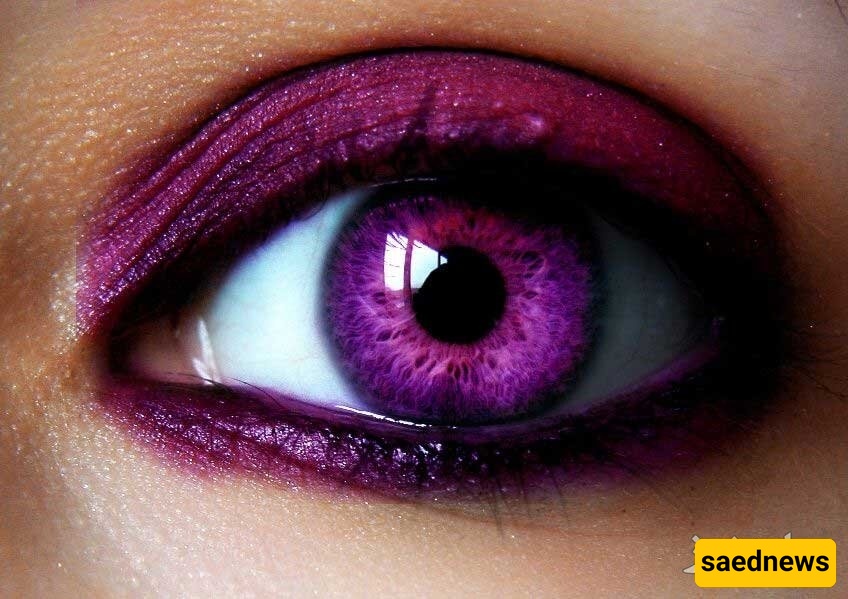
The pupil at the center of our eye is almost always black, but the colored ring surrounding it—the iris—comes in a variety of hues. While brown is the most common eye color, what is the rarest?
The Rarest Eye Color Globally
Green has been reported as the rarest naturally occurring eye color. A survey by the American Academy of Ophthalmology found that only 9% of people have green eyes, compared to 45% with brown, 18% with hazel, and 27% with blue.
If gray eyes—which are traditionally considered a subset of blue—are categorized separately, they actually top the list as the rarest eye color.
Some may wonder where black eyes fit in this ranking. Despite the romanticized depictions in poems and songs, true black eyes do not exist. Eyes that appear black are usually very dark brown or have large pupils that create the illusion of blackness.
In the same U.S. ophthalmology survey, 1% of respondents reported that their eye color did not fit into any of the standard categories of brown, blue, hazel, gray, or green.
If we step outside typical human eye-color standards, individuals with the genetic condition albinism may have the rarest eye colors. Albinism affects roughly 1 in 20,000 people, sometimes resulting in eyes that appear red, pink, or even purple. This is not due to pigment in the iris; instead, the iris is translucent, revealing blood vessels that influence the apparent color. People with albinism often experience significant vision problems.
Can People Have Different-Colored Eyes?
Those with a rare condition called heterochromia can have eyes of different colors—such as one brown and one blue—or even two distinct colors within a single iris. Most individuals with heterochromia are born with it and experience no health issues, though it can also arise from conditions like Horner’s syndrome or piebaldism.
What Determines Eye Color?
Eye color is influenced by the production of melanin, the pigment in the iris. Higher melanin levels produce darker eyes. Different types of melanin contribute to various eye colors: eumelanin, a black-brown pigment, darkens eyes, hair, and skin, while pheomelanin, a red-yellow pigment, produces green or amber eyes, red hair, and freckles.
Geography also plays a role: people living farther from the equator tend to have lighter eyes and skin, whereas darker eyes and skin are more common in warmer, equatorial regions. Genetics, however, is the ultimate determinant.
Scientists once believed eye color inheritance was simple—brown eyes were dominant, and blue eyes recessive. In this model, a child could have brown eyes if even one parent had brown eyes, while blue eyes would only appear if both parents had them.
Modern research has shown that eye-color genetics are far more complex. Two brown-eyed parents, for example, can have a child with lighter eyes.
Most people retain the same eye color throughout life. A newborn with blue eyes may see them gradually darken in the first year or few years, but the color generally stabilizes after that. Certain conditions, such as cataracts or eye injury, can also change eye color over time.





![Remarkable Discovery of a 3,000-Year-Old Bronze Sword in Southern Germany [Photo]](https://en.saednews.com/storage/files/post/b5d38cbe-ddea-4efa-8d4e-8a3bb7b26953-D4mxF6AO4p2lNMhZ/1x1-image.jpg)