SAEDNEWS: Hieroglyphs on this coffin reveal its owner was a prominent figure of their time.
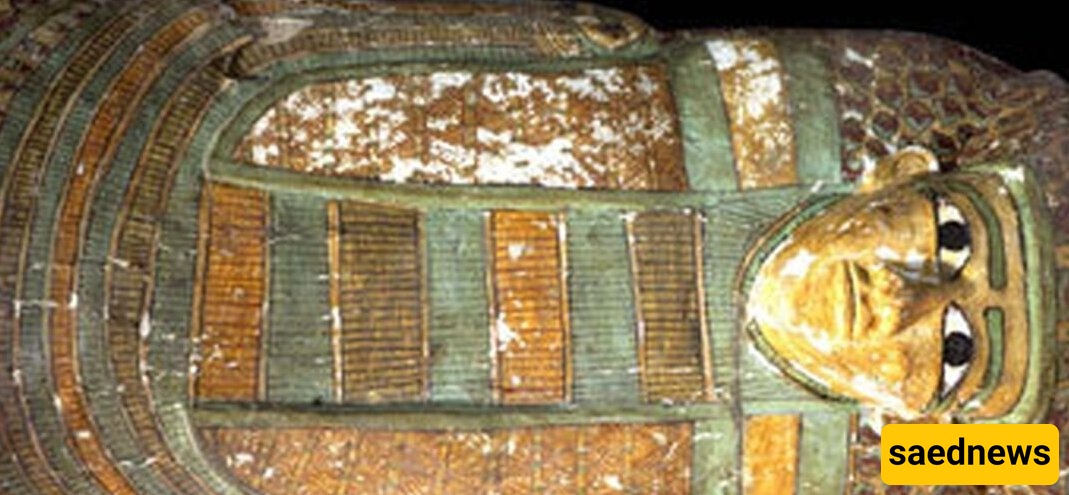
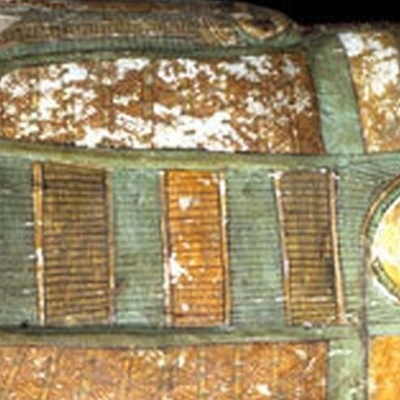
A rare wooden coffin belonging to Egypt’s Seventeenth Dynasty, along with its mummified occupant, has been discovered in the historic region of Luxor, according to Saed News. The Egyptian Ministry of Antiquities announced that a team of Spanish archaeologists working in Luxor unearthed the exceptionally preserved coffin, which belonged to a high-ranking official from the influential Seventeenth Dynasty (circa 1650–1567 BCE).
Inside the coffin, whose colors and external decorations have astonishingly endured over the millennia, the mummy of the official remains almost fully intact.
The Seventeenth Dynasty, considered one of the weakest ruling families of ancient Egypt, marked the end of the Second Intermediate Period. Following the defeat of Ahmose I—the founder of the Eighteenth Dynasty—against the Hyksos, Egypt entered its New Kingdom era, famously known as the Empire period (circa 1567–1085 BCE). From that time, Luxor, in southern Egypt, became a central seat of power.
Ali El-Asfar, head of the Egyptian Ancient Monuments Department, stated that the coffin discovered by the joint Spanish-Egyptian team has preserved the mummy remarkably well. Hieroglyphic inscriptions along the coffin indicate that the deceased was a prominent figure of his era.
The coffin measures approximately two meters in length, 50 centimeters in width, and 42 centimeters in height. It is decorated with feather motifs, and prayers inscribed on its surface are believed to guide the deceased into the afterlife.
José Gelán, leader of the Spanish excavation team, noted that the group has been conducting digs in the Abu Nja area west of Luxor for nearly 13 years. Last year, the team also uncovered the wooden coffin of a five-year-old child from the Seventeenth Dynasty, along with a collection of statues and amulets buried alongside the child.



![Remarkable Discovery of a 3,000-Year-Old Bronze Sword in Southern Germany [Photo]](https://en.saednews.com/storage/files/post/b5d38cbe-ddea-4efa-8d4e-8a3bb7b26953-D4mxF6AO4p2lNMhZ/1x1-image.jpg)