SAEDNEWS: After 21 successful landings and countless spacecraft orbiting the Red Planet, we still don’t know the answer.
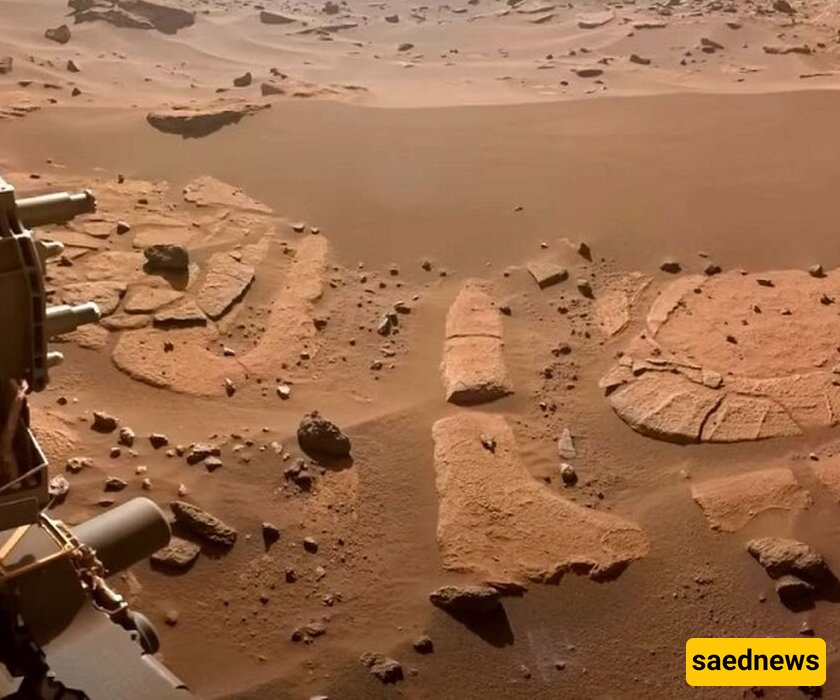
According to Saed News’ society service, the search for past Martian life has primarily focused on biosignatures—such as chemical traces in rocks or the atmosphere—that might have been left behind by microorganisms. These types of clues require careful laboratory analysis.
But what if we could actually see biological markers on the rocky landscapes of Mars? Mars rovers have occasionally spotted intriguing and unusual shapes on the surface. Most of these formations have been explained as erosion caused by Mars’ thin atmosphere. However, on September 27, 2023, the Perseverance rover encountered something unusual: circular formations resembling those created by microbial communities in certain lakes on Earth.
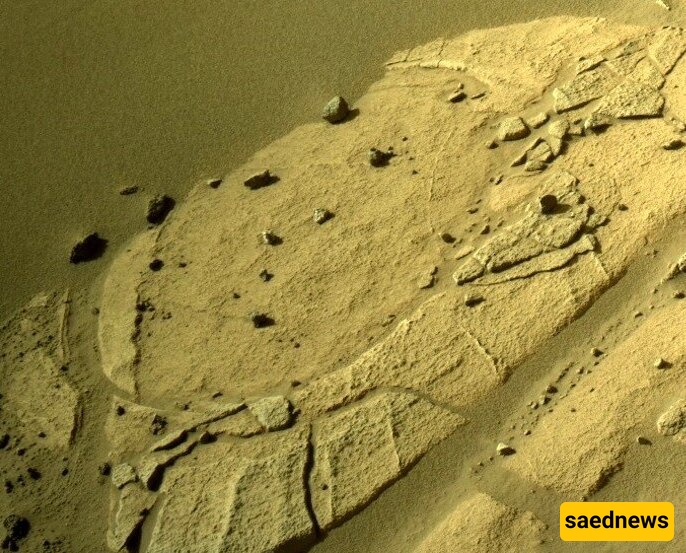
NASA recently released these images as part of its daily uploads of new photos from the rover. No analyses or peer-reviewed articles have been published yet, so for now, we only have the images and the observations of the mission scientists.
The rover has been exploring the remnants of an ancient delta within Jezero Crater—a location where a river once flowed into a lake that existed billions of years ago. The delta is still clearly visible from above. NASA specifically sent Perseverance to Jezero because it is considered an ideal site to search for evidence of ancient microbial life.
As noted, the search is largely about finding traces of biosignatures left by microorganisms. However, this likely requires returning some samples to Earth for study in advanced laboratories if life truly existed.
The newly observed circular structures, however, could represent direct evidence of past Martian life. They closely resemble formations on Earth known as stromatolites and microbialites, created by microbial communities in lakes through a process that blends biology and geology.
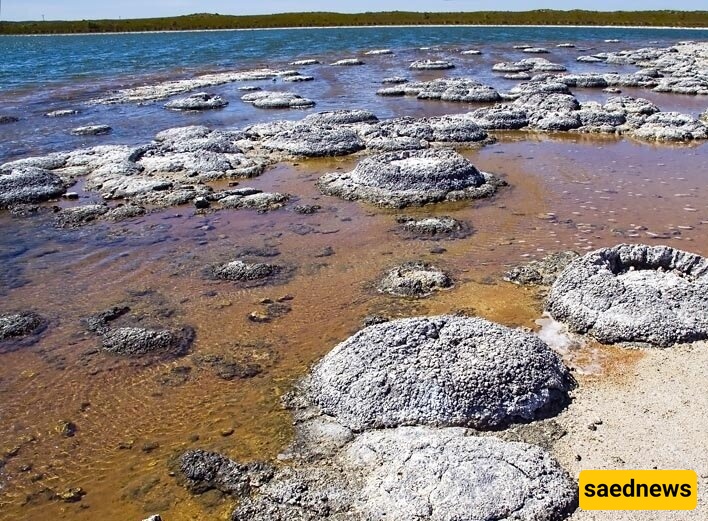
Circular structures formed by microbial activity on a lakeshore in Western Australia
The Great Salt Lake in Utah is home to excellent examples of stromatolites, which are formed by a combination of bacteria and calcium carbonate. Could a similar process have occurred on Mars?
Mars geologist Stephen Ruff of Arizona State University discussed the discovery on his YouTube channel, Mars Guy:
"Exactly where one might expect it, Perseverance discovered circular rock formations reminiscent of those created by microbial communities in some Earth lakes. This exciting possibility deserves closer scrutiny."
These formations resemble stromatolites—or more specifically, microbialites. However, as Ruff notes, there is another potential explanation: "spherical weathering," a process in which chemical weathering of jointed bedrock produces concentric or spherical layers of highly eroded rock. This process creates “onion-like” concentric shells. The features observed on Mars could originate from this type of weathering.
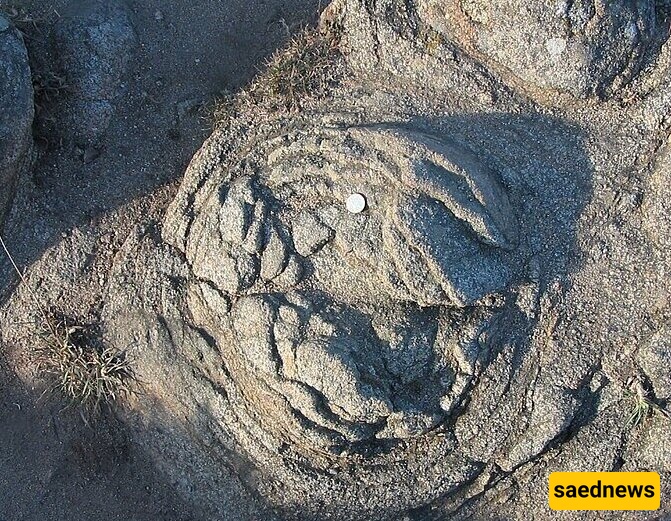
Example of spherical weathering on Earth; Galicia, Spain
Kenn Farley, a geochemist at Caltech, explained: “Mars scientists considered the hypothesis that these features could simply be spherical weathering.” He noted that this phenomenon is very common on Earth and has been observed elsewhere in Jezero, in both igneous and sedimentary rocks.
Farley added: “While we are still interpreting the data, the second hypothesis is far less extraordinary, which is why it currently has more support.”