SAEDNEWS: The stomach contents of a juvenile Tyrannosaurus show that 75 million years ago, the animal had feasted on a small, bird-like species during its final meal.
According to Saed News’ Society Desk, what did this juvenile Tyrannosaurus eat for dinner? Whatever it wanted! Unlike their fully grown relatives at the top of the food chain, young tyrannosaurs appear to have relied on prey better suited to their smaller, more agile bodies.
Sometimes, that diet included a variety of small, birdlike dinosaurs, which were apparently so abundant that young predators would pick off the meaty hind legs and swallow them, leaving the rest for scavengers.
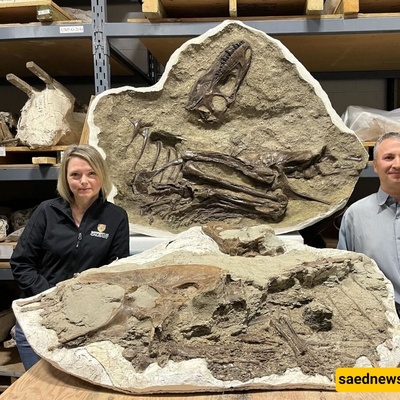
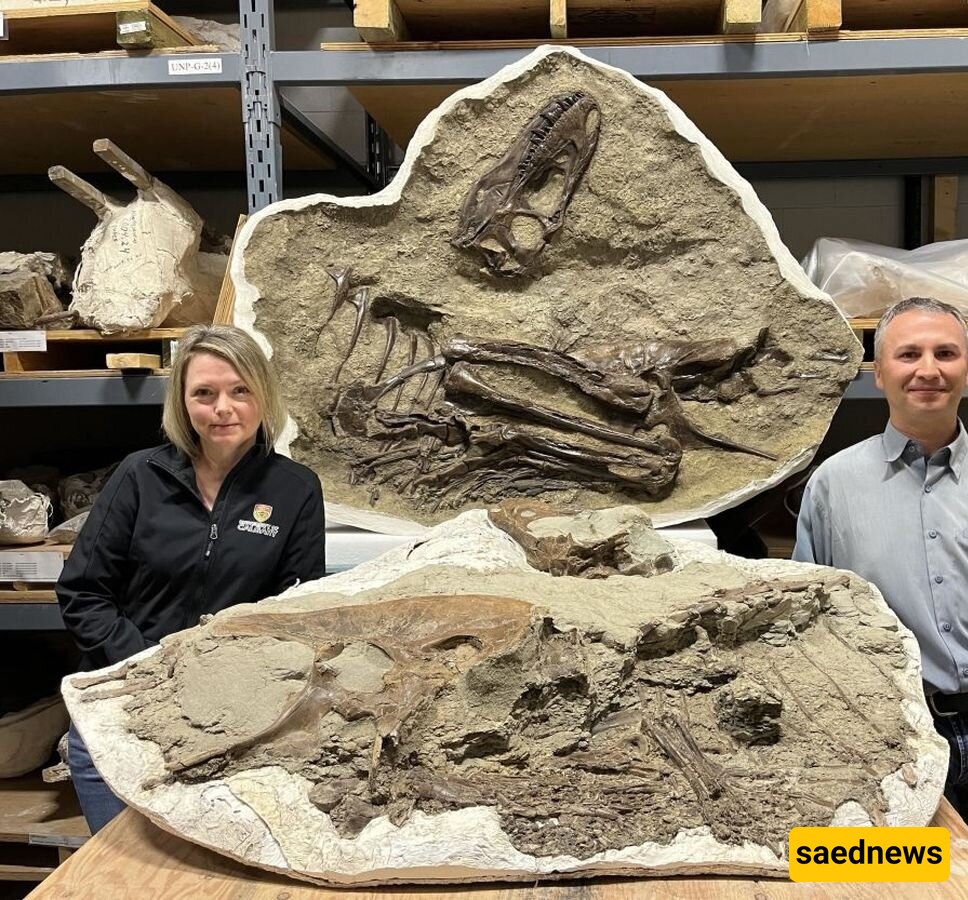
How did scientists uncover what these 75-million-year-old dinosaurs ate? The first incredible fossil was discovered in the Dinosaur Park Formation in Alberta, Canada: a juvenile Gorgosaurus skeleton (a type of Tyrannosaurus) with its last two meals preserved in the stomach cavity. Each meal consisted of a pair of hind legs from small, birdlike dinosaurs. Darla Zelenitsky, a paleontologist at the University of Calgary and co-author of the study, explains: “The juvenile Tyrannosaurus tore off the legs of its prey and swallowed them whole, based on the evidence.”

The section highlighted in red contains fossilized bones from the tyrannosaur’s last meal.
Each pair of legs shows different levels of bone digestion, suggesting they were consumed during two separate meals spaced hours or days apart.
This unique find provides strong evidence for a long-standing hypothesis: tyrannosaurs adapted their hunting and feeding strategies as they grew. Young, nimble tyrannosaurs could chase and kill smaller animals to fill their bellies, but as adults, they targeted larger prey, including big Late Cretaceous herbivores like hadrosaurs and ceratopsians. Zelenitsky notes, “This is the first direct evidence showing that tyrannosaurs shifted their diets dramatically as they grew from juveniles into adults.”
Younger tyrannosaurs were leaner and more agile, with narrow skulls and blade-like teeth suited for grabbing, slicing, and swallowing smaller prey. In contrast, broad skulls and large teeth in adults were better for crushing bigger prey and biting through bone.
Sus adds that modern crocodiles and Komodo dragons experience similar dietary shifts as they grow.
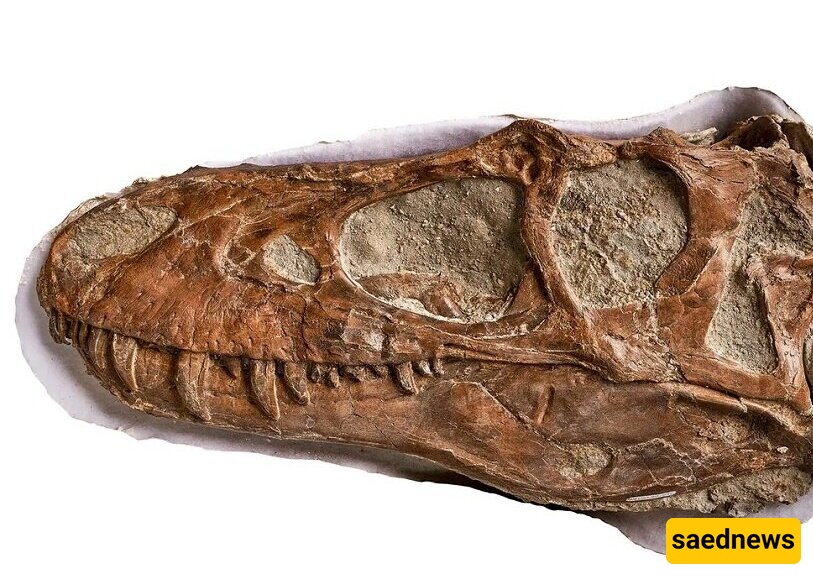
The fossilized juvenile Gorgosaurus libratus was between 5 and 7 years old, roughly waist-high for a human, about 13 feet long, and likely weighed 740 pounds. Even at this size, it was less than 15 percent the weight of its adult relatives and had a long way to go in its growth.
The two small, birdlike sytips it ate likely weighed 20 to 26 pounds—roughly the size of wild male turkeys. François Therrien, a co-author from the Royal Tyrrell Museum of Alberta, notes that these dinosaurs were more like Australian ostriches or cassowaries and among the fastest runners in their ecosystem, much like the juvenile tyrannosaurs themselves.
In 2009, Darren Tanke, a technician at the Royal Tyrrell Museum, discovered this remarkable fossil in the Badlands Dinosaur Provincial Park. Fossilized skeletons of young tyrannosaurs are far rarer than those of their fully grown relatives. Large dinosaurs, with their robust skulls and bones, were more likely to survive the fossilization process than fragile juveniles.
During preparation, Tanke noticed small finger bones near the animal’s chest that didn’t seem to belong to the tyrannosaur. “The bones were so small, they were unlikely to belong to this Tyrannosaurus and were emerging from inside the chest,” he said. The research team carefully examined the fossil to determine what was behind the ribcage.
One researcher said, “It was truly exciting because it was the first time the stomach contents of a tyrannosaur had been found. It’s amazing that here we have four legs representing the most complete sytip skeleton ever discovered. The reason it remained intact is that the Tyrannosaurus swallowed it, and the stomach actually protected the prey’s bones.”