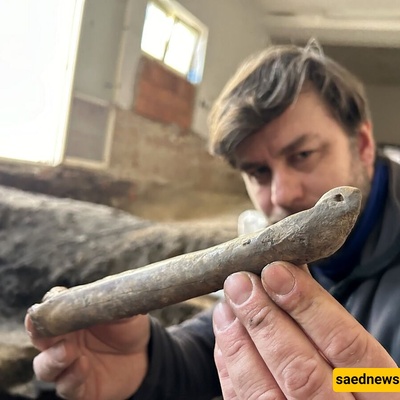
SAEDNEWS: Archaeologists have discovered a 1,000-year-old bone skate in the cellar of a house in the town of Přerov, located in the Moravia region of the Czech Republic.
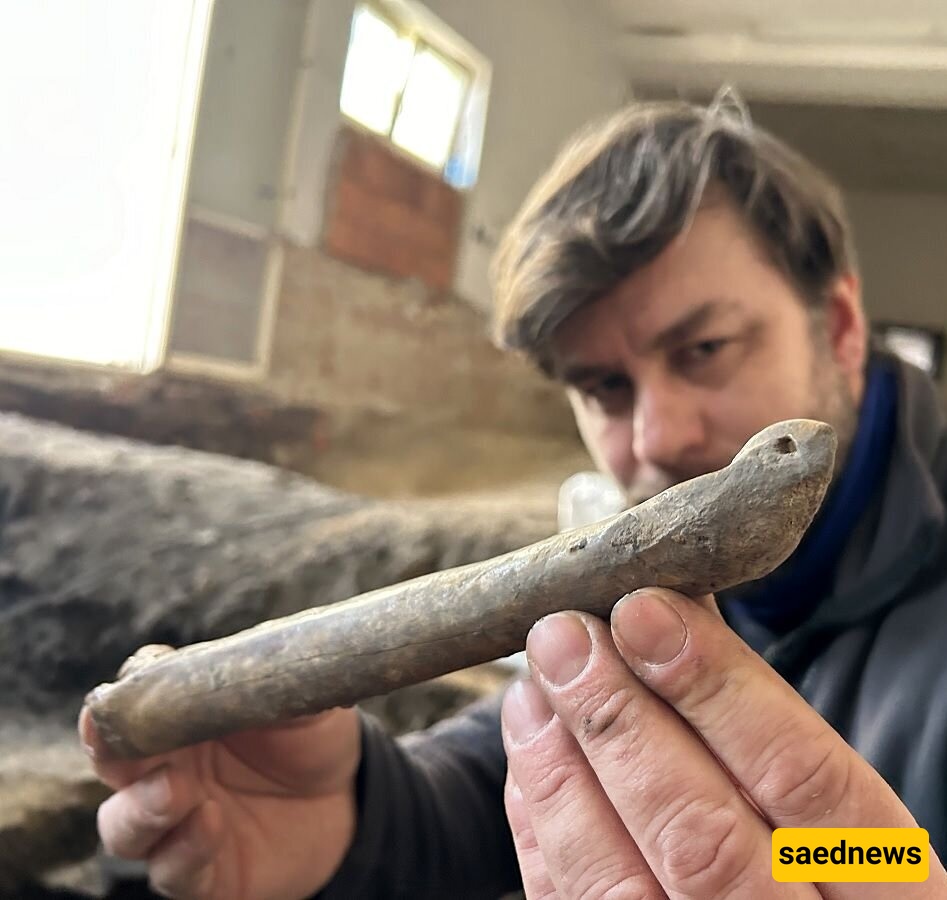
According to a report by the Society Desk of Saed News, the skate was made from animal bone and was most likely carved from the lower leg bone of a horse. Pottery fragments found nearby date to the 10th or 11th century.
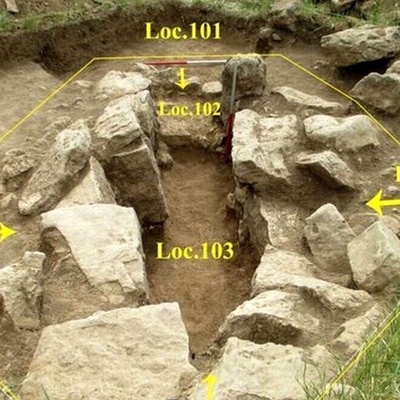
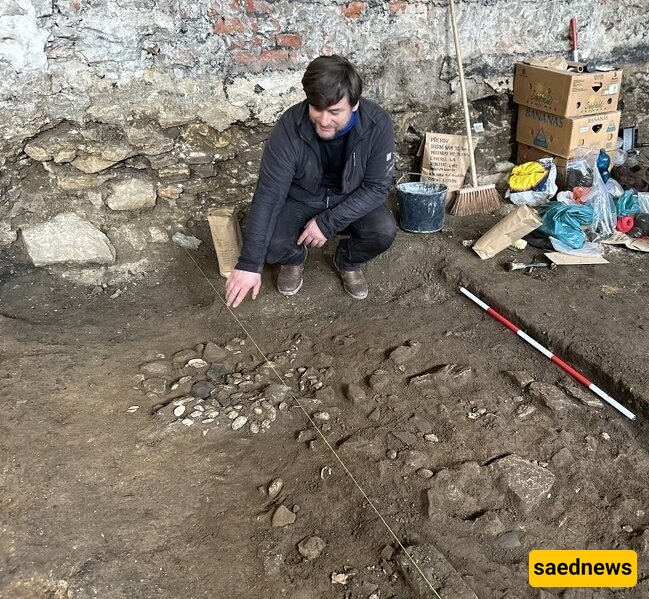
Archaeologists from the Comenius Museum made the discovery during a rescue excavation in the Upper Square of the town. At the time the skate was made, the Upper Square area lay on a hill overlooking the left bank of the Bečva River. The town of Přerov did not yet exist; instead, there was a cluster of small settlements along branches of the Bečva. The Upper Square was first a fortified area and later a castle built by the Polish king Bolesław the Brave after his conquest of Moravia in 1003.

“This object has a very distinctive shape,” said archaeologists. “One end is curved into a pointed tip with a drilled hole, and there is another hole at the back. These holes were used to thread straps for fastening the skate to a shoe or to a wooden sled.
Even after a thousand years, the surface of the bone remains polished, indicating that it was heavily used. The skate is small, suggesting that it may have been worn by someone with small feet — possibly a woman or a child — or attached beneath a small transport sled instead of footwear.
Rather than skating as we do today, people moved across icy surfaces using one or two poles for propulsion. The skates were also attached to sleds to transport loads of goods across frozen waterways.”
Similar bone ice skates made from animal bones have been found elsewhere in Central and Northwestern Europe and are generally dated to the same period, the 10th or 11th century. Much older examples, approximately 3,500 years old, have been discovered in China.
The bone skate will be displayed at the Comenius Museum in Přerov Castle.