SAEDNEWS: Scientists Hope Discovery of Richard’s Remains Beneath a Leicester Parking Lot, Along With Complex Spine and Skull Injuries, Could Help Rebuild the Notorious King’s Reputation

According to Saed News’ society section, citing Faradeed, the image of England’s most notorious king was unveiled yesterday (Tuesday) for the first time in 500 years, following the reconstruction of his skull, which had been discovered beneath a parking lot.

The 3D plastic model is based on a CT scan of King Richard III’s skull, who was killed in battle in 1485.
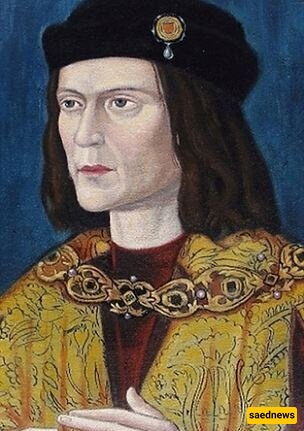
The Bloodthirsty King
Scientists hope that uncovering Richard’s remains beneath a Leicester parking lot, along with the detailed curvature of his spine and extensive cranial injuries, could help reconstruct the appearance of this infamous ruler.

Researchers say this reconstruction provides, for the first time, a likely depiction of Richard III at the time of his death at age 32.
Previously, portraits from the Tudor period always suggested he was around 50 years old.
The facial reconstruction, complete with Richard III’s long, pointed hair, was led by Caroline Wilkinson, a professor of craniofacial identification at the University of Dundee, Scotland.

The Skeleton
Wilkinson and her team conducted the reconstruction purely from the CT scans of Richard’s skull, without referencing contemporary portraits. They then added color and features such as eyebrows and eyelashes to give the face a lifelike appearance.

Philip Shaw of the University of Leicester is also attempting to recreate Richard’s likely voice. By analyzing the king’s handwriting, which often reflected local accents of the time, Shaw concluded that Richard III probably spoke with a Birmingham accent.
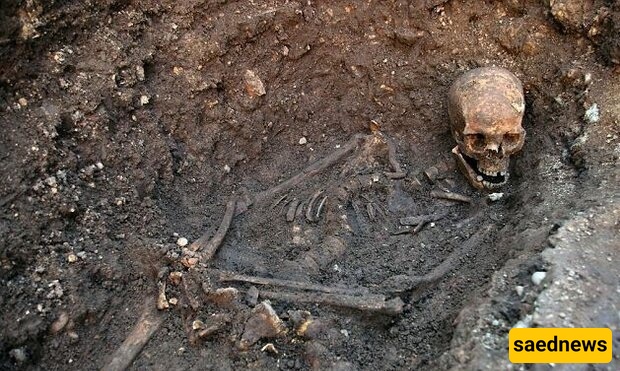
The Skull
On Monday, scientists confirmed that DNA tests, carbon dating, and bone analyses proved beyond reasonable doubt that the remains belonged to King Richard III, solving a 500-year-old mystery.
In a remarkable discovery that may rewrite history books, DNA testing even matched the skeleton to living descendants of the last English Plantagenet king.
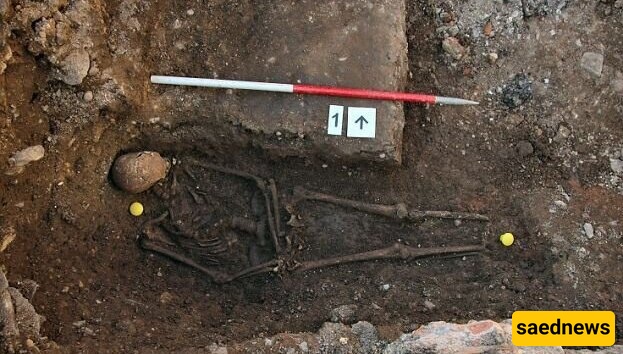
Researchers from the University of Leicester reported that the remains show ten injuries inflicted on Richard shortly before his death. Some of the wounds were particularly severe, including multiple head injuries, a skull fracture, a chest cut, and a pelvic wound.
Preliminary analyses indicate the skeleton belonged to a man in his late 20s or early 30s, aligning with historical records that Richard III was 32 at the time of his death.
Recent images also reveal a pronounced spinal curvature, matching Shakespeare’s depiction of the hunchbacked king.
Richard Buckley, the lead researcher, told 140 international journalists that the identification of the remains “goes beyond reasonable doubt” and represents a definitive academic conclusion from the University of Leicester.
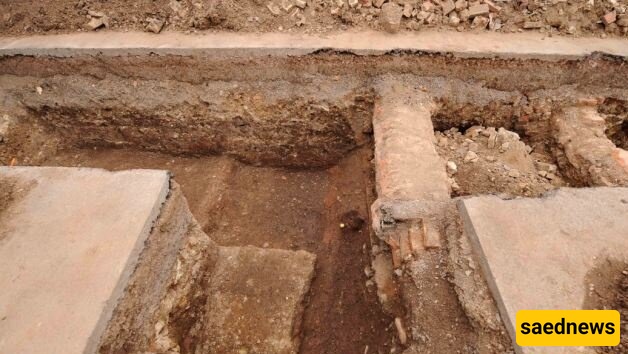
To confirm the identity, scientists compared DNA with Michael Ibsen, a direct descendant of Richard’s sister, and another relative.
Radiocarbon tests also showed that the king died between 1485 and 1550, consistent with historical records. Richard III was defeated and killed at the Battle of Bosworth by Henry Tudor, who then became King Henry VII.
Richard was buried near Leicester in an unmarked grave. When the Franciscan Church was destroyed in the 1530s, all traces of Richard III vanished. The king’s remains are now scheduled to be reinterred at Leicester Cathedral.





![The World’s Deadliest Snake Found in This Iranian City [Photo]](https://en.saednews.com/storage/files/post/517704c6-b47c-42a8-b92f-85bb60754f88-VwHP70C12CApnCbX/1x1-image.jpg)
![The Doctor Who Injected the U.S. President’s Blood into a Dog [Photo]](https://en.saednews.com/storage/files/post/10dc7382-0ee4-409f-98c0-31cbfa469b11-yPOHS5aG0kMs6a2h/1x1-image.jpg)

![Woman Gives Birth to World’s Smallest Baby, Shocking Scientists [Photos]](https://en.saednews.com/storage/files/post/ebe1f3c5-d51f-4a43-ab6e-920f4d4bcfa9-222jg6ioVrEgqQrm/1x1-image.jpg)