SAEDNEWS: Direct Detection of Oxygen on Venus Could Reveal How Its Atmosphere Became Rich in Carbon Dioxide
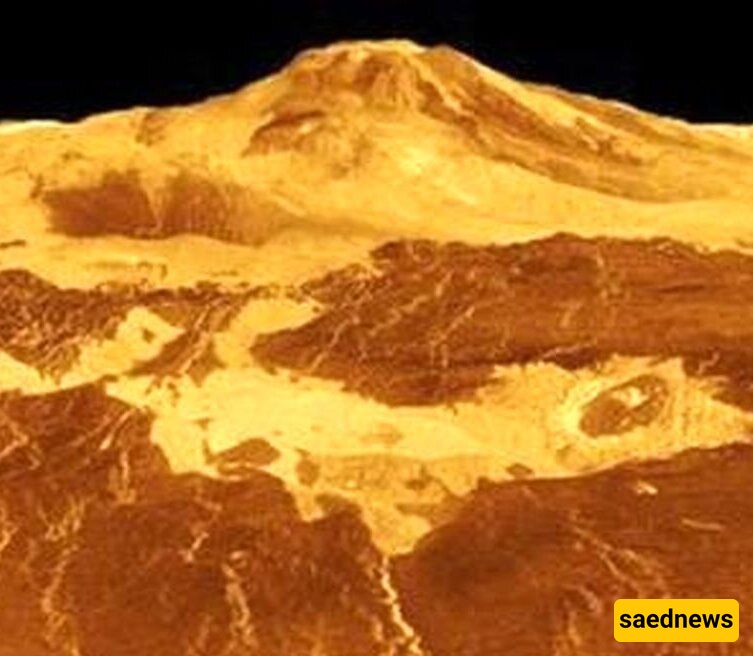
According to Saed News’ Society Service, scientists had previously observed direct traces of oxygen on Venus’ night side, and theoretical models have long predicted the presence of atomic oxygen in the planet’s atmosphere.
Now, researchers have successfully detected atomic oxygen on Venus’ sunlit, daytime side. This discovery could provide scientists with new insights into the planet’s atmosphere.
What Does Tracking Oxygen on Venus Mean?
This is an exciting breakthrough, especially since scientists have long sought more information about Earth’s “hellish twin.” Where Earth is lush and vibrant, Venus is a scorching, cloud-shrouded world dominated by thick carbon dioxide layers.
A useful way to imagine Venus is as a massive greenhouse with an average temperature of 867 degrees Fahrenheit. It’s so hot that any landers sent there melt within minutes. These extreme conditions make it extremely difficult to study the planet’s surface.
Venus presents a hellish landscape of rocky terrain under a deadly atmosphere.
However, atomic oxygen isn’t the kind of oxygen we breathe. Even if we could survive the intense heat, Venus is not a place where humans could inhale safely.
Instead, atomic oxygen is highly reactive and readily bonds with other atoms. On Earth, it is found in higher altitudes, but on Venus, it appears to be far more abundant.
Why This Discovery Matters
Directly detecting oxygen on Venus’ day side could shed light on how carbon dioxide—the gas that dominates Venus’ atmosphere—is formed and transformed. Data suggest that as carbon dioxide molecules move toward the sunlit side, they break apart into atomic oxygen and carbon monoxide.
When these molecules move back toward the night side, they recombine into carbon dioxide.
Studying Venus, Earth’s sister planet, helps scientists understand how Venus transformed into the scorching, deadly world it is today. This research could also provide insights into climate change and other global effects that may influence the future appearance and function of our own planet for thousands of years.




![The World’s Deadliest Snake Found in This Iranian City [Photo]](https://en.saednews.com/storage/files/post/517704c6-b47c-42a8-b92f-85bb60754f88-VwHP70C12CApnCbX/1x1-image.jpg)
![The Doctor Who Injected the U.S. President’s Blood into a Dog [Photo]](https://en.saednews.com/storage/files/post/10dc7382-0ee4-409f-98c0-31cbfa469b11-yPOHS5aG0kMs6a2h/1x1-image.jpg)

![Woman Gives Birth to World’s Smallest Baby, Shocking Scientists [Photos]](https://en.saednews.com/storage/files/post/ebe1f3c5-d51f-4a43-ab6e-920f4d4bcfa9-222jg6ioVrEgqQrm/1x1-image.jpg)