SAEDNEWS: A Western international relations analyst says, “Israel and we thought that we could overthrow the regime through the protests. The protesters were supposed to weaken the regime, and then we would step in, but the problem is that the protests failed on January 14.”
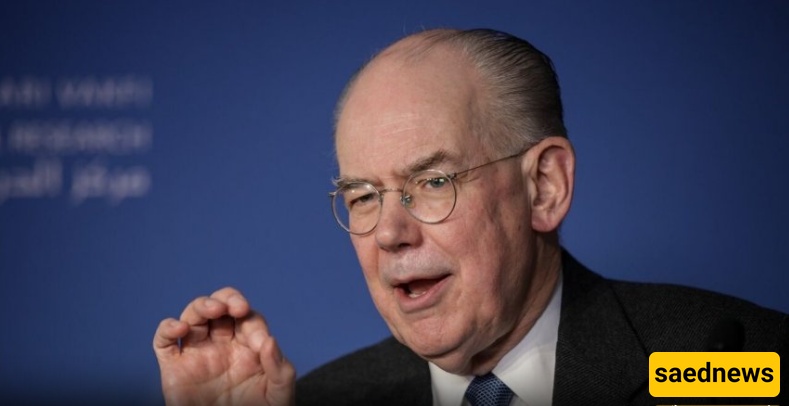
According to the Political Service of Saed News Website, While some political and security circles in the U.S. and Israel continue to talk about the option of "maximum pressure" and even direct confrontation with Iran, warnings are emerging from Western think tanks about the disastrous consequences of such adventures. One of the most explicit of these warnings comes from John Mearsheimer, a prominent American theorist and professor of international relations.
A Deep Admission
Looking at regional developments, Mearsheimer acknowledges that the U.S. and Israel’s strategy to weaken and overthrow the Islamic Republic of Iran has not only failed but was based on a fundamentally flawed calculation. He states: “We and Israel thought we could topple the regime through protests. The protesters were supposed to weaken the regime, and then we would step in and deliver the final blow with U.S. military power. But the problem is that the protests failed on January 14.”
This frank admission reveals a joint security-political project, in which domestic unrest was designed as a pretext for foreign intervention—a project that not only failed but also strengthened Iran’s internal cohesion and exposed the dimensions of a hybrid war against the country.
Mearsheimer, a staunch critic of U.S. interventionist policies, has repeatedly emphasized that a war with Iran would not be a limited or controllable conflict. From his perspective, any direct military confrontation with Iran would quickly escalate into a full-scale regional war, with Israel on the front lines and U.S. military bases across the region becoming legitimate targets for Iranian retaliation.
Consequences of a Conflict with Iran
Moreover, the consequences of such a war would not be confined to the battlefield. Disruptions to energy security, the destabilization of strategic straits, and surges in oil and gas prices could shock the global economy like never before—a concern even U.S. European allies have warned about.
Overall, Mearsheimer’s statements can be seen as a sign of the growing rift between American realists and adventurous currents in Washington’s foreign policy. This gap shows that, despite media hype, even within Western think tanks it is recognized that Iran will neither collapse under internal pressure nor yield to external threats; and that the cost of any miscalculation regarding Tehran could be extremely high for the U.S., Israel, and the entire international system.