SAEDNEWS: In the sensitive circumstances following recent events, the President prioritized multi-layered crisis management and addressing the legitimate demands of the people in government actions, adopting an approach based on accountability, on-site presence, and direct dialogue.
According to the Political Service of Saed News, quoting the Presidential Information Portal, The recent bitter and costly incidents over the past weeks, which began following certain labor and economic protests and escalated into widespread unrest, insecurity, and destruction through targeted interventions by foreign agents and organized riot networks, represent one of the most sensitive managerial, security, and social periods in the country’s recent history. These events, which led to the martyrdom and injury of a number of citizens, emergency personnel, and security forces, as well as significant damage to public property, service infrastructure, and emergency equipment, highlighted the necessity of a multi-layered, proactive, responsible, and field-oriented approach by the highest level of executive management in the country.
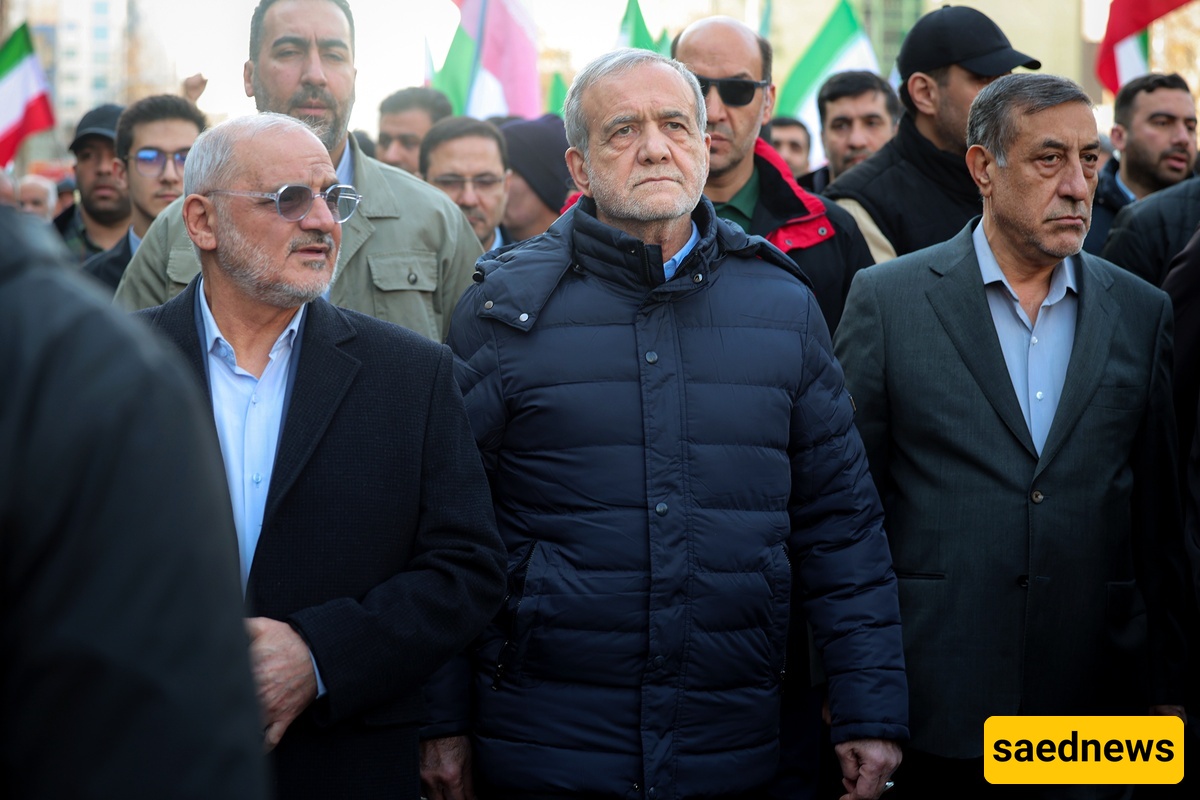
Within this framework, Dr. Masoud Pezeshkian, the President, relying on an approach based on field presence, direct dialogue with the people, acknowledgment of shortcomings, attention to the affected, and simultaneous confrontation with foreign destabilization projects, prioritized crisis management. This proactive approach was explicitly confirmed, supported, and praised by the Supreme Leader of the Islamic Revolution, who in his remarks acknowledged the President’s efforts, motivation, persistence, and sense of responsibility, and emphasized support for the government in these sensitive circumstances. This endorsement and praise serve as a significant foundation for continuing service delivery, reform, and active crisis management.
The following provides a comprehensive and detailed report on the main axes of the President’s actions and initiatives in response to the recent events.
A hallmark of the President’s approach was direct engagement with representatives of guilds, merchants, unions, professional associations, and economic activists. These meetings were held in a context where the country’s adversaries sought to exploit labor and economic demands as a platform for security destabilization.
The main objectives of this approach included:
Hearing economic demands and concerns directly and without intermediaries
Reducing the communication gap between the government and the social base of markets and guilds
Clearly distinguishing between legitimate civil protests and organized riots
Preventing the hijacking of protests by rioters
Returning protests to legal, dialogue-based, and institutional resolution pathways
As a result of these dialogues, the government, under the direct instruction of the President, implemented a series of immediate operational decisions, including:
Suspension and review of certain system requirements and administrative procedures
Suspension or installment of tax penalties and debts for affected guilds
Facilitation of business license issuance and renewals
Formation of special task forces for continuous monitoring of market issues
These measures effectively reduced tensions, separated ordinary citizens from rioters, and rebuilt relative trust between the government and the business community.
At the structural level, the President convened intensive and specialized government sessions to implement a coordinated, mission-oriented management approach. In this framework, specific assignments were defined for ministers and executive bodies across three main axes:
a) Responding to economic and livelihood demands
Controlling psychological and real impacts of the crisis on the market
Reducing pressure on small and medium enterprises
Facilitating access to support and banking resources
b) Compensation for damages and infrastructure reconstruction
Accurate assessment of damage to public and commercial facilities
Planning for repair and reconstruction of emergency and service equipment
Allocating necessary resources to restore public service capacity
c) Strengthening coordination in economic decision-making
Active role for the Central Bank and Ministry of Economy
Preventing fragmented decision-making
Moving toward coherent policies to reduce social tension
In these sessions, the President emphasized outcome-oriented decisions and avoiding purely declarative approaches.
A central aspect of the government’s approach was emphasizing its sovereign responsibility toward all affected individuals. In his official statements, the President highlighted several key principles:
Immediate attention to the injured and families of the deceased
Fair review of detainees’ situations
Distinguishing between protesters, misled individuals, and violent actors
Pursuing compensation for material and moral damages to citizens and businesses
Reviewing managerial, executive, and preventive shortcomings
This approach aimed to alleviate social suffering, repair social capital, and reinforce the public’s perception of government justice and responsibility.
The President did not limit himself to surface-level crisis management but stressed the need to examine the economic, social, and managerial roots of discontent. Within this framework:
Acknowledgment of policy shortcomings and deficiencies
Emphasis on reforming economic decision-making processes
Review of costly administrative procedures affecting citizens
Moving toward policy-making based on listening to society
Alongside social and economic measures, the President explicitly pointed to the role of the United States and the Israeli regime in turning protests into a project of chaos and destabilization. In this context:
Legitimate protests were distinguished from organized riots
The enemy’s cognitive and narrative warfare was explained
Efforts were made to raise awareness among domestic and international audiences
This axis formed part of the strategy to counter the enemy’s hybrid war against internal stability.
In foreign policy, the President addressed the recent events with foreign leaders, including the Presidents of Russia and Turkey, the Prime Minister of Pakistan, and the Iraqi Foreign Minister, emphasizing the principled positions of the Islamic Republic of Iran. The objectives of this approach included:
Neutralizing distorted narratives of hostile media
Preventing international legitimization of riots
Defending Iran’s right to distinguish protests from urban chaos and terrorism
A key feature of this period was the Supreme Leader’s explicit endorsement and praise of the President’s approach, motivation, and efforts. In public statements, he acknowledged the President’s active engagement, high motivation, sense of responsibility, and persistence, emphasizing support for the government during sensitive circumstances. This explicit support serves as a strategic foundation for continuing reform, crisis management, and government service delivery.
The President’s actions regarding recent events illustrate an active, multi-layered, field-oriented, and responsible management model that simultaneously addressed three core levels:
Responding to legitimate economic and labor demands
Crisis management, focusing on identifying and resolving causes of discontent, attending to victims, and compensating damages
Confronting foreign destabilization projects and narrative warfare
This approach, backed by the Supreme Leader’s explicit endorsement, reflects the government’s efforts to responsibly navigate a complex security-social period, based on dialogue, reform, field presence, and simultaneous protection of national security and citizens’ rights.