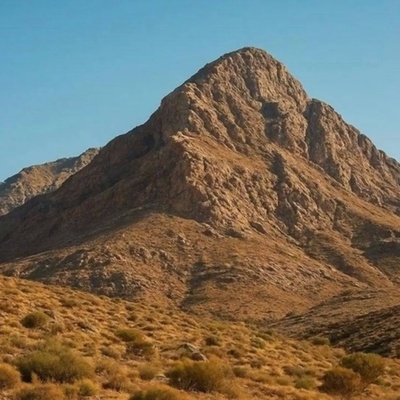
SAEDNEWS: Bisotun Mountain, one of Iran’s most famous historical mountains in Kermanshah Province, is renowned not only for the grand inscription of Darius the Great but also for the monumental, unfinished work known as Farhad’s carving.
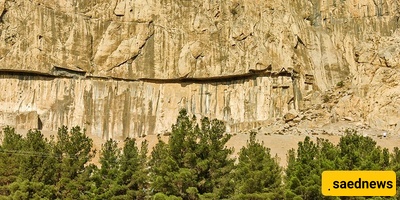
According to the History and Culture Service of Saed News, this colossal rock wall, carved into the western side of Darius’ relief on the mountainside, measures approximately 200 meters in length, 30 to 36 meters in width, and around 45 meters in height. It is considered the largest flat, carved stone surface in Iran. Its surface is so meticulously smoothed and uniform that from a distance it appears like a giant canvas ready for engraving—yet no figures or inscriptions adorn it, leaving it unfinished.
The name Farhad’s Carving (or Faratash and Frai-Tash in local dialects) derives from the famous Persian love story of Farhad and Shirin. According to the poet Nezami Ganjavi and Iranian folklore, Farhad, a stonecutter in love with Shirin, was tasked by Khosrow Parviz (Sassanian king) to carve through Mount Bisotun in the hope of reaching his beloved. This tragic tale, ending with Farhad’s deception and eventual suicide, led local people to name this enormous wall after him, seeing it as a symbol of burning love and relentless effort. While largely literary and folkloric, the story has forged a deep cultural connection to the region.
Historically, scholars generally believe that Farhad’s Carving dates to the Sassanian period, particularly the reign of Khosrow Parviz. It may have been intended to commemorate Iran’s victories over the Eastern Roman Empire or serve as a grand royal relief, but military defeats, internal crises, and the gradual collapse of the Sassanian Empire left it incomplete. Some attribute it to the Achaemenid era or even as a quarry site, but archaeological evidence and carving tools strongly support the Sassanian hypothesis. Today, the site is part of the Bisotun World Heritage complex, standing as a testament to both the technical brilliance and fragility of Iran’s ancient civilizations.