SAEDNEWS: A wooden-stone axe from the Neolithic period, remarkably well preserved, was discovered last year in Lake Constance, Switzerland. After undergoing conservation and stabilization, the artifact is now on display at the Archaeological Museum of Frauenfeld.
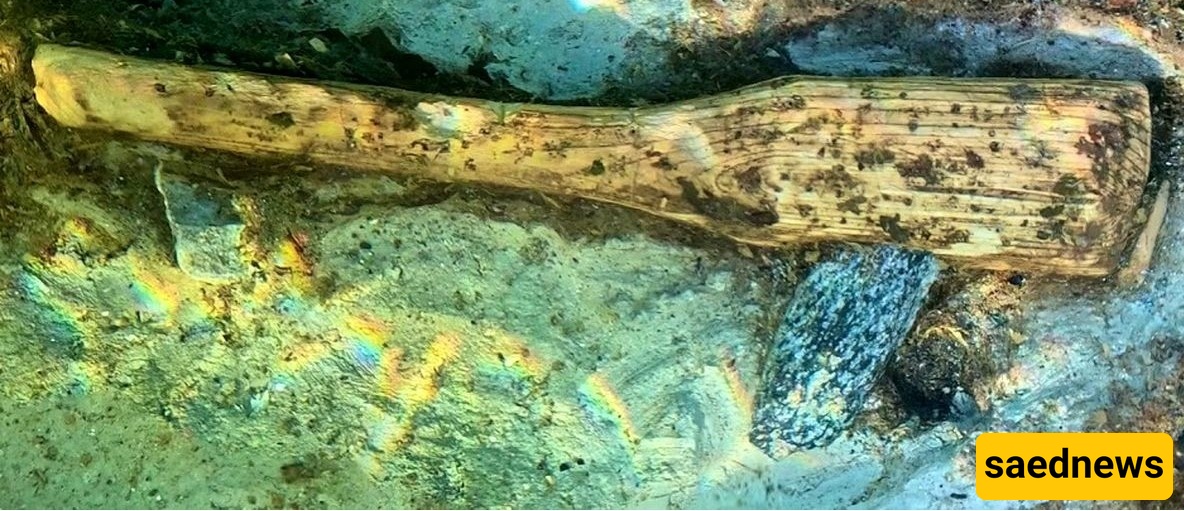
According to the social affairs section of Saed News, this artifact was discovered during an underwater excavation in the port basin of Shtakburg, located in the southwestern part of the lake. Due to lower water levels in winter and a regional dredging program—and given that remains of prehistoric wooden settlements had already been identified at this site in the 19th century—archaeology department divers examined the area last spring.
During the excavation, they recovered the remains of wooden house foundations, animal bones, pottery fragments, and stone tools. Among these discoveries, a Neolithic axe stood out as the most significant find, likely holding high value in that society. Experiments with similar tools indicate that crafting such an axe would have taken more than a full day of continuous labor.
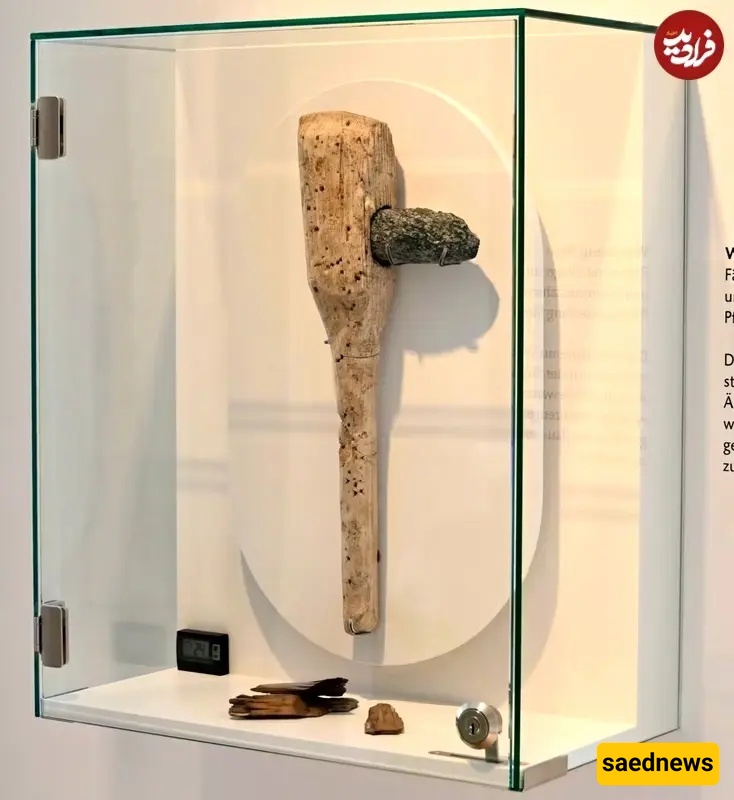
The axe blade is made of “prasinite,” a hard and durable stone sourced from the Alps in the Grisons region. However, in that era, there was no need for a long journey to the Alpine Rhine Valley to obtain the material, as similar stones could also be found in glacial deposits around Shtakburg. The handle was fashioned from narrow ash tree trunks, a wood prized for its strength and flexibility, making it ideal for tool construction.
These wooden settlements were built on marshy ground. Houses were raised on stilts, protecting them from floods, predators, and human threats, while also providing easy access to fishing and riverside farming. Hundreds of people lived in clusters of small homes connected by wooden walkways elevated on the stilts. The houses were constructed from wood, wattle-and-daub walls, and thatched roofs, forming temporary structures. Evidence suggests that these homes were rebuilt approximately every ten years.
As water levels rose and the lake formed, the settlements were abandoned, but the waterlogged environment preserved organic materials for thousands of years. Artifacts recovered from these sites include textiles, dugout canoes, and Europe’s oldest known wheels, dating back to around 3000 BCE. This rich archaeological collection offers invaluable insights into the labor, trade, fishing, hunting, and farming practices of Neolithic farming communities.